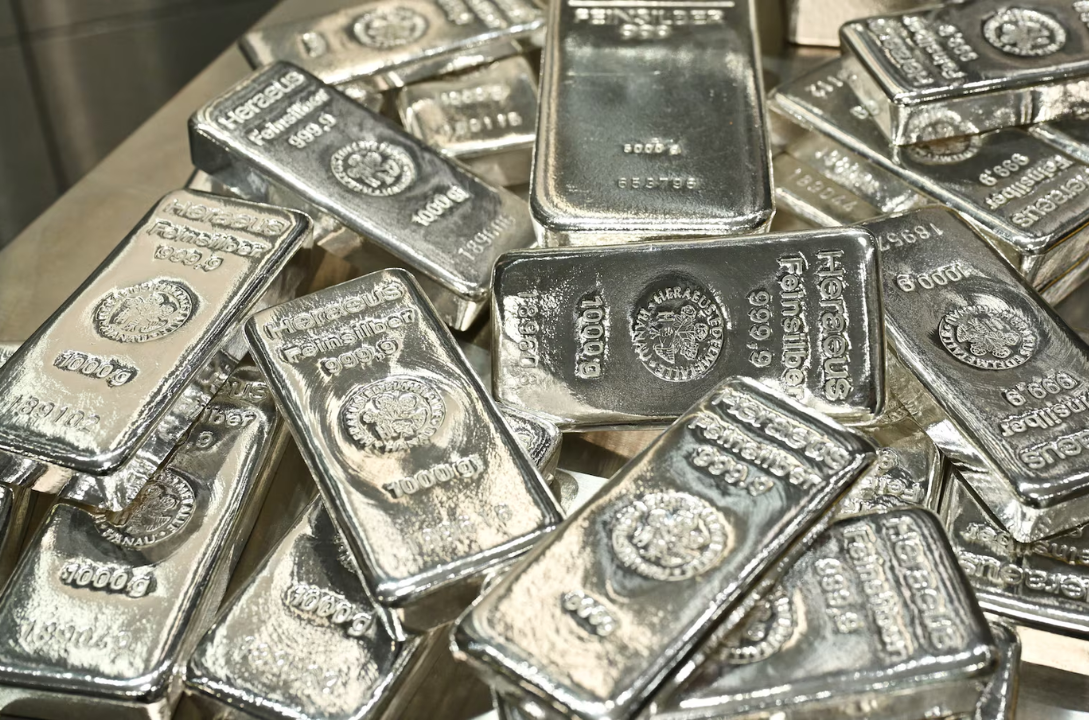
Silver Storm Mining has reached a major operational milestone at its La Parrilla Silver Mine Complex in Durango, Mexico. The company announced the first silver-gold doré pour at the 100%-owned project, marking the beginning of the restart process for an asset it acquired less than three years ago.
The first pour was completed as part of the commissioning of the oxide processing circuit at La Parrilla. Silver Storm said it now expects to pour silver-gold doré on an ongoing basis as commissioning progresses. The company began commissioning the oxide circuit in early June using mineralized material from an open-pit oxide stockpile.
Greg McKenzie, Silver Storm’s president and chief executive officer, described the event as a significant milestone and said the first silver was delivered safely and successfully. He added that the company has now “kicked off the restart of operations” at La Parrilla, opening a new chapter for Silver Storm and its stakeholders.
The announcement drew market attention, with Silver Storm shares rising sharply. For investors, the first pour is important because it moves La Parrilla from a restart plan toward visible operational execution. However, the company also emphasized several technical and economic risks, noting that the restart decision is not supported by a current mineral reserve estimate or a completed economic study under NI 43-101 standards.
Why the First Doré Pour Matters
In mining, a first doré pour is more than a symbolic event. It shows that several parts of the operating chain are functioning together: material handling, processing, metal recovery, refining preparation and final pouring. For a company restarting a mine, this is a practical sign that infrastructure can produce a marketable metal product.
Doré is a semi-refined metal bar that typically contains a mix of precious metals, in this case silver and gold. It is usually shipped to a refinery for further processing into refined commercial metal. Producing doré confirms that the processing circuit can recover payable metal from available mineralized material.
For Silver Storm, the milestone is especially important because La Parrilla is central to the company’s near-term growth strategy. The mine complex includes a 2,000 tonnes-per-day mill and three underground mines. Restarting such an asset requires technical coordination, capital discipline, workforce readiness, equipment availability and steady access to suitable mineralized material.
The first pour indicates that Silver Storm has passed an early commissioning hurdle. It does not yet prove that the operation will reach full commercial stability, but it provides a concrete step forward after a long period of preparation.
Oxide Circuit Commissioning Begins the Restart
Silver Storm’s first doré pour came from the oxide processing circuit. The company started commissioning this circuit in early June, using mineralized material from the open-pit oxide stockpile.
This approach gives the company an immediate source of feed while underground development continues. Processing stockpiled material can help test equipment, refine operating procedures, train teams and identify any metallurgical or mechanical issues before a broader ramp-up.
The oxide circuit will continue treating the stockpile until underground development in the San Marcos area provides access to run-of-mine mineralized oxide material. That transition will be important. Stockpiles can support commissioning, but a sustainable restart depends on consistent mine feed from underground development.
Investors will therefore watch whether Silver Storm can move smoothly from stockpile processing to mine-fed production. If underground access advances as expected, the oxide circuit may support more regular doré production. If delays occur, the pace of the restart could be affected.
Sulphide Circuit Ramp-Up Is the Next Major Step
Silver Storm also expects to begin commissioning the 1,250 tonnes-per-day sulphide processing circuit in June 2026. The company estimates the ramp-up period will take about one month.
This is a critical next step because oxide and sulphide materials usually require different processing approaches. Having both circuits operating would expand La Parrilla’s flexibility and potentially improve the company’s ability to process different types of mineralized material from the complex.
The sulphide circuit could become an important part of the restart if underground mining provides sufficient feed. A successful ramp-up would help demonstrate that La Parrilla is not limited to the initial oxide stockpile and can move toward a broader operating model.
However, commissioning a sulphide circuit brings risk. Recovery rates, throughput, reagent use, maintenance performance, equipment reliability, labor availability and feed consistency can all affect results. A one-month ramp-up target is positive, but it remains a forward-looking expectation.
The market will need more operational updates before it can judge whether the sulphide circuit is performing as planned.
La Parrilla Is a Strategic Asset for Silver Storm
La Parrilla is one of Silver Storm’s most important assets. Located in Durango State, Mexico, it sits in a major silver-producing jurisdiction with a long mining history. The complex includes existing infrastructure, underground mines and processing capacity, making it more advanced than an early-stage exploration project.
That existing infrastructure is a key advantage. Restarting a former or advanced mine complex can be faster than building a new operation from the ground up, especially when mills, underground workings and stockpiles are already in place. It can also reduce certain development risks, although it does not eliminate them.
For Silver Storm, La Parrilla represents a potential path toward near-term production. If the restart progresses successfully, the company could shift from being primarily an advanced-stage silver developer toward becoming an operating precious-metals producer.
The company also owns the San Diego Project, which it describes as one of the largest undeveloped silver projects in Mexico. Progress at La Parrilla could therefore strengthen Silver Storm’s broader position in the Mexican silver sector.
Stock Options Granted to Employees and Consultants
Alongside the operating update, Silver Storm announced that it granted stock options to certain officers, employees and consultants. The options cover an aggregate of 400,000 common shares and carry an exercise price of $0.50 per share. They are valid for five years from the grant date and vest periodically according to their terms.
The options were granted under the company’s 2020 amended and restated incentive stock option plan and remain subject to the rules and policies of the TSX Venture Exchange. The grant is also subject to acceptance by the exchange.
Stock option grants are common among mining companies, particularly those in development or restart phases. They are often used to align employees, consultants and management with shareholder interests. If the company succeeds and the share price rises, option holders may benefit.
For investors, the option grant is secondary to the operational news, but it still matters as part of compensation structure and potential future dilution.
NI 43-101 Risk Disclosure Is Important
Silver Storm’s cautionary language is a key part of the announcement. The company stated that its decision to potentially restart operations at La Parrilla is largely based on internal company data, historical operating results, reports and engineering assessments.
Importantly, the company said the decision is not supported by a current mineral reserve estimate prepared under NI 43-101, nor by a preliminary economic assessment, pre-feasibility study or feasibility study demonstrating economic and technical viability.
This is a material point for investors. Mineral resources are not mineral reserves, and resources that are not reserves do not have demonstrated economic viability. Without current reserve estimates or formal economic studies, there is greater uncertainty around recoveries, costs, production levels and long-term profitability.
The company explicitly warned that projects advanced without such reserve estimates and studies have historically experienced a higher incidence of economic and technical failure. This does not mean La Parrilla will fail, but it does mean the restart carries a higher degree of risk than a mine decision backed by formal reserves and feasibility work.
Production Is Not Yet Guaranteed
The first pour is positive, but it does not guarantee full production or commercial success. Silver Storm cautioned that there can be no assurance production at La Parrilla will begin as anticipated, or that expected production levels and operating costs will be achieved.
This distinction matters. Commissioning is an early operating phase. During commissioning, companies test equipment, adjust flowsheets, resolve mechanical issues, evaluate recovery performance and work toward stable throughput. It is not the same as steady-state commercial production.
Several variables could affect the restart. Market conditions may change. Metal prices may move lower. Equipment, parts or consumables may become difficult to access. Labor availability may tighten. Metallurgical recoveries may differ from expectations. Underground development may take longer than planned.
For a junior mining company, these risks can have a major financial impact. A failure to commence production or achieve expected costs could affect Silver Storm’s ability to generate revenue and cash flow.
Why Investors Reacted Positively
Silver Storm shares rose after the announcement because the market often rewards visible operational milestones. For development-stage or restart-focused mining companies, investors look for proof that plans are moving into execution.
The first pour provides that proof. It confirms that the oxide circuit is not merely planned but active in commissioning. It also suggests that the company has progressed through important technical steps since acquiring La Parrilla.
The market reaction may also reflect broader investor interest in silver and gold exposure. Precious metals have remained in focus amid macroeconomic uncertainty, interest-rate debate, inflation concerns and geopolitical volatility. A company advancing a Mexican silver asset toward production can attract attention in that environment.
Still, the positive share-price reaction should be viewed alongside the company’s risk disclosures. The first pour reduces one category of uncertainty but leaves many others unresolved.
What Investors Should Watch Next
The first item to watch is whether Silver Storm can produce doré consistently from the oxide circuit. Ongoing pours would show that the initial success can be repeated.
The second factor is the development of the San Marcos underground area. Access to run-of-mine mineralized oxide material will be important once the open-pit oxide stockpile is no longer the primary feed source.
The third point is the commissioning of the 1,250 tonnes-per-day sulphide circuit. If the ramp-up proceeds smoothly, La Parrilla’s restart would gain more operational depth.
The fourth factor is operating data. Investors will eventually need information on throughput, recoveries, costs, concentrate or doré quality, maintenance performance and production rates.
The fifth issue is financing and working capital. Mine restarts can consume cash before they generate stable revenue. Silver Storm’s ability to manage that transition will be central to the investment case.
Finally, investors should watch for any future technical reports or economic studies. Formal reserve estimates or updated economic analysis would help reduce uncertainty around La Parrilla’s long-term viability.
Silver Storm Mining has completed its first silver-gold doré pour at the La Parrilla Silver Mine Complex in Durango, Mexico. The milestone marks the start of the company’s operational restart process and confirms progress in commissioning the oxide processing circuit.
The company now expects ongoing doré pours from the oxide circuit, while commissioning of the 1,250 tonnes-per-day sulphide circuit is expected to begin in June 2026 with an estimated one-month ramp-up. The announcement is a clear operational step forward and was welcomed by the market.
However, the company’s own cautionary disclosure remains central. La Parrilla’s restart is not supported by a current NI 43-101 mineral reserve estimate or formal economic study, which increases technical and economic risk.
Silver Storm’s first doré pour at La Parrilla is a meaningful restart milestone, but it is not the final proof of commercial success. Investors will now look for consistent pours, successful sulphide circuit commissioning, underground development progress and clearer operating data to confirm whether La Parrilla can become a sustainable production asset.