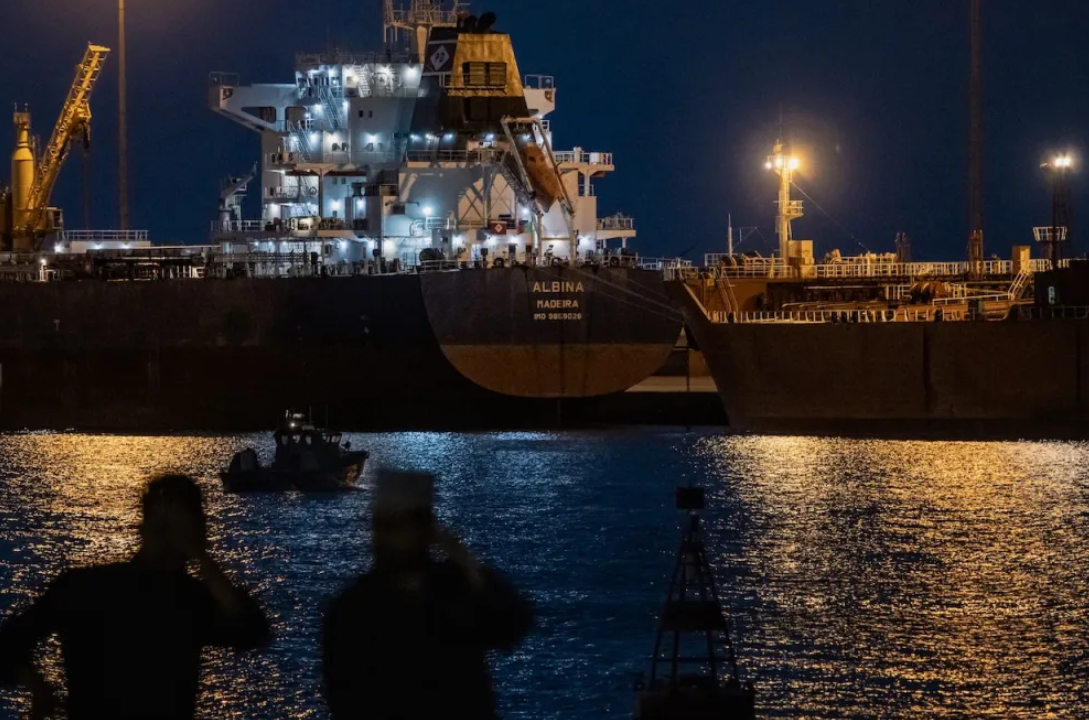
The Strait of Hormuz remains one of the most closely watched chokepoints in global energy markets. It is not fully open, but it is not completely closed either. In recent weeks, a small number of ships, including large tankers carrying crude oil and liquefied natural gas, have managed to cross the dangerous waterway by using high-risk tactics, including sailing “dark” without their automatic tracking systems.
This development matters because the Strait of Hormuz is central to global oil and gas flows. Before the war, more than 100 ships could pass through the channel in a typical day. Now, only a small number are getting through, creating a narrow relief valve for energy markets but not enough to restore normal trade.
For oil traders, insurers, shipping companies and governments, these dark transits show how fragile the current situation has become. Ships are moving, but under conditions that increase collision risk, insurance costs, crew stress and geopolitical tension. The market is no longer dealing only with supply and demand. It is also pricing navigational danger, military coordination, mine threats, drone attacks and the political leverage of Iran.
In maritime markets, sailing “dark” means a vessel turns off its Automatic Identification System, or AIS. AIS is a navigational beacon that allows ships to identify one another, share location data and reduce the risk of collision. It is a core safety tool for commercial shipping.
When a ship turns off AIS, it becomes harder to track electronically. That can reduce the chance of being targeted in a hostile environment, but it also creates new dangers. Other vessels may not see it on electronic systems, and the crew must rely more heavily on radar, experience and direct navigation judgment.
In the Strait of Hormuz, some ships are also turning off lights while passing through dangerous waters. The goal is to make the vessel less visible and less vulnerable to Iranian attacks. But this tactic is not routine commercial navigation. It is closer to wartime movement through a contested maritime corridor.
For traders, the fact that vessels are taking these measures shows that the strait remains highly unstable. A route that normally supports a large share of global energy trade is now being crossed through improvised, risky and often military-assisted methods.
U.S. Military Coordination Becomes Part of Shipping
Some ships moving through the strait have reportedly remained in contact with U.S. military officials. U.S. forces use radar, drones and other surveillance tools to monitor traffic and help vessels pass through safely. In some cases, U.S. officials advise shipowners when to go dark and how to respond to Iranian threats.
This changes the nature of commercial shipping in the region. In normal conditions, tankers and cargo vessels rely on shipping companies, port authorities, pilots, insurers and standard navigational procedures. In the current environment, military coordination has become part of the risk-management process.
That creates both protection and exposure. On one hand, U.S. monitoring can help ships avoid mines, drones, missile sites or hostile boats. On the other hand, vessels perceived as working with U.S. forces could be viewed as more politically sensitive targets.
This is one reason insurers do not all treat naval escort the same way. Some may see military support as reducing risk. Others may see it as increasing the chance that a ship becomes a target. That divergence shows how difficult pricing maritime risk has become.
Iran’s Leverage Depends on Control of the Strait
The movement of ships through Hormuz is also a test of Iran’s leverage. Tehran has used control over the waterway as a strategic tool during negotiations with the United States. Freedom of navigation remains one of the central issues in the talks.
Iranian state media has said the Islamic Revolutionary Guard Corps Navy will maintain control and management of the waterway. Iran has also insisted that it should play a role in approving ship traffic and may seek to charge tolls.
The U.S. has pushed back strongly against that position. Washington recently imposed sanctions on the Persian Gulf Strait Authority, an Iranian entity created to screen and charge commercial vessels seeking to cross the strait.
For markets, the key issue is not only whether some ships can escape. It is whether Iran can maintain enough control to keep energy markets under pressure. If shipowners believe they need Iranian approval, U.S. military coordination or risky dark transits to move cargo, the strait is not functioning normally.
That abnormality supports a risk premium in oil prices.
Mine Threats and Drone Activity Keep Risk Elevated
The danger is not theoretical. According to the report, the IRGC attempted to lay sea mines in the past week and fired five one-way attack drones. U.S. Central Command responded by sinking IRGC mine-laying boats and striking missile and drone sites, describing the actions as defensive.
Even if both sides maintain that a ceasefire is technically still in place, these incidents show that the maritime environment remains active and dangerous. A ceasefire on paper does not guarantee safe passage through a contested waterway.
Sea mines are especially disruptive because they create uncertainty even when no attack is underway. A single suspected minefield can slow traffic, increase insurance costs and require specialized clearance operations. Drone threats create a different problem: ships and escorts must constantly monitor the airspace, while crews operate under elevated stress.
For oil markets, this means the risk is not binary. The question is not simply whether the strait is open or closed. There are degrees of disruption. A partially functioning strait with sporadic attacks, dark shipping and military escorts can still keep energy prices higher than normal.
Project Freedom Left a Limited Safe Route
A small number of ships have reportedly used a route cleared earlier this month by U.S. forces under the short-lived “Project Freedom.” That operation involved U.S. naval and air escorts and aimed to reopen a passage through the Gulf. It was halted after Iran began attacking vessels and Saudi Arabia restricted U.S. access to its bases and airspace.
Although the operation did not last, it left behind a relatively safer path. U.S. forces had used underwater robots to clear mines in preparation for the mission.
Some vessels have since taken advantage of that route, particularly along the Omani coast. A Greek supertanker carrying two million barrels of crude reportedly communicated with U.S. officials while crossing the waterway after being stuck in the Gulf since early March. The ship is now headed to India.
This kind of movement matters for energy flows, but it remains limited. Only a small number of vessels have used the U.S.-designated path, while many others have followed Iran-specified routes closer to Iran’s coast or passed dark, making them harder to track.
The result is a fragmented shipping environment. There is no single reliable, broadly trusted route.
Financial Pressure Forces Shipowners to Move
Hundreds of ships remain stuck in the Gulf, and the financial pressure to move is significant. Large crude carriers can cost $10,000 to $15,000 a day in fuel and crew expenses while sitting idle. Insurance costs have surged, and crews are being paid war premiums, sometimes double normal rates.
For shipowners, waiting is expensive. But moving is dangerous. This creates a difficult calculation: accept the cost of delay or attempt a high-risk transit through a contested waterway.
Clients are also pressuring shipowners to move cargo. According to the report, Greek shipowners who recently managed to get vessels through have been contacted by clients asking whether they can move other cargoes in the same way.
This is how partial reopening pressure builds. Once a few ships succeed, others try to follow. But each transit remains exposed to military incidents, miscommunication, insurance disputes and navigational hazards.
Markets should not confuse isolated successful crossings with full normalization.
Insurance Costs Reflect a War-Zone Market
The insurance market shows how serious the risks have become. War-zone shipping insurance rates are now around 2.5% to 4% of a vessel’s value, compared with about 0.25% in peacetime, according to the figures cited.
That is a dramatic change. A $100 million vessel could face an insurance cost of roughly $3 million for a transit, although ships that successfully pass through may get around 50% of the fee returned.
This structure creates an unusual incentive. Insurers charge high upfront premiums because the risk is severe, but successful passage can reduce the final cost. Still, even discounted war-risk insurance is far more expensive than normal maritime coverage.
Higher insurance costs eventually affect the broader energy system. They can raise freight rates, increase delivered fuel costs and discourage some operators from moving cargo at all. When insurance becomes expensive or unevenly available, physical supply chains become less efficient.
This supports the idea that the oil market may continue to price a risk premium even when some cargoes are moving.
Sailing Without AIS Creates Safety Risks
Dark shipping may reduce exposure to hostile targeting, but it increases navigational danger. Without AIS, ships cannot easily identify one another on electronic charts. Radar remains useful, but it requires skill and constant attention. It also does not show vessel names, which complicates communication and coordination.
In a narrow and busy waterway like the Strait of Hormuz, this matters. Ships need to anticipate the movement of other vessels, avoid collisions and respond quickly to changing conditions. If multiple ships are moving dark at the same time, the risk of misunderstanding grows.
This is especially concerning when large tankers are involved. Very large crude carriers and LNG tankers are difficult to maneuver quickly. A collision, grounding or accidental incident could create both environmental and market consequences.
The market often focuses on military risk, but navigational risk is also significant. A major accident in a dark transit environment could disrupt traffic even without a deliberate attack.
Why This Matters for Oil Prices
Oil prices are shaped by expectations, not only current supply. If traders believe the Strait of Hormuz is only partially usable, they will price higher risk into crude futures. Even if a few ships get through, the market will ask whether the flow is reliable, scalable and safe.
Current dark transits suggest that the system is functioning under stress. They provide limited relief but do not restore pre-war capacity. Before the conflict, more than 100 ships could pass daily. Now, the number is far smaller, and traffic can stop when military skirmishes break out.
This creates a floor under oil prices. Any sign of successful crossings may ease panic, but persistent danger prevents a full return to normal pricing. The market will need to see consistent, transparent and safe vessel movement before risk premiums decline meaningfully.
For energy importers, especially in Asia, the uncertainty is critical. Countries that depend on Gulf crude and LNG need stable shipping routes. If they cannot rely on normal Hormuz traffic, they may seek alternative routes, build inventories or pay more for supply security.
The Hormuz situation affects more than crude oil. LNG flows, refined products, fertilizer cargoes and broader shipping routes are also exposed. One vessel cited in the report carried fertilizer from the United Arab Emirates to Brazil after being stuck for nearly three months.
This shows how the crisis can affect food and agriculture supply chains as well as energy. Fertilizer costs influence crop production, and shipping delays can affect global trade flows.
For equity markets, the impact can vary by sector. Energy producers may benefit from higher oil prices. Airlines, shipping customers, chemical companies and consumer sectors may face margin pressure. Defense and maritime security companies may see increased demand. Insurers and reinsurers must manage unusual exposure.
For central banks, prolonged energy disruption can complicate inflation policy. If oil and fuel prices stay elevated, inflation expectations may remain sticky even if other categories cool.
What Traders Should Watch Next
Traders should monitor four key signals.
The first is the number of successful ship transits. A gradual increase in crossings could suggest that the relief valve is widening. A decline or sudden halt would signal renewed stress.
The second is whether ships are using Iranian-approved routes, U.S.-cleared routes or dark transits. The route matters because it reveals who has operational influence over the strait.
The third is insurance pricing. If war-risk premiums fall, it may indicate improving confidence. If they rise further, shipping companies may become more reluctant to move.
The fourth is military activity. Mine-laying attempts, drone launches, U.S. defensive strikes or missile-site activity can quickly change the market narrative.
The fifth is diplomacy. If the U.S. and Iran reach a framework that guarantees free navigation without tolls or screening by Tehran, oil risk premiums could ease. If Iran insists on controlling traffic, volatility may persist.
Ships sailing dark through the Strait of Hormuz show that the waterway is not fully closed, but they also confirm that it is far from normal. A handful of tankers and cargo vessels are moving through dangerous waters with reduced visibility, military coordination, elevated insurance costs and significant navigational risk.
For oil markets, this creates a fragile middle ground. The successful movement of some vessels provides limited relief, but the lack of a stable, open and trusted shipping corridor keeps risk premiums alive. Traders are not only watching barrels; they are watching mines, drones, escorts, insurance rates and diplomatic language.
The Strait of Hormuz remains a pressure point for the global economy. Until shipping returns to a transparent and predictable rhythm, oil prices are likely to remain sensitive to every headline from the Gulf. Dark transits may help some vessels escape, but they are not a substitute for true freedom of navigation.