Bitcoin recovered to around $78,100 as traders prepared for an unusually concentrated week of monetary-policy decisions and U.S. crypto legislation. The Federal Reserve, Bank of England and Bank of Japan are all scheduled to announce interest-rate decisions within days of one another, while the U.S. Senate is expected to hold a procedural vote on the Digital Asset Market Clarity Act before the Fed publishes its decision. Bitcoin traded at $78,122 on Sept. 14, gaining 1.7% over 24 hours after falling as low as $76,439. It reached an intraday high of $78,276 but remained below $80,000, a level that has rejected several recent advances.
The broader crypto market also moved higher ahead of the policy announcements. Ethereum gained 1.6% to $2,523.75, XRP advanced 4.5% to $1.40 and Filecoin recorded the strongest move among the assets cited, rising 23% to just above $1. The rebound comes as traders attempt to position around a sequence of events that could change expectations for borrowing costs in the United States, United Kingdom and Japan while also affecting the regulatory outlook for digital assets in Washington.
Fed expectations changed sharply before the meeting
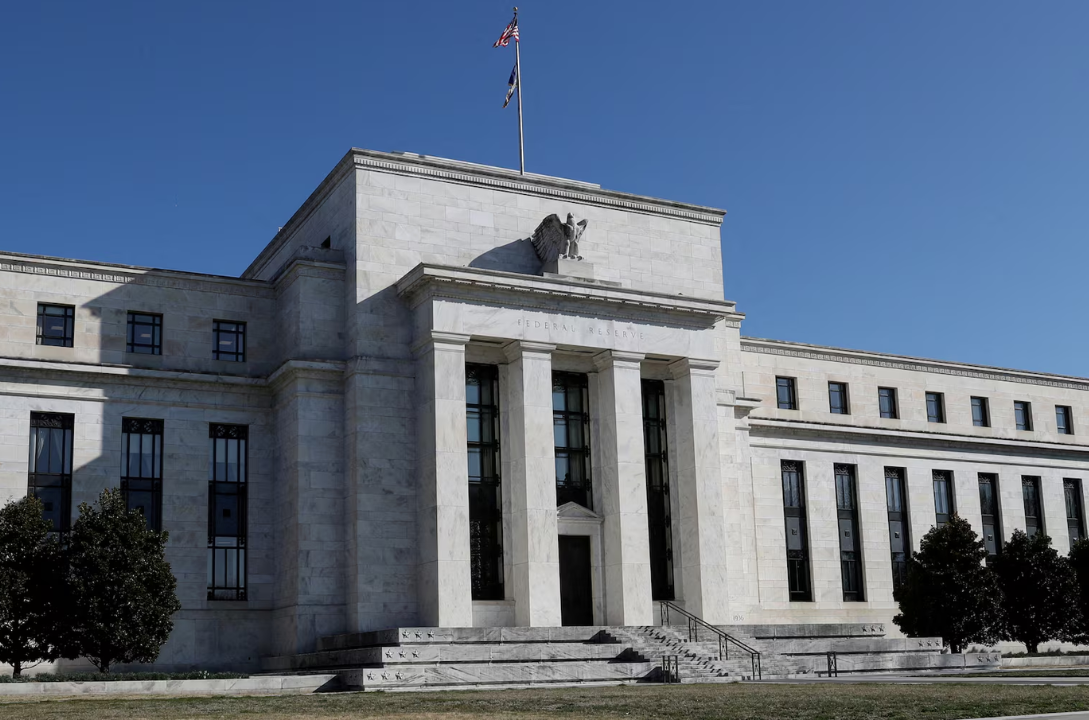
The Federal Open Market Committee meets on Sept. 15 and 16 with the federal funds target range currently at 3.50% to 3.75%. A 25-basis-point increase would lift the range to 3.75% to 4.00%, although the committee has not confirmed that such a move will occur. Interest-rate markets assigned an 87% probability to a September increase, according to Reuters, reflecting a sharp shift in expectations after the latest U.S. inflation data.
Only days earlier, nearly 70% of economists surveyed by Reuters had expected the Fed to leave rates unchanged. August inflation figures and higher energy costs led several banks to revise their forecasts before the meeting. Goldman Sachs and JPMorgan now expect a quarter-point increase. JPMorgan also projects another increase in December, while Goldman expects two reductions in 2027. Those forecasts are the banks’ own assessments and do not represent an agreed Federal Reserve path.
Bitcoin had already moved back above $78,000 when September hike odds reached 81% after the U.S. consumer price report. The probability continued to rise as traders adjusted their positions, showing how quickly expectations have changed ahead of Wednesday’s announcement.
The decision is only one part of Wednesday’s Fed event
The interest-rate announcement will be accompanied by an updated Summary of Economic Projections. That document contains policymakers’ forecasts for economic growth, unemployment, inflation and the federal funds rate. Its interest-rate projections are commonly known as the dot plot because each participating official places a point beside the rate level they consider appropriate.
The chart does not bind the committee to any future decision, and the individual projections do not reveal the names of the officials who submitted them. Still, the new projections will give markets a clearer view of how policymakers currently see the path of rates after September.
Fed Chair Kevin Warsh is scheduled to hold a press conference 30 minutes after the statement. Questions are expected to focus on persistent inflation, labor-market conditions and the likely direction of borrowing costs following the September meeting. Traders will therefore be watching both the headline decision and the language used to explain it.
U.S. economic releases add more variables
Several U.S. economic indicators are scheduled around the central-bank decision. Retail sales and import-price data are due earlier Wednesday. Initial unemployment claims and the Philadelphia Federal Reserve’s manufacturing index are scheduled for Thursday, followed by industrial production figures on Friday.
Crypto markets remain open continuously through all of these releases. That means Bitcoin, Ethereum and other assets can react immediately as information enters the market. However, timing alone cannot establish that a particular economic release caused a price move. Crypto prices can respond to multiple factors simultaneously, including positioning, expectations and developments elsewhere in the market.
Earlier analysis identified the $80,000 to $83,000 range as an important resistance zone for Bitcoin. On Monday, the cryptocurrency remained below the lower end of that range despite recovering from its recent low.
Bitcoin enters the Fed meeting below a repeatedly tested level
The failure to reclaim $80,000 gives the market an important reference point heading into the policy decision. Bitcoin reached $78,276 during the day but could not move through the threshold that has rejected several recent attempts.
That does not establish how the cryptocurrency will react once the Fed announces its decision. A quarter-point increase is already heavily priced by interest-rate markets, which means the reaction could depend not only on the rate move itself but also on whether the statement and new projections differ from expectations.
Past price movements cannot provide a reliable prediction either. The market’s reaction will depend on what is announced, how much of that outcome was already reflected in prices and what investors conclude from the accompanying language.
Bank of England expected to keep rates unchanged
The policy focus shifts to the United Kingdom on Sept. 17. The Bank of England’s current Bank Rate is 3.75%, while U.K. inflation stands at 2.9%, above the central bank’s 2% target.
Economists surveyed by Reuters generally expect the Monetary Policy Committee to keep the rate unchanged at 3.75% at Thursday’s meeting. Goldman Sachs, however, now forecasts a quarter-point increase in November after previously expecting the BOE to wait longer.
Markets have priced approximately 47 basis points of U.K. rate increases through the end of 2026. That pricing can change as traders reposition and should not be interpreted as a guarantee of how policymakers will vote.
For crypto markets, the BOE decision follows directly after the Fed, creating a second major monetary-policy event within 24 hours. The result could add another layer to global expectations around borrowing costs.
Japan could deliver the largest policy shift of the week
The Bank of Japan meets on Sept. 17 and 18. Its current target for the overnight call rate is around 1%, following a rate increase approved in June.
Analysts cited by the Financial Times expect the BOJ to raise the rate by another 25 basis points to 1.25%. If that happens, Japan would reach its highest policy rate in 31 years. The central bank will not announce its decision until Friday, so the expected increase remains a market forecast rather than a confirmed policy move.
Japan’s monetary decisions have attracted attention from crypto traders before. Bitcoin fell roughly 3% within hours of an earlier January increase that took the rate to 0.75%, according to market data cited in the report. That previous reaction does not determine how Bitcoin will respond this time.
The outcome may depend on whether the BOJ meets expectations, surprises markets or changes the language surrounding future policy.
Three central banks create a concentrated macro calendar
The significance of the week comes from the sequencing. The Federal Reserve announces first, followed by the Bank of England and then the Bank of Japan. Each institution enters its meeting with a different domestic backdrop and a different set of expectations.
The Fed faces markets that have rapidly shifted toward expecting a hike. The BOE is broadly expected to hold even though U.K. inflation remains above target. The BOJ is expected by some analysts to tighten further and potentially take rates to a 31-year high.
For Bitcoin traders, these decisions arrive close enough together that market positioning around one announcement may overlap with preparations for the next. That creates a dense macroeconomic calendar in which expectations can change quickly.
Crypto markets are already showing uneven strength
Bitcoin’s 1.7% rebound was relatively modest compared with some other assets. XRP rose 4.5%, while Filecoin climbed 23%. Ethereum gained 1.6%.
Those differences show that the market is not moving uniformly. Even when central-bank policy dominates the macro calendar, individual crypto assets can experience significantly different price changes.
The rebound therefore should not be treated as evidence that all digital assets are reacting identically to interest-rate expectations. Bitcoin remains the primary reference point in the current macro discussion because of its size and sensitivity to global liquidity conditions, but other tokens continue to follow their own market dynamics.
The CLARITY Act adds a regulatory event before the Fed
Before Wednesday’s monetary-policy decision, the U.S. Senate is expected to hold a procedural vote on the Digital Asset Market Clarity Act on Sept. 15 at 2:15 p.m. Eastern Time.
The vote requires 60 senators to advance the legislation. Senators Cynthia Lummis, Tim Scott and John Boozman released the final text on Sept. 14 and said it would be offered as a substitute amendment if the Senate votes to invoke cloture.
Passing the procedural vote would not mean the legislation has received final Senate approval. It would begin formal consideration, leaving lawmakers able to debate the measure, propose amendments and hold additional votes.
The 635-page proposal includes revised government ethics language as well as provisions related to stablecoin rewards, decentralized finance and commodity regulation.
Bipartisan support remains uncertain
Republicans described the latest version as their final offer to Democrats, while the level of bipartisan support remained uncertain on Monday. That uncertainty is important because the procedural vote requires 60 votes.
Several provisions remain exposed to possible changes, including sections addressing presidential ethics, stablecoin rewards and decentralized protocols.
Even if the Senate eventually passes the legislation, any amendments would require further action by the House before a final bill could reach President Donald Trump. The House has removed voting sessions that had been scheduled for the weeks of Sept. 21 and Sept. 28.
The regulatory process therefore remains separate from the immediate monetary-policy calendar, but both events are arriving in the same week and can influence sentiment across digital-asset markets.
A week where policy risk comes from several directions
Bitcoin enters this sequence at approximately $78,100, below the resistance area that has limited recent advances but above the low reached earlier in the day. The market now faces policy uncertainty from both central banks and lawmakers.
A Fed increase is considered highly likely by interest-rate markets, but the decision is not official. The BOE is generally expected to hold at 3.75%, while the BOJ could raise rates to 1.25%. Meanwhile, the Senate’s CLARITY Act vote could determine whether a major U.S. crypto-market bill advances to formal consideration.
None of these events guarantees a specific Bitcoin reaction. Markets may already reflect part of the expected outcomes, and price changes around announcements can have more than one cause.
What is clear is that the week concentrates several events capable of changing expectations about interest rates and digital-asset regulation within a very short period. Bitcoin’s recovery to $78,122 places it back near a closely watched resistance zone, but the next move will occur against a calendar dominated by decisions from Washington, London and Tokyo.