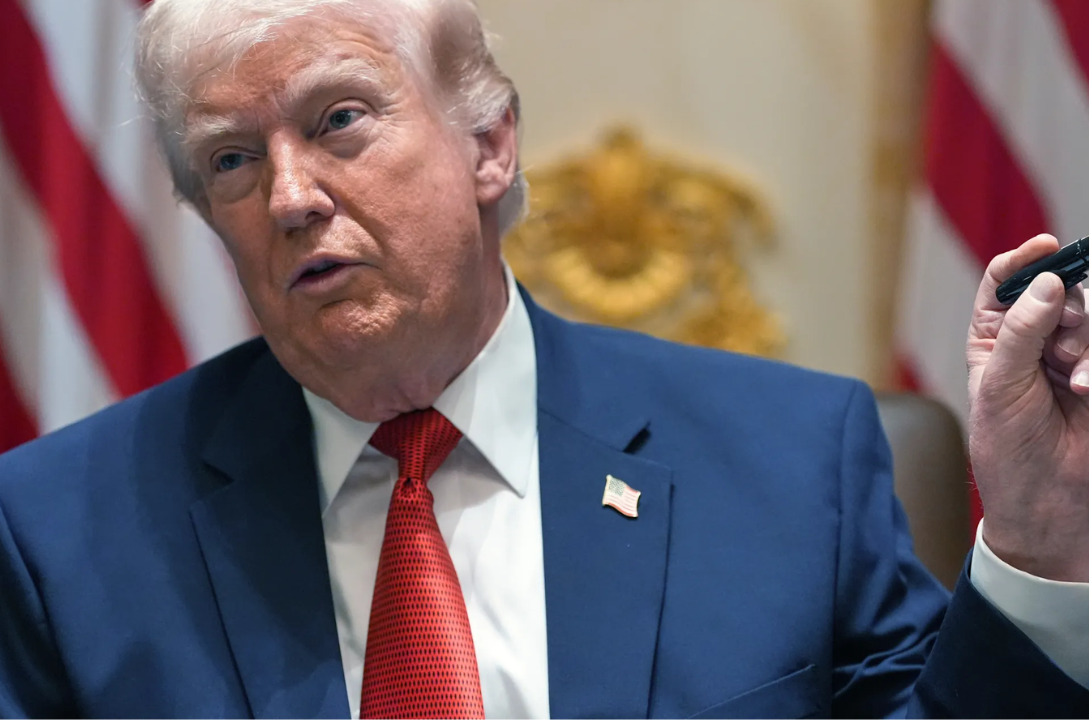
President Donald Trump has rejected claims that the United States will pay Iran hundreds of billions of dollars under the new US-Iran framework agreement, calling the reports fake news. Yet despite that denial, digital assets have entered the market conversation because traders are debating whether any future reconstruction funding, sanctions relief or Gulf-backed investment mechanism could involve Bitcoin, stablecoins or other crypto rails.
The confusion centers on a preliminary memorandum of understanding that Washington and Tehran are expected to formally sign on June 19. The framework is intended to move the two countries toward a broader settlement after months of conflict, while also addressing nuclear commitments, inspections, economic normalization and the reopening of the Strait of Hormuz.
A figure of $300 billion has circulated in political and market discussion. Vice President JD Vance said Iran could access such funds only if it honored its commitments, and that any money would come from Gulf states rather than US taxpayers. Trump, however, pushed back strongly against claims that the United States itself would pay Iran, saying the story was false.
No public version of the draft framework currently mentions a fixed payout. No public text mentions digital assets either. Still, crypto has become part of the debate because Iran has a history of using digital-asset channels to reduce the impact of sanctions, and because traders often connect geopolitical funding, capital controls and sanctions relief with Bitcoin or stablecoin flows.
What the $300 Billion Figure Really Means
The first point is that the $300 billion figure should not be treated as a confirmed direct payment from the United States to Iran. Based on the available comments, the number refers to a possible reconstruction or investment pool that Iran could access only if it complies with the obligations in the framework.
Vance described the funding as something Iran could reach if it honored its side of the agreement. He also said it would be funded by Gulf states, not by American taxpayers. That distinction matters because it changes the political and financial interpretation of the proposal.
A direct US payment to Iran would be highly controversial domestically. A Gulf-backed reconstruction or investment mechanism, conditional on compliance, would be different. It would still be politically sensitive, but it would not represent the same fiscal burden or diplomatic structure.
Trump’s denial focused on the idea that the United States is paying Iran. He rejected that claim while emphasizing Iran’s pledge not to pursue nuclear weapons. The messaging indicates that the White House wants to frame the agreement as a performance-based security deal rather than a financial concession.
The emerging framework appears to be structured around performance. Iran would receive economic benefits only if it complies with commitments linked to nuclear limits, weapons inspections and regional stability.
That design is important. It allows the United States and its partners to argue that Iran is not being rewarded upfront. Instead, any benefits would depend on measurable behavior. The likely conditions include no nuclear weapon, cooperation on inspections, treatment of enriched uranium, and non-disruption of maritime navigation through the Strait of Hormuz.
This kind of structure is intended to reduce political criticism. It gives supporters of the deal a way to say that economic normalization is conditional, reversible and tied to security outcomes.
But it also creates implementation risk. A performance-based agreement requires clear standards, credible verification and defined consequences. If Iran and the United States disagree over whether obligations have been met, the funding mechanism could quickly become another source of dispute.
Why Crypto Became Part of the Conversation
Crypto entered the discussion even though no public text of the framework mentions Bitcoin, stablecoins or blockchain-based payment systems. The reason is Iran’s history.
Iran has used crypto markets for years as one way to reduce the impact of financial restrictions. Digital assets can be attractive to sanctioned actors because they can move across borders, settle outside traditional banking channels and operate through decentralized or lightly regulated infrastructure.
That does not mean crypto is immune to enforcement. On the contrary, US authorities have increasingly targeted crypto platforms, wallets and intermediaries linked to sanctions evasion. But Iran’s past activity makes traders more likely to speculate about whether any future financial arrangement could touch digital assets.
The US Treasury recently blacklisted Iranian crypto platforms, including Nobitex, described as Iran’s largest exchange. Treasury said Nobitex processed a large share of Iran’s crypto inflows in 2025, including flows linked to the Islamic Revolutionary Guard Corps. This enforcement history keeps crypto close to the Iran sanctions discussion.
Bitcoin and Stablecoin Speculation
The online speculation has focused mainly on Bitcoin and stablecoins. Bitcoin is often discussed in geopolitical contexts because it is global, liquid and not issued by a government. Stablecoins are discussed because they can function as dollar-linked settlement instruments outside traditional correspondent banking.
If Iran were to receive Gulf-backed reconstruction funding, traders naturally asked whether any portion could move through digital assets. However, there is no public evidence that the framework includes a crypto payment channel.
For now, this remains speculation. The actual agreement appears to revolve around conventional state diplomacy: sanctions waivers, oil sales, banking services, shipping, insurance and nuclear commitments. These are traditional financial and diplomatic instruments, not crypto-native mechanisms.
Still, stablecoins remain relevant to the broader debate because sanctioned economies and cross-border traders often look for alternatives when banking access is restricted. That is why crypto speculation can appear even when an agreement does not mention digital assets.
Iran’s Crypto Record Keeps the Issue Alive
Iran’s crypto history makes the market conversation more plausible. Tehran has previously been linked to crypto mining, exchange activity, sanctions circumvention and discussions around nontraditional payment systems.
The report also noted that Iran had floated Bitcoin tolls for ships crossing the Strait of Hormuz. Even if such ideas remain outside any formal agreement, they contribute to the perception that digital assets could become part of the regional financial toolkit.
For traders, the logic is straightforward. If an agreement involves sanctions relief, oil sales, shipping access and reconstruction funding, then payment rails matter. If traditional rails are constrained or politically sensitive, crypto becomes part of the speculative discussion.
But there is a major difference between speculative discussion and policy adoption. Any formal use of digital assets in a US-Iran framework would face intense scrutiny from regulators, Congress, banks, Gulf partners and international compliance bodies.
Stablecoins Would Face Major Compliance Questions
If stablecoins were ever considered in relation to Iran-linked funding, compliance would be the central obstacle. Dollar-backed stablecoins usually depend on regulated issuers, reserve banking relationships and access to US financial infrastructure.
That makes them vulnerable to sanctions enforcement. Issuers can freeze addresses, block sanctioned entities and cooperate with regulators. This limits the ability of a sanctioned state to use major compliant stablecoins openly.
More opaque channels exist, but they carry higher legal and operational risks. For any official reconstruction mechanism, Gulf states and financial partners would almost certainly prefer channels that can be audited, supervised and defended politically.
That is why the most likely path for any formal funding remains traditional: sanctions waivers, approved banking channels, monitored transfers, oil revenue mechanisms and insurance permissions. Crypto may remain a market narrative, but official adoption would be far more complex.
Bitcoin’s Market Reaction Reflects Risk Sentiment
Bitcoin’s price reaction appears more connected to broader risk sentiment than to any confirmed role in the agreement. The ceasefire optimism helped Bitcoin reach a two-week high and triggered the liquidation of roughly $246 million in short positions.
That kind of move is consistent with how Bitcoin often trades during macro shocks. When geopolitical risk falls, investors may move back into risk assets. Oil declines can reduce inflation fears, which can support expectations for easier financial conditions. Both dynamics can help crypto.
In this case, Bitcoin benefited from the same relief impulse that supported other risk-sensitive markets. The move does not necessarily mean traders expect Bitcoin to be used in the US-Iran framework. It may simply reflect lower war-risk pricing and forced short-covering.
Still, the combination of geopolitical headlines, sanctions history and crypto-market positioning made the rally more visible.
Why the June 19 Signing Matters
The formal signing expected on June 19 is the next key event. Until then, the gap between Trump’s denial, Vance’s performance-based explanation and Tehran’s messaging will likely keep speculation alive.
The text matters because it should clarify whether there is any fixed funding amount, who would provide it, what conditions Iran must meet, what sanctions waivers are included, and whether oil, banking, transport and insurance permissions take effect immediately.
It should also clarify whether digital assets have any official role. At present, there is no public indication that they do. If the text does not mention crypto, then the market narrative will likely shift back toward sanctions, oil flows, nuclear inspections and Hormuz.
If the agreement includes vague language around alternative payment systems, monitored settlement channels or reconstruction finance, speculation may continue.
Political Messaging Is Driving Market Confusion
The confusion also reflects different political incentives. Trump wants to present the agreement as a security victory, not a financial giveaway. Vance wants to frame any economic benefit as conditional and funded by Gulf partners. Iran may emphasize access to money, oil sales and normalization to show domestic audiences that the agreement produces tangible benefits.
Those messages are not necessarily incompatible, but they create ambiguity. A conditional Gulf-backed investment pool can be described by one side as reconstruction support, by another as performance-based access, and by critics as a payout.
Markets dislike ambiguity when large numbers are involved. That is why the $300 billion headline quickly attracted attention from crypto traders, sanctions analysts and political commentators.
What Investors Should Watch Next
The first point to watch is the public text of the memorandum. Investors need to know whether the $300 billion figure appears anywhere in the actual document.
The second point is the funding source. If Gulf states are expected to provide capital, the structure, timing and conditions will matter.
The third factor is sanctions relief. Any waiver involving oil, banking, insurance or transport services could have major implications for energy markets and Iran’s external finances.
The fourth point is crypto enforcement. If Iran-linked platforms remain under pressure from the US Treasury, official crypto usage in the framework becomes less likely.
The fifth factor is Bitcoin’s reaction after the signing. If the agreement reduces geopolitical risk, Bitcoin may continue trading as a risk asset. If the deal disappoints or creates new uncertainty, volatility could return.
Trump has denied that the United States will pay Iran $300 billion, while Vice President JD Vance has framed any potential funding as conditional, performance-based and supplied by Gulf states rather than US taxpayers. No public version of the framework currently confirms a fixed payout, and no public text mentions crypto.
Digital assets entered the conversation because of Iran’s past use of crypto to navigate sanctions, recent US enforcement against Iranian platforms and trader speculation around alternative payment rails. Bitcoin’s rally appears tied mainly to ceasefire optimism and broader risk appetite, not to a confirmed role in the agreement.
The crypto angle in the US-Iran framework remains speculative. The real issues are sanctions relief, oil sales, nuclear commitments, Gulf-backed funding and the reopening of Hormuz. Until the June 19 signing clarifies the text, traders will continue debating whether Bitcoin or stablecoins could play any role. For now, there is no public evidence that they do.