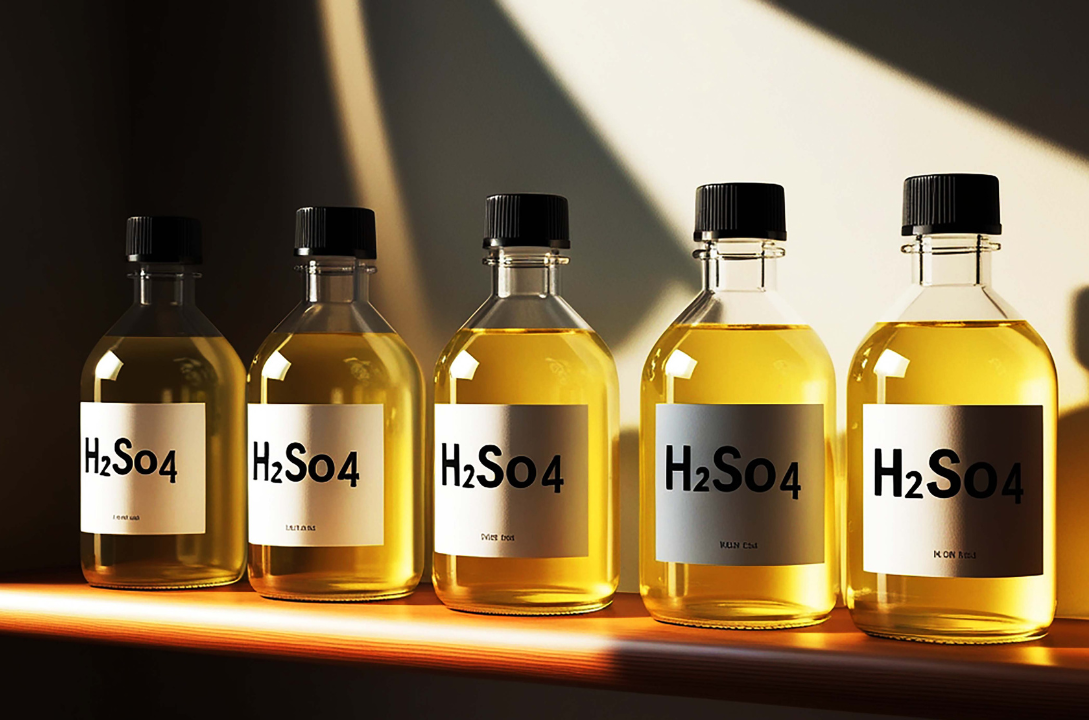
Sulfuric acid, the world’s most widely used industrial chemical, is becoming a new pressure point in global supply chains. The war in the Persian Gulf, the closure of the Strait of Hormuz and new Chinese export restrictions have pushed prices sharply higher, raising concerns across several critical industries, from fertilizer and copper to semiconductors, batteries, water treatment and clean-energy infrastructure.
The issue matters because sulfuric acid sits deep inside the industrial economy. Most consumers never see it directly, except perhaps in drain-cleaning products. But factories, miners, fertilizer producers, steel processors, municipal utilities and chipmakers depend on it every day. When sulfuric acid becomes scarce or expensive, the pressure can move quietly through supply chains before showing up in higher costs for food, metals, electronics, batteries and infrastructure.
The latest disruption began with the war in the Persian Gulf, which has restricted flows of sulfur and sulfuric-acid-related supply through one of the world’s most important energy corridors. China, worried about fertilizer prices and food security, has added export controls that further tighten the market. The result is a supply shock in a chemical that many industries cannot easily replace.
Why Sulfuric Acid Matters So Much
Sulfuric acid is often described as the most consumed chemical in the world because it is used in an unusually wide range of industrial processes. It helps produce phosphate fertilizers, leach copper and other metals from ore, pulp wood, pickle steel, tan leather and vulcanize rubber. It is also used in municipal water treatment, battery production, semiconductor manufacturing and several consumer-product supply chains.
The chemical is produced mainly in two ways. One route comes from smelting and refining nonferrous metals such as copper and nickel. Another comes from burning sulfur, which is often generated as a byproduct of oil and gas processing.
That link to oil and gas is now especially important. A large share of global sulfur supply comes from Persian Gulf refineries and gas plants. When transportation through the region is disrupted, sulfur availability tightens. That then affects sulfuric acid production, which affects downstream users.
This makes sulfuric acid a hidden but essential industrial input. It is not as visible as crude oil, copper or wheat, but it supports all three categories indirectly: energy processing, metals extraction and food production.
The Strait of Hormuz Disruption Raises Supply Risk
The Strait of Hormuz is central to the current shortage concern. When a key corridor for oil, gas and related byproducts becomes restricted, the effects extend beyond fuel markets. Sulfur flows are also affected because Gulf energy infrastructure is a major source of sulfur.
Sulfuric acid is highly corrosive and difficult to move. It requires special tanks, careful handling and dedicated logistics. That makes the market less flexible than more easily transported commodities. Users also tend not to store very large amounts because storage is costly and technically demanding.
This creates a fragile supply structure. Many users may have only a few weeks of supply planned in their pipeline and storage systems. If trade routes are blocked, delayed or rerouted, shortages can develop quickly.
That is why the current disruption has become more serious. It is not simply a pricing issue. It is a logistics issue, a storage issue and a supply-chain reliability issue.
China’s Export Controls Add More Pressure
China’s decision to restrict sulfur exports has added another layer of pressure. China is the world’s largest sulfur producer, and its policy response appears tied to concerns over fertilizer stability and food security.
That logic is straightforward. Sulfuric acid is critical for phosphate fertilizer production. If sulfur and sulfuric acid prices rise too sharply, fertilizer costs can increase. Higher fertilizer prices can then affect crop production costs and food inflation.
By restricting exports, China appears to be prioritizing domestic supply stability. That may help protect its own fertilizer market, but it tightens availability for countries that depend on imported sulfur or sulfuric acid.
The countries likely to feel the strongest impact include Chile and Indonesia. Both are major players in critical minerals, and both depend on sulfur or sulfuric acid flows for important parts of their mining sectors.
Chile’s Copper Sector Is Exposed
Chile is the world’s top copper producer and imports more sulfuric acid than any other country. The chemical is used there to leach copper from large heaps of ore. This process is essential for extracting copper from certain deposits, especially in large-scale mining operations.
Since the fighting began, sulfuric acid prices in Chile have more than doubled. That creates a direct cost problem for copper miners. If acid becomes too expensive or too scarce, miners may slow production, delay processing or face margin pressure.
This matters far beyond Chile. Copper is one of the most important metals in the modern economy. It is used in power grids, housing, automobiles, data centers, renewable energy systems and industrial machinery.
Demand is also rising because artificial intelligence infrastructure, electrification and clean-energy investment require large amounts of copper. The biggest data centers require tens of thousands of metric tons of copper for wiring, busbars, transformers, circuit boards and electrical systems. If copper supply tightens further, prices could climb from already elevated levels.
Indonesia’s Nickel Industry Faces Pressure
Indonesia is another market vulnerable to sulfur and sulfuric acid disruption. The country is a major nickel producer, and nickel is used in stainless steel and electric-vehicle batteries. Many Indonesian nickel producers rely on sulfur from the Middle East.
Sulfur prices in Indonesia were already rising before the U.S. and Israel began bombing Iran at the end of February. Since then, prices have climbed more than 80%, according to industry pricing data cited in the report. Metals executives say some nickel miners have started reducing production.
This is important for the battery supply chain. Nickel remains a major input in several battery chemistries, especially higher-energy-density electric-vehicle batteries. Any disruption to Indonesian production can affect battery manufacturers, automakers and stainless-steel producers.
It also shows how the sulfur shortage is not isolated to one commodity. It can affect multiple strategic sectors at once: fertilizer, copper, nickel, batteries and clean-energy infrastructure.
Fertilizer Markets Face Food-Security Risk
The most sensitive impact may be fertilizer. Sulfuric acid is used to produce phosphate fertilizers, which are essential for agricultural productivity. If sulfuric acid becomes more expensive or less available, fertilizer production can slow or become costlier.
That can move into food markets. Higher fertilizer prices raise costs for farmers. If farmers use less fertilizer, crop yields can suffer. If they absorb the cost, food prices can rise. Either scenario can create political and economic stress.
China’s export restrictions appear to reflect this concern. Policymakers want fertilizer prices to remain stable because food security is a strategic priority. But when a major producer restricts exports to protect domestic supply, other countries can face greater pressure.
The risk is that a chemical shortage created by energy disruption becomes an agricultural cost shock. That is why sulfuric acid is attracting attention far beyond chemical markets.
The U.S. Is More Insulated, But Not Immune
The United States is relatively better protected than some other markets. Much of U.S. sulfuric acid demand is met by domestic oil refineries, domestic smelters and regional supply from Mexico and Canada. Canada also has large sulfur stockpiles near the Alberta oil sands, built during earlier periods of low prices.
That gives North America a buffer. But insulation is not immunity. If global copper production slows and copper prices rise, U.S. industries will still feel the impact. Data centers, homebuilders, automakers, utilities and manufacturers all use copper directly or indirectly.
The same applies to fertilizer and battery supply chains. Even when U.S. sulfuric acid supply is more secure, global shortages can push up costs for imported goods, critical minerals and agricultural inputs.
The modern economy is highly interconnected. A chemical shortage in one region can influence metals prices, food costs and clean-energy supply chains elsewhere.
Some Companies Benefit From Higher Prices
The shortage is not negative for everyone. Some producers are benefiting from higher sulfur and sulfuric acid prices. U.S. Gulf Coast refiners that process sulfur-heavy sour crude can now sell a byproduct that is in unusually strong demand.
Smelters can also benefit when they produce sulfuric acid as part of their operations. Ivanhoe Mines recently opened Africa’s largest copper smelter in the Democratic Republic of the Congo. The company said its Kamoa-Kakula smelter was generating about $1 million per day from sulfuric acid sales as prices surged.
This highlights an important market dynamic. The same shortage that pressures miners, fertilizer producers and industrial users can create windfalls for refiners and smelters with available acid supply.
For investors, this means the sulfuric acid shock creates winners and losers. Companies exposed to rising input costs may suffer, while producers of sulfur, acid or related byproducts may benefit.
Why Logistics Make This Shortage Harder to Solve
Sulfuric acid is not easy to substitute or transport. Its corrosive nature makes storage and shipping difficult. It needs dedicated tanks, careful regulatory handling and specialized infrastructure.
That means supply cannot quickly shift from one region to another without logistical friction. Even if there is available acid somewhere, moving it to the users who need it may be slow and expensive.
This distinguishes sulfuric acid from more flexible commodities. Some materials can be stored in large quantities, shipped easily or rerouted with limited handling constraints. Sulfuric acid does not fit that model.
The shortage can therefore persist even when total global production is not collapsing. The problem may be distribution, access, storage and regional imbalance.
Inflation Risk Could Spread Through Industrial Costs
Sulfuric acid shortages can also feed inflation indirectly. Fertilizer, copper, nickel, batteries, semiconductors, clean water systems and paper products all sit in broader supply chains. When input costs rise, companies may pass some of those costs to customers.
The effect may not appear immediately in consumer prices, but it can show up gradually. Higher fertilizer costs can affect food. Higher copper costs can affect construction, utilities, electronics and data centers. Higher nickel costs can affect batteries and stainless steel. Higher chemical costs can affect industrial production.
This is why chemical supply shocks matter for macroeconomic analysis. They can create cost pressures that are less visible than gasoline or electricity prices but still important.
If the Iran war continues and Chinese export controls remain in place, sulfuric acid could become another source of supply-side inflation.
Critical Minerals Production Is at Risk
The sulfuric acid shortage also intersects with the global push for critical minerals. Copper, nickel and other metals are central to electrification, battery production and infrastructure expansion. Many of these materials require chemical processing.
If sulfuric acid becomes scarce, production of some critical minerals can slow. That could complicate clean-energy supply chains just as demand is rising from electric vehicles, renewable power, grid upgrades and AI data centers.
This creates a strategic contradiction. Governments want to accelerate energy transition and technology infrastructure, but these goals depend on industrial chemicals and minerals that remain vulnerable to geopolitical disruptions.
The shortage is a reminder that critical mineral security is not only about mines. It is also about processing inputs, logistics, refining capacity and chemical availability.
What Investors Should Watch Next
Investors should watch several indicators in the coming weeks. The first is the status of the Strait of Hormuz and Persian Gulf shipping flows. Any improvement could ease pressure, while prolonged disruption would keep supply risk elevated.
The second is China’s export policy. If restrictions remain in place or tighten, global availability could worsen. If China relaxes controls, the market may stabilize.
The third is sulfur and sulfuric acid prices in Chile, Indonesia, the Middle East and China. These markets can show where pressure is most severe.
The fourth is production guidance from copper and nickel miners. Any announced cutbacks would confirm that chemical shortages are affecting critical-mineral output.
The fifth is fertilizer pricing. If phosphate fertilizer costs rise sharply, food-security concerns could intensify.
Finally, investors should monitor companies that may benefit from higher sulfuric acid prices, including refiners and smelters with excess supply.
The Iran war and Chinese export restrictions have turned sulfuric acid into a major supply-chain concern. As the world’s most consumed chemical, sulfuric acid is essential for fertilizer, copper, nickel, steel, water treatment, batteries, semiconductors and many everyday products.
The disruption is especially serious because sulfuric acid is hard to store, difficult to transport and deeply embedded in industrial production. Users often hold limited inventory, leaving them vulnerable when shipping routes or export flows are interrupted.
Chile’s copper industry, Indonesia’s nickel producers and global fertilizer markets are among the most exposed. The U.S. is better insulated by domestic and regional supply, but it can still be affected through higher global metals and food-related costs.
For markets, the lesson is clear: supply-chain risk is no longer limited to oil, gas or shipping rates. A shortage in a basic industrial chemical can ripple through food, metals, clean energy, artificial intelligence infrastructure and inflation. Until Persian Gulf flows normalize and China’s export restrictions ease, sulfuric acid will remain a quiet but powerful stress point in the global economy.