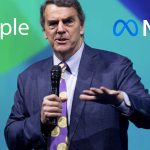
The crypto market loves oversized personalities, spectacular statements, and predictions that seem to defy all restraint. But even in an industry used to extremes, some comments attract more attention than others. That is exactly what happened with YoungHoon Kim, a highly active social media figure who has once again found himself at the center of discussion after a fresh series of aggressive posts about XRP, Bitcoin, and the broader digital asset market.
Kim, who has built a large online following by commenting on Bitcoin, XRP, and crypto market trends, recently drew attention with a rapid stream of posts in which he claimed, among other things, that he was the “Son of XRP,” that he was “born to send XRP to $100,” and that no one could stop him. In the same stretch, he also declared that “crypto is about to explode,” that altseason had arrived “100%,” that meme coins would pump first, and that Bitcoin was “basically a meme coin.”
These are not ordinary market comments. They are part of a much broader communication strategy built on certainty, provocation, and spectacle. Kim also leans heavily on another part of his public image: his claim that he has an IQ of 276, which he uses to present himself as “the smartest man alive.”
But behind the media effect, another question immediately emerges: what are these new predictions actually worth? And more importantly, why does XRP continue to sit at the center of his narrative despite a long string of past forecasts that never materialized?
A fresh wave of statements designed to hit hard
Kim’s latest posts were anything but measured. They were not framed as scenarios, possibilities, or carefully hedged market views. They were presented as declarations.
The most striking line remains his self-description as the “Son of XRP,” a deliberately theatrical phrase clearly meant to signal an almost identity-level attachment to the token. He also said he was “born to send XRP to $100,” turning a price prediction into something closer to a personal mission. This kind of performance is typical of the way some crypto personalities build emotional ties with their audience. They do not present themselves only as analysts or investors, but as figures carrying a destiny, a crusade, or a cause.
Kim did not stop at XRP. He also said that the crypto market as a whole was about to explode, that altseason had fully arrived, and that meme coins would be the first to move. He even described Bitcoin itself as “basically a meme coin,” a phrase clearly meant to provoke while also challenging the usual symbolic hierarchy between the biggest assets in the market.
This style of messaging works especially well on social media because it is easy to share, easy to clip, and easy to remember. But on substance, it creates an obvious problem: the more absolute the tone becomes, the more visible the gap becomes if the market fails to deliver.
XRP remains the core of his story
Among all of Kim’s statements, XRP remains the central focus. That is not new. He has previously claimed that XRP could reach $100 within five years. He has also argued that Ripple’s token is superior to Bitcoin.
These positions show that his attachment to XRP is not just a portfolio preference. He appears to be building something much larger around it, almost a belief system. In that story, XRP is not simply an asset that might rise. It becomes a symbol of superiority, vindication, or future market transformation.
At the time those comments were being circulated, XRP was trading around $1.32, down roughly 1.67% over the previous 24 hours. That means a move to $100 would represent an increase of about 7,475% from current levels. Such a gain is not impossible in the abstract over a long enough horizon in crypto, but it would require extraordinary conditions in terms of flows, adoption, regulation, narrative, and market structure.
In other words, this is not just a bold forecast. It is an extreme projection, built to attract attention and reinforce a highly emotional community-driven story around XRP.
The tone sounds more like posture than analysis
What stands out in Kim’s way of presenting his crypto predictions is the near-total absence of analytical caution. He does not talk in terms of probabilities, conditional scenarios, key technical levels, macro context, liquidity, or regulatory risk. He talks in slogans.
That is not a minor detail. In traditional financial markets, forecasts are usually presented with assumptions, ranges, or clear caveats. In the crypto influencer world, by contrast, absolute language often performs better. It creates a sense of strength, clarity, and conviction. It also drives more engagement than nuanced analysis ever will.
But it comes with a cost. Once a public figure repeatedly presents extreme scenarios as near certainties, that person eventually gets judged less on charisma or audience size and more on results. And on that front, Kim already carries a record that is hard to overlook.
A long list of missed predictions
The skepticism around his latest claims does not come out of nowhere. It rests on a history of predictions that failed to match reality.
One of the clearest examples came on January 6, when Kim predicted that Bitcoin would hit $100,000 within 48 hours, or by January 8 at the latest. That did not happen. Instead of pushing toward that level, Bitcoin fell from around $93,747 to close near $91,099. Not only did the target fail, but the market moved in the opposite direction from the certainty he projected.
That was not an isolated mistake. Kim also predicted that XRP would reach a new all-time high by late 2025. That never happened. He further projected that Bitcoin would hit $300,000 in early 2026, a level the market never came close to touching.
These repeated misses do not prove that every future prediction must be wrong. Markets can surprise, and even weak forecasts can occasionally land by chance. But they do raise a fair question: after enough failed calls, at what point do people stop reading this content as analysis and start reading it as performance?
The IQ of 276 claim fuels fascination and doubt at the same time
A major part of Kim’s online aura comes from his claim that he has an IQ of 276. He uses that number to present himself as “the smartest man alive.” In an environment where authority is often built through virality rather than institutional credibility, that claim functions as a powerful symbolic amplifier.
The problem is that it has been widely challenged. A report published by VICE in July 2025 said that experts in high-IQ testing were unable to reproduce or validate that score from the available test data. Chris Leek of Mensa reportedly described attempts to extrapolate a score of 276 as “nonsense.” Australian psychometrician Jason Betts reportedly estimated that Kim’s real score did not exceed 175.
Even if 175 is still extremely high, the gap between that figure and 276 is enormous. It changes the entire narrative. The difference is not cosmetic. It transforms the public image from “very high IQ individual” into something much more sensational and controversial.
His supporters still defend the narrative
Despite these criticisms, Kim continues to have supporters who try to defend the coherence of the number. Some, including GIGA Society Professional, have argued that the 276 score is based on a standard deviation of 24, which would correspond to about 210 on the more common SD15 scale.
That defense shows that the argument is not just about one number, but about how that number is presented publicly. Even under the more favorable interpretation, the score would need to be converted and contextualized. That already makes the claim much less simple and much less absolute than it appears in viral posts.
A preprint that was once circulated in support of that argument was reportedly released in August 2025 and later withdrawn. That does not help stabilize the credibility of the broader story.
In other words, the myth of the extraordinary IQ remains part of Kim’s public identity, but it is far from universally accepted. And that spills directly into how his crypto predictions are received. The more someone builds authority around a disputed claim, the more their market calls are viewed through a skeptical lens.
Why this kind of messaging still finds an audience
Despite the failed calls and the controversy over his IQ claim, Kim continues to attract attention. That may seem surprising, but it actually fits the culture of crypto very well.
Crypto is a market where narrative matters enormously. The figures who gain traction are not always the ones with the most rigorous models or the most measured analysis. They are often the ones who can embody a movement, polarize a community, carry a strong belief, or project certainty into an environment filled with uncertainty.
Kim appears to understand this perfectly. His posts are not designed to persuade everyone. They are designed to energize people who want to believe in a massive upside scenario, especially around XRP. By calling himself the “Son of XRP,” he is not speaking to skeptics. He is trying to become a banner for believers.
In that kind of strategy, predictive accuracy is not always the main engine of attention. The goal is often to generate narrative, sustain emotional momentum, and make followers feel like they are part of something larger than a financial bet.
XRP, altseason, meme coins: a highly theatrical market vision
The five major predictions or claims highlighted in this latest burst of content add up to a very specific kind of market vision. XRP occupies an almost heroic position. Altseason is presented as a certainty. Meme coins are framed as the first major winners. And Bitcoin itself is recast, provocatively, as a kind of dominant meme coin.
There is internal consistency to that worldview. It favors the most explosive narratives, the most polarized assets, and the most emotionally loaded scenarios. It suggests that the market is on the edge of a euphoric phase in which the traditional hierarchy of digital assets could be upended.
But it also clashes with several harder realities. The macro backdrop remains uncertain. Regulation still matters. Not every asset sits at the same point in its adoption or liquidity cycle. And not every dramatic narrative becomes a sustained trend.
That is why a growing number of observers treat this kind of prediction with distance. These statements can excite an audience. They may even occasionally line up with a short-lived market move. But without a stronger analytical framework behind them, they look more like amplified market noise than a serious roadmap.
The real question is not only whether he could be right
It would be too easy to dismiss Kim’s latest claims simply by saying he was wrong before. In financial markets, even weak arguments can occasionally land if the environment changes suddenly. The more useful question is not whether he could one day be right, but what exactly his credibility is built on.
If the point is simply that XRP could rise significantly over a multi-year period under a very favorable set of conditions, that is a fair market debate. If the point is that altcoins could eventually experience another powerful rotation, that is not absurd in itself. But when those possibilities are turned into absolute claims without a clearly defined framework, the nature of the exercise changes.
At that point, the audience is no longer facing market analysis. It is facing a public figure who turns price targets into slogans and conviction into identity. That may be powerful on social media, but it does not automatically make the predictions useful.
Conclusion
YoungHoon Kim has once again drawn major attention with a fresh set of spectacular claims about XRP, Bitcoin, altcoins, and meme coins. By calling himself the “Son of XRP” and declaring that he was born to send the token to $100, he is continuing a communication strategy built on certainty, provocation, and community-driven storytelling.
But behind the viral effect, the skepticism is understandable. His past predictions on Bitcoin and XRP have repeatedly failed to materialize, and his claim of a 276 IQ continues to face serious challenges. That naturally weakens the analytical weight of his new market calls.
That does not mean the crypto market cannot enter another strong upside phase, or that XRP could never surprise to the upside. It simply means that the most extreme declarations should not be mistaken for rigorous analysis. In a market as emotional as crypto, that distinction remains essential.
In the end, Kim appears less interested in forecasting the market than in embodying a belief. And that may be exactly why his posts continue to spread: not because they are necessarily accurate, but because they give a portion of the market a dramatic story to believe in.