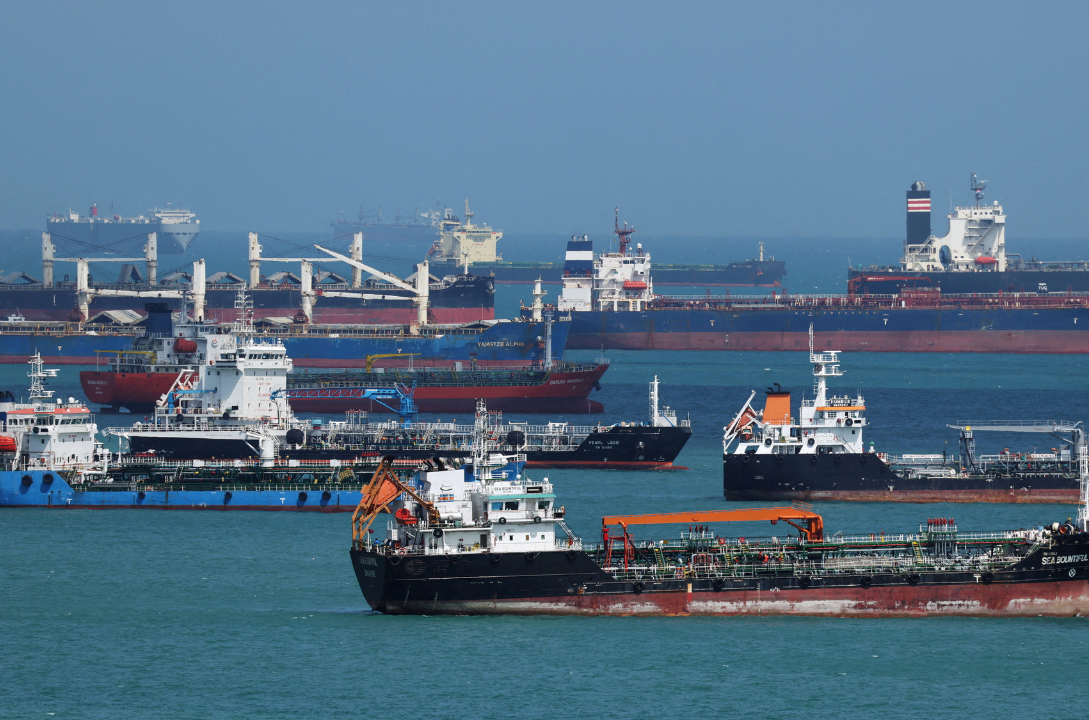
Singapore’s fuel oil inventories climbed to a three-week high in the week ending May 13, supported by a sharp recovery in imports and stronger regional trade flows. The move offers a fresh signal that Asia’s key oil storage and trading hub is rebuilding some supply after weeks of volatility across global energy markets.
According to Enterprise Singapore data cited by Reuters, onshore residual fuel oil stockpiles rose 1.0% to 20.08 million barrels, equivalent to about 3.16 million metric tons. Total fuel oil imports more than doubled from the previous week to above 941,000 tons, while exports also increased sharply, rising 61.9% to more than 412,000 tons.
The recovery in Singapore inventories comes at a sensitive time for fuel markets. Global oil and refined product flows remain affected by Middle East supply disruptions, the Iran war, restricted traffic through the Strait of Hormuz and shifting trade routes. The U.S. Energy Information Administration recently warned that Middle East oil supply losses could peak above 10 million barrels per day in May, with global inventories expected to fall meaningfully this year.
Imports Drive the Inventory Recovery
The main reason for the weekly inventory increase was the rebound in imports. Singapore received more than 941,000 tons of fuel oil during the week, more than twice the previous week’s volume. Indonesia was the largest origin of inflows, followed by the United States and Brazil.
Indonesia supplied 122,007 tons and recorded net inflows of 115,408 tons after accounting for exports back to the country. The United States supplied 97,455 tons, while Brazil delivered 90,789 tons. Other meaningful sources included Congo, Thailand, Venezuela, Japan, India and Georgia.
This diversification matters because Singapore is a major fuel oil blending, storage and bunkering hub. When supply from one region weakens, traders often compensate by sourcing from alternative origins. The latest data show that non-Middle Eastern barrels played a larger role in rebuilding inventories.
Imports from the Middle East remained limited, with Saudi Arabia providing only a relatively small volume of 17,403 tons. That detail is important because Middle East supply conditions remain one of the central risks in the fuel oil market.
Middle East Flows Remain Constrained
The low volume from the Middle East reflects broader disruptions affecting energy trade. The Strait of Hormuz remains a key pressure point for crude oil, refined products and residual fuel flows. Reuters reported earlier this week that oil prices rose after President Donald Trump said the Iran ceasefire was “on life support,” keeping the Strait of Hormuz largely closed with no clear end to the conflict.
For Singapore, weaker Middle East availability can change sourcing patterns. The city-state often receives cargoes from multiple regions, but Middle Eastern supply is still important for Asian fuel markets. When these flows are reduced, buyers may need to rely more on barrels from Southeast Asia, the Americas, Africa or other origins.
This can increase freight complexity, affect blending economics and alter regional premiums. Even when inventories rise, the quality, origin and cost of incoming cargoes still matter.
The latest inventory recovery, therefore, should not be read as a complete normalization of supply. It shows that imports improved, but not necessarily that the market has fully escaped geopolitical pressure.
Exports Also Rose Sharply
Singapore’s fuel oil exports also increased during the week, rising 61.9% to more than 412,000 tons. Most of the exported volume went to Malaysia, the neighboring storage and trading hub. Malaysia received 295,075 tons, making it the largest destination for Singapore fuel oil outflows.
South Korea received 63,200 tons, while New Zealand received a rare shipment of 42,749 tons. Smaller volumes moved to Indonesia, Australia and India.
The rise in exports shows that Singapore is not only rebuilding stocks but also continuing to serve regional demand. Its role is not simply to store fuel oil. It functions as a redistribution hub, moving cargoes across Asia-Pacific markets depending on demand, pricing and logistical needs.
The rare shipment to New Zealand is notable because it suggests that regional buyers may be sourcing more flexibly in response to wider disruptions. When global flows become unstable, buyers often widen their procurement options and draw from hubs like Singapore.
Net Imports Stay Positive
Despite the export increase, Singapore remained a net importer of fuel oil during the week. Total imports of 941,071 tons exceeded exports of 412,297 tons, leaving net imports of 528,774 tons.
This positive net import position explains the inventory build. If exports had risen faster than imports, stockpiles might have remained flat or declined. Instead, the import surge was large enough to lift onshore inventories to their highest level in three weeks.
Net inflows from Indonesia, the United States, Brazil, Congo, Thailand and Venezuela helped offset net outflows to Malaysia, South Korea and New Zealand.
For traders, net import data are important because headline inventory changes can sometimes hide underlying flow dynamics. In this case, both gross imports and exports rose, but imports increased enough to rebuild stocks.
Spot Premiums Come Under Pressure
Spot premiums for fuel oil have come under pressure in recent sessions. That is consistent with the inventory build. When local stocks rise and imports recover, near-term supply tightness can ease, reducing the willingness of buyers to pay aggressive premiums.
However, the pressure on premiums must be interpreted carefully. Singapore’s inventories are higher than in recent weeks, but global fuel markets remain exposed to geopolitical and logistical stress. Reuters has reported that physical oil markets remain fragile despite a temporary calm, with the Strait of Hormuz disruption and global inventory drawdowns still presenting major risks.
This means lower spot premiums may reflect short-term relief rather than a durable shift. If Middle East supply remains constrained or freight disruptions intensify, premiums could recover quickly.
Fuel oil markets are particularly sensitive to local availability, blending components, shipping schedules and refinery output. A one-week inventory gain can ease immediate pressure, but it does not eliminate broader supply risk.
Why Singapore Matters to Global Fuel Markets
Singapore is one of the world’s most important oil trading and storage centers. Its fuel oil inventories are closely watched because they provide insight into Asian supply conditions, regional bunkering demand and the availability of residual fuels used in shipping and industrial applications.
Fuel oil is especially important for marine fuel, power generation in some markets and refinery blending. Changes in Singapore inventories can therefore influence regional prices, bunker fuel costs and trade flows across Asia.
When Singapore stockpiles rise, traders may interpret it as a sign of improving availability. When inventories fall, it can point to tighter regional supply or stronger demand from shipping and industrial users.
In the current environment, Singapore’s data carry extra weight because global fuel flows are being reshaped by geopolitical disruptions, refinery outages and shifting crude supply patterns. Reuters reported that the Iran and Ukraine wars have disrupted global refining output, reducing available capacity and worsening fuel supply conditions in several regions.
Import Origins Show a Changing Trade Map
The weekly import table shows how diverse Singapore’s fuel oil sourcing has become. Indonesia led inflows, followed by the United States, Brazil, Congo, Thailand and Venezuela. This mix reflects a market adjusting to disrupted traditional routes.
Imports from the United States were particularly relevant because U.S. exports have become more important in helping cover supply gaps in Asia. Reuters noted that the current oil market balance has been partly supported by stronger U.S. exports and inventory drawdowns, even as Middle East disruptions continue.
Brazil, Venezuela and Congo also contributed significant volumes. These flows suggest that traders are drawing on Atlantic Basin and African supply to balance Asian needs.
The reduced Middle East presence remains the key contrast. In normal conditions, Middle Eastern supply is central to Asian energy flows. Its limited role in the latest Singapore import data reinforces how much the regional map has shifted.
Market Impact for Traders
For traders, the inventory build sends a mixed signal. On the bearish side, higher stocks and recovered imports reduce immediate scarcity and can weigh on spot premiums. This may limit short-term upside in Singapore fuel oil prices if demand does not accelerate.
On the bullish side, the broader global environment remains tight. Middle East supply disruptions, refinery outages and uncertain crude flows continue to create upside risk. If imports slow again, or if exports remain strong, Singapore inventories could quickly tighten.
The market will therefore focus on whether the latest import recovery continues. A single week of stronger inflows may not be enough to change the broader trend. Several consecutive weeks of inventory builds would provide stronger evidence of improved supply.
Traders will also monitor fuel oil cracks, bunker demand, freight rates, refinery margins and demand from regional utilities.
What Investors Should Watch Next
The first factor to watch is Middle East supply. If flows remain limited through the Strait of Hormuz, Singapore may continue sourcing more heavily from alternative regions.
The second factor is import sustainability. The latest increase was large, but the market needs to see whether high import volumes continue.
The third factor is export demand. Malaysia remained the main destination for Singapore outflows, while the rare New Zealand shipment suggests broader regional demand may still be active.
The fourth factor is spot premiums. If premiums keep weakening, it may indicate that short-term supply has improved. If they rebound, it could suggest that the inventory build was not enough to satisfy demand.
Finally, traders should watch global fuel stock levels. Energy agencies and market analysts have warned that global inventories are being drawn down rapidly amid the current supply shock.
Conclusion
Singapore fuel oil inventories rose to a three-week high in the week ending May 13, supported by a strong rebound in imports. Onshore residual fuel stockpiles increased 1.0% to 20.08 million barrels, while total imports more than doubled to above 941,000 tons. Exports also rose sharply, but net imports remained positive at 528,774 tons.
The data point to a short-term improvement in supply at Asia’s key oil trading hub. Indonesia, the United States and Brazil led import flows, while Middle East supply remained limited except for a small Saudi volume. Most exports went to Malaysia, with a rare shipment heading to New Zealand.
For the fuel oil market, the inventory build has helped pressure spot premiums, but it does not remove the broader risk. Middle East disruptions, the Strait of Hormuz situation, global refinery stress and falling oil inventories continue to shape the outlook.
Singapore’s latest stock recovery is therefore a relief signal, not a full reset. The next few weeks will show whether imports can remain strong enough to stabilize regional supply or whether geopolitical disruptions will pull the market back into tighter conditions.