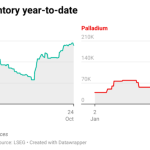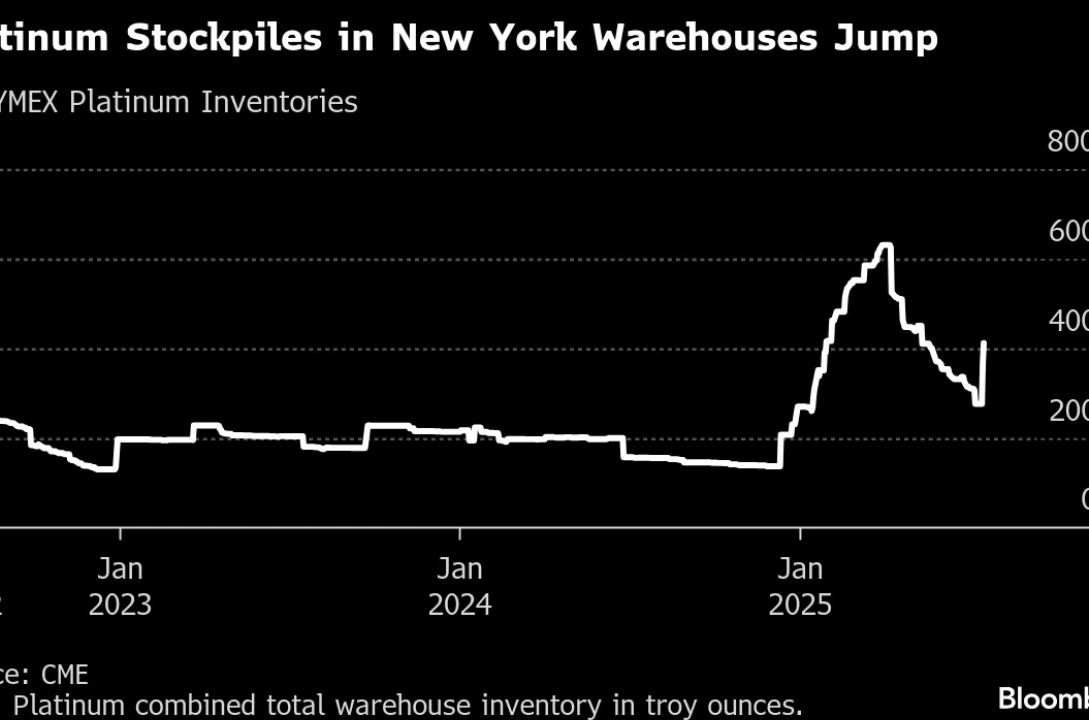
Nymex warehouse data for June 24 showed a decline in platinum inventories, while palladium stocks were unchanged across CME-approved depositories. The report highlighted a modest withdrawal from eligible platinum stocks at JP Morgan Chase Bank NA, reducing total platinum warehouse inventories from 412,570 ounces to 409,009 ounces.
Palladium inventories, by contrast, remained unchanged at 254,945 ounces. Registered palladium stocks held at 201,316 ounces, while eligible stocks stayed at 53,629 ounces. The lack of movement in palladium suggests a stable warehouse picture, even as platinum experienced a small but notable drawdown.
The data arrived during a weak session for platinum-related prices, with platinum futures and spot platinum showing sharp declines. Warehouse stock reports do not always drive daily price action by themselves, but they remain important for traders because they show the availability of metal within the futures delivery system.
Platinum Inventories Decline by 3,561 Ounces
The combined Nymex platinum total fell by 3,561 ounces, from 412,570 ounces to 409,009 ounces. The entire decline came from the eligible category, where stocks dropped from 200,613 ounces to 197,052 ounces.
Registered platinum stocks were unchanged at 211,957 ounces. This distinction matters because registered metal is available for delivery against futures contracts, while eligible metal meets exchange specifications but has not been placed into registered delivery status.
The withdrawal from eligible stocks does not automatically mean immediate tightness in the deliverable market, because registered stocks were unchanged. However, it still indicates that some platinum left the warehouse system or was reclassified outside available eligible inventory.
For traders, even a relatively small movement can matter when it occurs during a period of elevated volatility. Platinum is less liquid than gold and can react sharply when supply, demand or positioning signals shift.
JP Morgan Accounts for the Platinum Withdrawal
The only meaningful movement in platinum inventories came from JP Morgan Chase Bank NA. Its eligible platinum holdings fell by 3,561 ounces, from 79,046 ounces to 75,485 ounces. Total platinum held at JP Morgan declined from 170,833 ounces to 167,272 ounces.
Registered platinum at JP Morgan remained unchanged at 91,787 ounces. That means the withdrawal affected eligible stock only, not metal already registered for futures delivery.
JP Morgan remains one of the largest platinum depository holders in the CME warehouse system. Even after the withdrawal, it held 167,272 total ounces, second only to Brink’s among the listed platinum depositories.
This kind of warehouse movement is important because it can offer clues about metal positioning, physical demand, inventory management or depository flows. A single withdrawal does not define the market, but it becomes relevant when combined with price weakness, speculative positioning or broader supply concerns.
Registered Platinum Stocks Remain Stable
Registered platinum inventories stayed unchanged at 211,957 ounces. This stability suggests that the immediately deliverable portion of the Nymex platinum stock base did not tighten during the reporting period.
Registered stocks were distributed across several depositories. JP Morgan held the largest registered platinum position at 91,787 ounces. Brink’s held 62,757 ounces, while Loomis International held 26,272 ounces. Manfra, Tordella & Brookes held 16,247 ounces, and StoneX Precious Metals held 9,575 ounces.
Smaller registered positions were reported at Delaware Depository, HSBC Bank USA, CNT Depository, International Depository Services of Delaware and Malca-Amit USA.
The unchanged registered total is significant because it reduces the immediate delivery concern that might otherwise arise from a warehouse drawdown. Traders looking for signs of delivery stress would usually focus on changes in registered inventory first.
Eligible Platinum Stocks Show the Only Pressure
Eligible platinum stocks fell to 197,052 ounces after the JP Morgan withdrawal. Brink’s remained the largest holder of eligible platinum at 79,557 ounces, followed by JP Morgan at 75,485 ounces and Delaware Depository at 18,460 ounces.
Loomis held 12,948 ounces of eligible platinum, HSBC held 8,782 ounces, Manfra held 1,805 ounces, and StoneX held only 16 ounces. Several depositories reported no eligible platinum stocks.
Eligible stock is important because it represents metal that meets exchange standards and could potentially be converted into registered stock if the owner chooses. A decline in eligible inventory can therefore reduce the broader pool of metal that may be made available for delivery later.
Still, the current decline was limited. The market would likely need to see repeated withdrawals, falling registered stocks or stronger delivery demand before treating the change as a major tightening signal.
Brink’s Remains the Largest Platinum Holder
Brink’s reported total platinum holdings of 142,314 ounces, unchanged from the previous report. Its stocks included 62,757 registered ounces and 79,557 eligible ounces.
Brink’s remains a central depository in the platinum warehouse structure, holding a large share of both registered and eligible metal. Its unchanged position suggests that the decline in total platinum stocks was not broad-based across the warehouse system.
This matters because a system-wide decline would send a stronger signal than a single-depository withdrawal. In the current report, the platinum drawdown was concentrated entirely at JP Morgan.
For market participants, concentration matters. A localized eligible withdrawal may reflect specific client activity or inventory management rather than a general shortage of exchange metal.
Palladium Inventories Remain Unchanged
Palladium warehouse stocks were unchanged at 254,945 ounces. Registered stocks stayed at 201,316 ounces, while eligible stocks remained at 53,629 ounces.
No palladium was received or withdrawn across the listed depositories. This makes the palladium inventory picture much more stable than platinum for the reporting day.
Loomis International remained the largest palladium depository with 106,048 total ounces, including 90,899 registered ounces and 15,148 eligible ounces. Manfra, Tordella & Brookes held 87,801 total ounces, including 67,754 registered and 20,047 eligible.
StoneX Precious Metals held 19,907 ounces, Brink’s held 17,234 ounces, JP Morgan held 17,352 ounces, Delaware Depository held 3,897 ounces, HSBC Bank USA held 2,609 ounces, and CNT Depository held 97 ounces.
The lack of movement suggests that palladium warehouse flows were quiet, even as futures and spot prices remained sensitive to broader market conditions.
Registered Palladium Supply Remains Concentrated
Registered palladium stocks remained at 201,316 ounces. The largest registered position was held by Loomis International at 90,899 ounces, followed by Manfra, Tordella & Brookes at 67,754 ounces.
JP Morgan held 17,250 registered ounces, StoneX held 16,688 ounces and Brink’s held 7,448 ounces. Smaller registered holdings were reported at Delaware Depository, HSBC and CNT Depository.
This concentration is important for futures traders because palladium is a thinner and more specialized market than gold or silver. When deliverable stocks are concentrated among a few depositories, changes at those locations can matter more.
In the current report, however, there were no changes. That stability reduces immediate concern about warehouse-driven pressure in the palladium delivery system.
Eligible Palladium Stocks Stay Low Relative to Registered Supply
Eligible palladium stocks remained at 53,629 ounces, much lower than the registered total of 201,316 ounces. Manfra held the largest eligible palladium position at 20,047 ounces, followed by Loomis at 15,148 ounces and Brink’s at 9,786 ounces.
Delaware Depository held 3,304 eligible ounces, StoneX held 3,218 ounces, HSBC held 2,023 ounces and JP Morgan held 103 ounces.
The relatively small eligible pool matters because it limits the amount of additional palladium that could potentially move into registered delivery status without new warehouse inflows. However, since registered stocks are currently far larger than eligible stocks, the deliverable base remains the more important figure.
For now, the report does not indicate a near-term change in palladium warehouse availability.
Why Warehouse Stocks Matter for Platinum and Palladium
Warehouse stock data is an important part of futures market analysis because it provides a view of metal available within the exchange delivery system. For platinum and palladium, this can be particularly relevant because these markets are smaller and less liquid than the largest precious metals markets.
Registered stocks are especially important because they represent metal deliverable against futures contracts. Eligible stocks provide a broader view of metal that meets exchange standards but has not been placed into registered delivery status.
Changes in these categories can affect trader expectations. Rising stocks may suggest easier availability, while falling stocks can raise questions about physical demand, withdrawals or tighter supply. However, warehouse movements must be interpreted carefully. A single withdrawal may reflect normal client activity rather than a structural market shift.
In the June 24 report, the key signal is limited but clear: platinum saw a modest eligible withdrawal, while palladium remained unchanged.
Price Weakness Adds Context to the Inventory Data
The warehouse report came during a session in which platinum prices were under pressure. Platinum futures and spot platinum both showed notable declines, with market data indicating weakness across platinum-linked instruments.
This creates an interesting contrast. Lower inventories can sometimes be interpreted as supportive, but price weakness suggests that broader market forces were dominating trading sentiment. Those forces may include macroeconomic positioning, liquidation, technical selling, industrial demand concerns or broader precious metals pressure.
For palladium, unchanged stocks suggest that warehouse flows were not the main driver of price action. The market likely remained more focused on demand expectations, industrial usage, investor positioning and broader sentiment toward metals tied to automotive and industrial applications.
The key point is that inventory data provides one piece of the market picture. It should be read alongside price action, open interest, spreads, physical premiums and macro conditions.
Platinum Versus Palladium: Different Signals
The June 24 data showed different short-term signals for platinum and palladium. Platinum inventories declined modestly, while palladium inventories remained flat.
For platinum, the eligible withdrawal at JP Morgan may attract attention if it is followed by additional drawdowns in coming reports. A single-day decline of 3,561 ounces is not enough to confirm a tightening trend, but it gives traders something to monitor.
For palladium, the unchanged stock picture suggests a quiet warehouse environment. With no receipts, withdrawals or adjustments, traders are left to focus on external market drivers rather than depository movement.
This divergence is useful. It shows that the platinum and palladium markets should not be treated as identical, even though both belong to the platinum group metals. Their warehouse structures, demand profiles, liquidity and investor behavior can differ significantly.
What Traders Should Watch Next
The first indicator to watch is whether platinum eligible stocks continue to fall. Repeated withdrawals could signal stronger physical demand or reduced available warehouse supply.
The second factor is registered platinum inventory. Since registered stocks were unchanged, there is no immediate evidence of deliverable supply pressure. A decline in registered stocks would be more important.
The third indicator is palladium warehouse movement. If palladium remains unchanged, traders may continue to focus mainly on demand and macro signals. If withdrawals begin, the market may reassess availability.
The fourth factor is depository concentration. Large changes at JP Morgan, Brink’s, Loomis or Manfra can matter because these firms hold significant portions of the total stock base.
The fifth point is price response. If platinum prices remain weak despite lower stocks, it suggests that macro or speculative pressure is outweighing inventory support.
Finally, traders should monitor spreads and delivery activity. Warehouse data becomes more meaningful when combined with changes in futures spreads, delivery notices and physical premiums.
Nymex platinum warehouse stocks fell on June 24, with combined inventories declining by 3,561 ounces to 409,009 ounces. The entire move came from eligible platinum at JP Morgan Chase Bank NA, where holdings fell from 79,046 ounces to 75,485 ounces. Registered platinum stocks remained unchanged at 211,957 ounces.
Palladium stocks were unchanged at 254,945 ounces, with registered inventories holding at 201,316 ounces and eligible stocks steady at 53,629 ounces. No palladium receipts, withdrawals or adjustments were reported across CME-approved depositories.
The latest CME warehouse data shows a modest tightening signal in platinum but no change in palladium. Platinum’s decline was limited to eligible stocks at JP Morgan, while registered deliverable supply remained stable. Palladium inventories were completely unchanged. For traders, the key question is whether platinum withdrawals continue or whether this was only a routine warehouse movement.