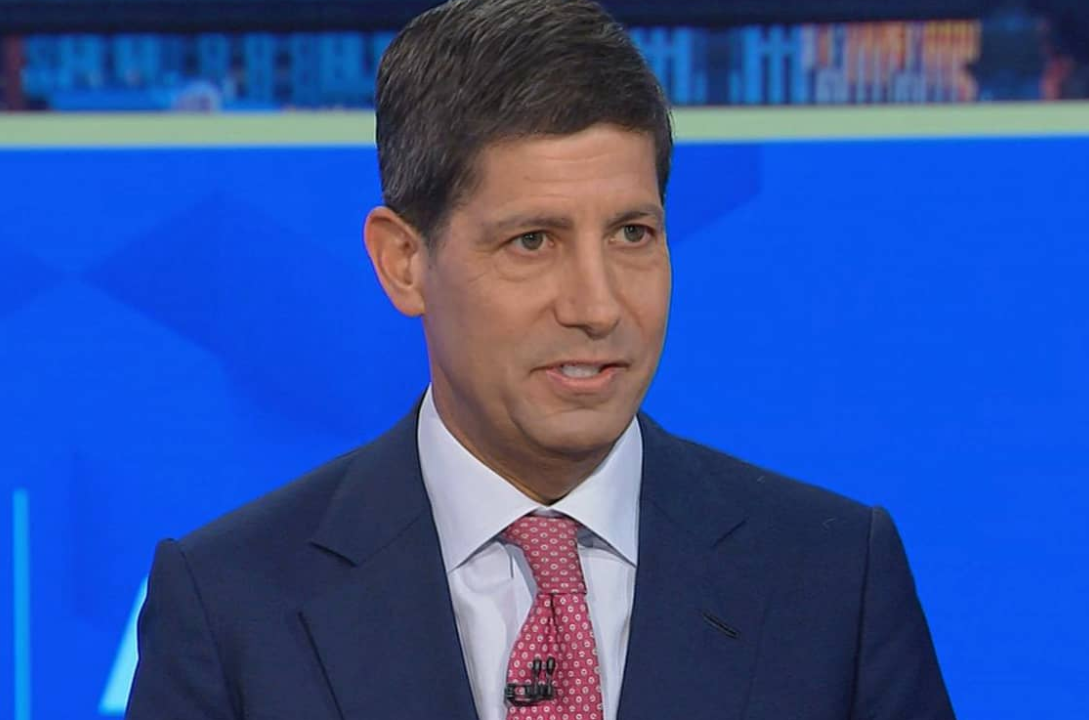
When President Donald Trump chose Kevin Warsh to become the next chair of the Federal Reserve, the political message was easy to understand. Trump wants lower interest rates, and he clearly believes Warsh is the person most likely to deliver them. The harder question is not why Trump made the choice. It is how Warsh could realistically move the Fed toward lower rates when so many central bank officials remain cautious, inflation is still not comfortably back at target, and the broader policy environment remains politically charged.
That question now sits at the center of Warsh’s upcoming Senate confirmation hearing. Lawmakers are likely to push him on two fronts at once. First, they will want to know whether he is genuinely independent or simply the White House’s preferred instrument for easier money. Second, they will want to know how, in practical terms, he thinks lower rates could be justified in a Federal Reserve that has not shown much appetite for aggressive cuts.
One possible answer has begun to stand out. Warsh may argue that shrinking the Federal Reserve’s balance sheet is itself a form of monetary tightening, and that if the balance sheet is reduced meaningfully, then short-term interest rates should be lowered to offset that tightening and keep the economy on a stable path. In that framework, balance-sheet reduction and rate cuts are not contradictory. They are paired tools.
The basic Warsh idea: tighten with one hand, ease with the other
The central theory associated with Warsh is straightforward, even if its execution would be complicated. Several economists believe he may argue that reducing the Fed’s balance sheet by about $1 trillion would have an economic effect roughly equivalent to a 50-basis-point rate hike. If that is true, then cutting the federal-funds rate by 50 basis points would not necessarily represent a net easing of policy. It could instead be presented as a way of offsetting the tightening effect created by the smaller balance sheet.
That is the core of the argument. Warsh could say that policy should not be judged only by the headline policy rate. It should be judged by the combined stance of rates, asset holdings, reserves, and financial conditions. If the Fed is withdrawing one form of support through balance-sheet reduction, then it may be able to provide another through lower short-term rates without becoming more stimulative overall.
This is the line of reasoning that some economists think Warsh may lean on. It would allow him to pursue lower rates without openly claiming that inflation risks have disappeared or that the economy suddenly needs a large monetary rescue. Instead, he could frame it as policy rebalancing.
Why the balance sheet matters so much
Warsh has long been a critic of the size of the Fed’s balance sheet. Before the 2008 financial crisis, it was under $1 trillion. It later ballooned above $6 trillion as the central bank bought large amounts of Treasurys and mortgage-backed securities in an effort to push down long-term borrowing costs and support the economy after rates hit zero.
Today, the Fed still holds roughly $1.6 trillion in long-term Treasurys and about $1.9 trillion in mortgage-backed securities. That gives the central bank a large footprint across financial markets. These holdings are important because they tend to suppress yields on those assets relative to where they might otherwise trade. In simpler terms, if the Fed owns a lot of long-term debt, it helps keep long-term rates lower than they would be without that intervention.
That means the balance sheet is not just an accounting artifact. It is part of the policy stance. Warsh’s likely argument is that if those holdings are reduced, then financial conditions will tighten. And if conditions tighten through that route, rate cuts can be justified elsewhere.
Miran has already hinted at the same logic
One reason this approach is being taken seriously is that Stephen Miran, the Fed governor seen as closest to the Trump White House, has publicly voiced support for similar reasoning. In a recent speech, Miran argued that the effects of balance-sheet reduction can be offset by a lower federal-funds rate. In that view, resuming or accelerating quantitative tightening would justify additional cuts relative to baseline policy projections.
This matters because it suggests Warsh would not be advancing a totally isolated theory. He would be drawing on an argument that already has some support inside the central bank, even if only from a small minority. That still would not make it easy to persuade the full Federal Open Market Committee, but it would at least provide a framework rooted in existing internal debate.
Joe Gagnon of the Peterson Institute believes Warsh may even have presented this logic directly to Trump during the competition for the chairmanship. In that telling, Warsh could have suggested that a total of 100 basis points in cuts might eventually be justified, with half of that tied to the tightening effect of balance-sheet shrinkage and the other half potentially linked to easing inflation pressures once tariff and war-related distortions fade.
Trump wants cuts quickly, but the Fed remains cautious
The political backdrop makes this even more complicated. Trump has made no secret of his desire for sharply lower rates. He has repeatedly argued that current rates, sitting in the 3.5% to 3.75% range, are too high and are unnecessarily restraining the economy. He has said publicly that when Warsh takes over, rates will go lower.
That creates pressure before Warsh even arrives. If confirmed, he will enter office with an expectation from the White House that he should move quickly. But the Federal Reserve is not structured for one person to impose policy unilaterally. The chair influences the institution heavily, but policy decisions still go through a committee, and many Fed officials remain wary of cutting rates while inflation remains above target.
The war with Iran has pushed inflation to its highest point in two years, making policymakers even more careful. Many officials have signaled that they want to see more progress toward the Fed’s 2% target before supporting a meaningful easing cycle. That means Warsh will need an argument that goes beyond simple political preference. The balance-sheet logic offers one such route.
What exactly is the Fed’s balance sheet?
To understand why this argument is even possible, it helps to understand what the balance sheet is. During the 2008 crisis, then-Fed Chair Ben Bernanke pioneered the use of large-scale asset purchases because the central bank had already cut short-term rates to zero and still needed another way to stimulate the economy. The Fed bought Treasurys and mortgage-backed securities to drive down longer-term borrowing costs and encourage recovery.
These assets were financed by liabilities, chiefly reserves held by banks at the Fed. The central bank pays banks interest on those reserves. Over time, this created a much larger balance sheet and a new policy dimension beyond the simple overnight policy rate.
The Fed has tried shrinking the balance sheet twice in recent years. One attempt ended badly in 2019 when money-market rates spiked. The second began in 2022 and ended more smoothly, but the balance sheet still remained above $6 trillion, larger than many critics think is appropriate.
One longstanding criticism is that the Fed has never done a very good job of integrating balance-sheet policy into its overall communication. Officials often act as if the balance sheet is background plumbing while rate-setting is the real policy lever. Warsh’s likely approach would challenge that separation directly.
Warsh’s practical options are limited
Even if Warsh wants a smaller balance sheet, there are only a few realistic ways to get there. The first option would be outright asset sales into the market. That is widely seen as the least likely path. Selling long-duration Treasurys or mortgage-backed securities aggressively would likely be disruptive, tighten financial conditions sharply, and hurt risk assets. That could produce exactly the kind of market stress Trump would not want.
The second and more plausible route is to focus on the liability side of the balance sheet, particularly the huge stock of reserves held by banks, now around $3 trillion. Banks hold these reserves partly to satisfy post-2008 liquidity rules. Reserves are extremely safe and liquid, which makes them useful in a crisis.
The challenge is that if banks continue to demand large reserve balances, then the Fed can only shrink its balance sheet so far. Officials like Cleveland Fed President Beth Hammack have noted that the central bank is trying to balance the stability benefits of ample reserves with the reputational and political appeal of a smaller balance sheet.
That means a serious balance-sheet reduction may require changes to the regulatory structure that encourages banks to hold so many reserves.
The regulatory route would take time
This is where the Warsh vision becomes harder to execute quickly. To reduce reserve demand meaningfully, the Fed and other regulators may need to revisit liquidity rules established after the financial crisis. There has been discussion of adjusting those rules and pairing them with stronger emergency funding programs so that banks would feel less need to hoard reserves.
Another controversial idea would be to pay a lower interest rate on reserves above a certain threshold, giving banks less reason to keep enormous balances parked at the Fed. But these options are politically and technically sensitive. Financial regulation is intricate, and changing it too quickly could have unintended consequences.
That is why some market participants are skeptical. Even if the theory is coherent, the timeline may be too slow to satisfy a White House that wants visible rate cuts quickly, perhaps even before the November midterm elections.
Markets may not fully buy the argument
There is another problem. Even if Warsh succeeds in convincing some colleagues that a smaller balance sheet justifies lower short-term rates, markets may still be skeptical. Jon Faust, a former top adviser to Jerome Powell, has said that while the broad logic is plausible, it is far from a slam dunk. It is one thing to construct a story for a president who wants cuts badly. It is another thing to convince a wary FOMC and a skeptical bond market.
Mark Cabana of BofA goes even further. He argues that if balance-sheet reduction is achieved in a relatively non-disruptive way, markets may not accept that it automatically warrants rate cuts. If the Fed lowers rates anyway, investors may simply see added inflation risk rather than elegant policy rebalancing.
In other words, Warsh may have a clever institutional argument. But that does not guarantee credibility in markets. Investors care about inflation, financial conditions, and political independence. If they conclude that the policy mix is really just a politically motivated attempt to lower rates, the reaction could be negative.
The confirmation hearing will be about more than policy mechanics
All of this means Tuesday’s hearing will be about much more than technical monetary theory. Senators will press Warsh on whether he truly believes in Fed independence, whether he intends to follow the data rather than the president, and whether his balance-sheet logic is serious policy analysis or merely a route to deliver Trump the lower rates he wants.
That makes Warsh’s position delicate. He must show that he has a coherent framework, that he understands the interaction between rates and the balance sheet, and that he is not simply the White House’s monetary emissary. If he leans too hard into rate cuts, he may appear politically captured. If he leans too hard into orthodoxy, he may disappoint the political coalition that elevated him.
Kevin Warsh’s most plausible path to lower rates may not be to argue that inflation is beaten or that the economy suddenly needs aggressive easing. It may be to argue that a meaningful reduction in the Fed’s balance sheet itself tightens policy, and that short-term rate cuts are necessary to offset that effect. In that framework, shrinking the balance sheet by $1 trillion could justify around 50 basis points of cuts, with further easing possible if inflation pressures fade.
That idea is intellectually serious enough to matter, especially since Stephen Miran has already voiced support for similar reasoning. But turning it into actual Fed policy would be difficult. It would likely require changes in how the Fed thinks about reserves, regulation, and the combined stance of monetary policy. It would also face skepticism from both markets and fellow policymakers.
So the real question is not whether Warsh can explain how lower rates might be justified. He probably can. The harder question is whether he can persuade a cautious Federal Reserve and a wary market that the argument is genuine, credible, and not merely a sophisticated route to giving Trump the cuts he wants.