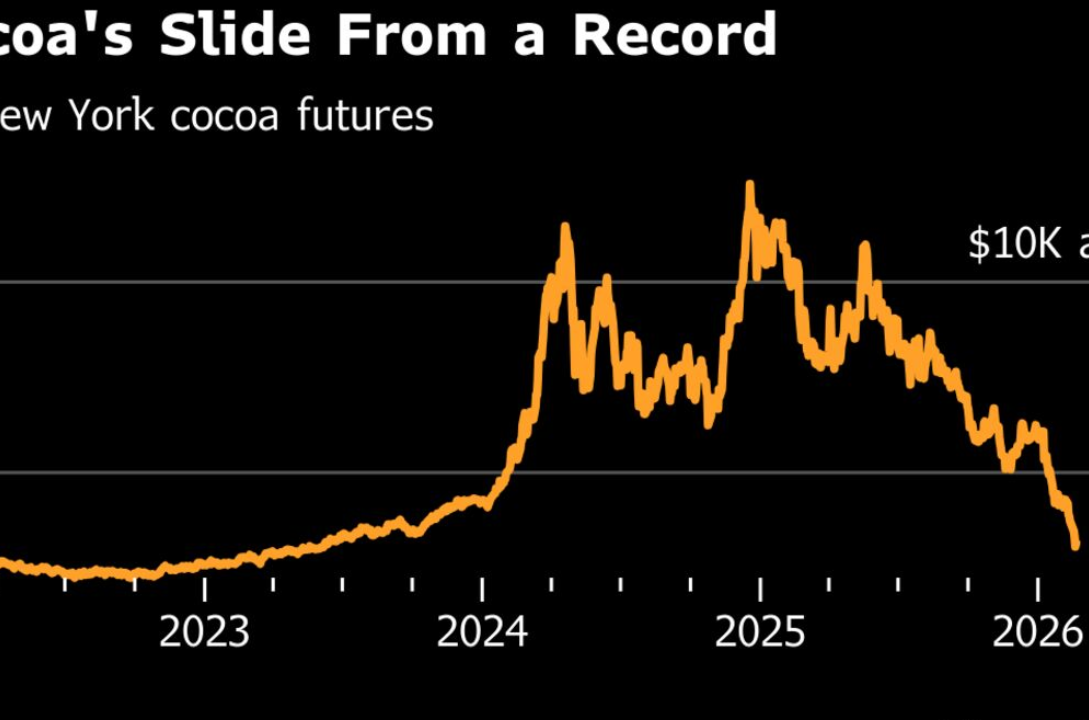
Cocoa futures surged sharply on Tuesday, recovering from recent weakness as industry buying and short-covering helped lift prices. At the same time, raw sugar futures fell to their lowest level in nearly three weeks as traders focused on weak demand, stronger crop finishes in Asia, and solid early crushing volumes in Brazil.
The move highlights a split across soft commodity markets. Cocoa found support after a period of pressure, even though the broader production outlook in Ivory Coast remains a bearish factor. Sugar moved in the opposite direction, weighed down by signs that global supply may be more comfortable than previously expected. Coffee posted modest gains, but traders remain cautious as Brazil’s harvest outlook continues to dominate sentiment.
For futures traders, the session showed how quickly positioning, weather, crop data, and physical market signals can shift price direction. Cocoa’s rally was strong, but not without risks. Sugar’s decline reflected supply confidence, but energy prices and weather remain variables. Coffee’s gains were limited by expectations of a large Brazilian crop, even as the harvest appears to be moving more slowly than usual.
Cocoa Prices Rebound After Recent Weakness
London cocoa futures closed up 293 pounds, or 10.2%, at 3,153 pounds per metric ton. New York cocoa rose 9.8% to $4,169 per ton. The size of the move suggests that the market was not simply reacting to one fresh supply headline. It also reflected a positioning adjustment after recent weakness.
Dealers pointed to industry buying and profit-taking by speculative traders on short positions as key drivers of the rebound. When speculators build bearish positions and prices start to recover, short-covering can amplify gains. Traders who had bet on lower prices may close positions quickly, creating additional buying pressure.
Industry buying also matters because it reflects commercial demand from users who may view lower prices as an opportunity to secure supply. In cocoa, physical buying interest can become especially important after sharp declines, as processors and chocolate manufacturers reassess forward coverage.
Still, the rally does not erase the broader supply story. Dealers noted that an improving production outlook in Ivory Coast remains a bearish factor. That means cocoa futures may continue to face resistance if supply data keeps improving.
Ivory Coast Supply Outlook Remains a Key Risk
Ivory Coast remains the world’s top cocoa producer, so port arrivals and weather conditions in the country are central to price direction. Cocoa arrivals at ports totaled 34,000 tons in the week to May 24, compared with 20,000 tons in the same week of the previous season.
That increase signals stronger near-term supply movement and helps explain why dealers still view the production outlook as a bearish influence. Higher arrivals suggest that more cocoa is reaching export channels, easing some concerns that supported prices earlier.
Weather remains another major factor. Rains were mainly below average last week in most cocoa-growing regions of Ivory Coast, but their intensity improved compared with previous weeks. Farmers said this was positive for the March-to-August mid-crop.
The mid-crop is important because it can help stabilize supply after earlier production concerns. If rainfall continues to improve and arrivals remain solid, cocoa may struggle to maintain sharp gains. However, if weather becomes inconsistent again or crop quality deteriorates, prices could find renewed support.
In other words, cocoa’s rally was strong, but the market is still balancing technical buying against improving fundamental supply signals.
Why Short-Covering Can Move Cocoa So Quickly
Cocoa futures can move sharply when speculative positions are crowded. If traders have built short positions expecting lower prices, a sudden rebound can force them to buy back contracts. That buying can push prices higher, which may then trigger more short-covering.
This dynamic is especially powerful in markets where liquidity is thinner than major financial futures. Soft commodities can react quickly when commercial demand, weather updates, and speculative positioning all point in the same direction for even a short period.
The sharp rise in London and New York cocoa suggests that some traders may have moved too aggressively into bearish positions after the recent decline. Once industry buying appeared and prices started to recover, short sellers had an incentive to reduce exposure.
For investors, the key question is whether the move marks the beginning of a more durable recovery or simply a technical correction within a market still pressured by improving supply. The answer will depend heavily on Ivory Coast arrivals, mid-crop quality, weather, and demand from processors.
Sugar Hits Lowest Level in Nearly Three Weeks
Raw sugar futures moved in the opposite direction. Prices settled down 0.16 cent, or 1.1%, at 14.54 cents per pound after touching 14.44 cents, the lowest level in almost three weeks. White sugar also declined, losing 1.2% to $436.90 per ton.
The sugar market is facing pressure from several supply-side factors. Dealers said weak demand and strong crop finishes in Thailand and China have led analysts to raise estimates for the global surplus in the 2025/26 season.
A larger surplus generally weighs on prices because it suggests the market may have more supply than needed. If buyers are not aggressive and producers are delivering better volumes, futures can remain under pressure.
Good crushing volumes at the start of Brazil’s crop are also weighing on sentiment. Brazil is the world’s largest sugar producer and exporter, so early-season crushing data often sets the tone for global price expectations.
Brazil Crushing Data Adds Pressure to Sugar
Data from Brazil’s Agriculture Ministry showed cane crush in the center-south region at 39.4 million tons in the second half of April. Sugar production reached 1.76 million tons. Those numbers were higher than analyst expectations in a poll by S&P Global Energy, which had forecast cane crush at 36.3 million tons and sugar production at 1.48 million tons.
Stronger-than-expected crushing data suggests that Brazil’s season began with solid processing momentum. If that continues, it could reinforce expectations of ample sugar supply and keep pressure on futures prices.
Brazil’s center-south region is critical because it accounts for a large share of global exportable sugar. When mills crush more cane and produce more sugar than expected, the global market often adjusts quickly.
However, traders still need to watch the sugar-ethanol mix. Brazilian mills can shift cane toward sugar or ethanol depending on relative prices. If energy prices rise strongly, mills may have more incentive to produce ethanol, which could reduce sugar output. For now, the latest data suggests sugar production is strong enough to pressure prices.
Sugar Demand Remains a Weak Point
Supply is not the only issue weighing on sugar. Dealers also cited weak demand. When buyers delay purchases or reduce coverage, futures can struggle even if prices appear low.
Weak demand may reflect several factors, including comfortable inventories, slower import interest, currency movements, or expectations that prices could fall further. If buyers believe Brazil’s crop will continue to perform well and the global surplus will grow, they may wait before stepping into the market.
This creates a negative feedback loop. Lower demand pressures prices, and falling prices can encourage buyers to remain patient. For a more sustained recovery, sugar may need either stronger physical demand, weather problems in a major producing country, or a shift in Brazil’s production mix toward ethanol.
Until then, the market may remain vulnerable to further downside tests.
Coffee Edges Higher, But Brazil Still Caps Upside
Coffee futures also gained, but the tone was more cautious than in cocoa. Arabica coffee settled up 1.65 cents, or 0.6%, at $2.74 per pound. Robusta coffee rose 1.8% to $3,519 per ton.
Dealers said speculators had reduced net long positions against the backdrop of what could be a bumper crop in Brazil this year. That means investors have become less aggressive in betting on higher coffee prices, likely because a large crop could increase supply and limit upside.
However, the harvest has started slowly. Broker StoneX estimated that 14% of Brazil’s crop had been harvested so far, compared with a historical average of 21% for this point in the season.
That slower pace may have helped limit pressure on coffee prices. If the harvest remains delayed, concerns could grow about logistics, quality, or near-term availability. But if harvesting accelerates and crop estimates remain strong, coffee futures may struggle to build a stronger rally.
Soft Commodities Show Diverging Supply Stories
The session showed three different soft commodity narratives. Cocoa rallied despite improving Ivory Coast supply signals, mainly because of industry buying and short-covering. Sugar fell because supply expectations improved and demand looked weak. Coffee rose modestly as traders balanced a potentially large Brazilian crop against a slower-than-normal harvest pace.
This divergence matters for futures traders. Soft commodities are often grouped together, but each market has its own supply chain, weather exposure, demand structure, and speculative positioning.
Cocoa is highly sensitive to West African crop conditions and processor demand. Sugar depends heavily on Brazil’s cane crush, Asian production, energy prices, and ethanol economics. Coffee is shaped by Brazilian crop size, harvest pace, certified stocks, weather risks, and demand from roasters.
Because of these differences, traders should avoid assuming that strength in one soft commodity automatically means strength across the group.
What Traders Should Watch Next
For cocoa, the key indicators are Ivory Coast port arrivals, rainfall patterns, mid-crop quality, and whether industry buying continues. If arrivals remain strong and weather improves, the market may face renewed selling pressure despite Tuesday’s rally.
For sugar, traders should watch the upcoming report from industry group Unica covering Brazil’s center-south cane crush. If official industry data confirms strong crushing and sugar production, prices may remain under pressure. Demand signals and the sugar-ethanol mix will also be important.
For coffee, the focus remains Brazil’s harvest pace. A slow harvest may support prices in the short term, but a bumper crop could limit gains if weather conditions remain favorable and logistics improve.
Across all three markets, speculative positioning is also critical. Short-covering can lift prices quickly, while liquidation of long positions can accelerate declines. In soft commodities, positioning often turns fundamental news into sharper price moves.
Cocoa futures surged sharply on Tuesday, with London cocoa up more than 10% and New York cocoa close to a 10% gain. The rally was driven by industry buying and short-covering, even as improving supply signals from Ivory Coast continued to limit the bullish case.
Sugar moved lower, with raw sugar touching its lowest level in nearly three weeks. Stronger crop finishes in Thailand and China, weak demand, and better-than-expected Brazilian crushing data reinforced expectations of a larger global surplus.
Coffee posted moderate gains, supported by a slower start to Brazil’s harvest, but expectations for a large crop kept traders cautious.
For futures traders, the main takeaway is that soft commodity markets remain highly sensitive to supply updates and positioning. Cocoa’s rebound shows how quickly prices can recover when short-covering appears. Sugar’s decline shows how surplus expectations can pressure prices even when broader commodity markets remain volatile. Coffee sits between both themes, with harvest timing now the central variable.
The next major signals will come from Ivory Coast arrivals, Brazil’s sugar data, and the pace of the Brazilian coffee harvest.