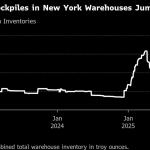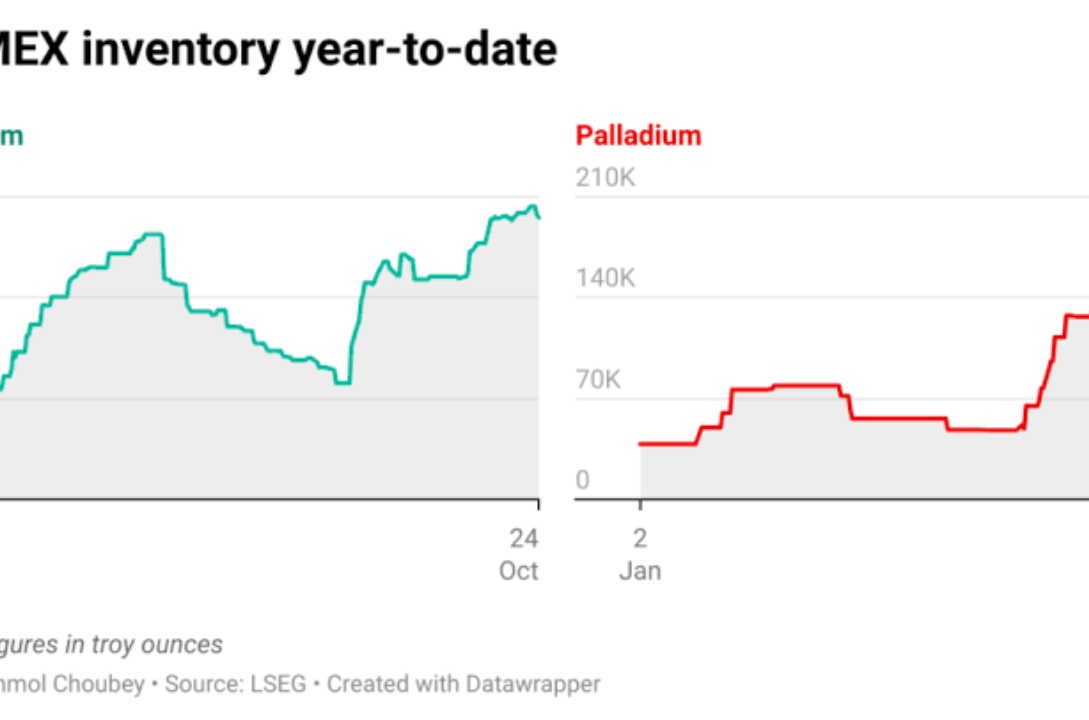
Nymex warehouse data for June 25 showed platinum inventories unchanged from the previous report, while palladium stocks also remained flat at the combined level despite internal movement between CME-approved depositories. The report suggests a stable overall inventory picture for both platinum and palladium, with no change in total exchange warehouse stocks.
Combined platinum inventories held at 409,009 ounces. Registered platinum stocks remained unchanged at 211,957 ounces, while eligible platinum stocks stayed at 197,052 ounces. No platinum was received, withdrawn or adjusted across the listed depositories.
Palladium inventories also remained unchanged at 254,945 ounces. Registered palladium stocks held at 201,316 ounces, while eligible stocks remained at 53,629 ounces. However, unlike platinum, palladium saw movement inside the eligible category, with 893 ounces received at Loomis International and 893 ounces withdrawn from Manfra, Tordella & Brookes.
The net effect was zero at the combined level, but the depository-level movement gives traders a more detailed view of where exchange-approved metal is being held.
Platinum Inventories Remain Unchanged
Platinum warehouse stocks were completely flat in the June 25 report. Total Nymex platinum inventories remained at 409,009 ounces, matching the previous total.
Registered platinum stocks held at 211,957 ounces. Eligible platinum stocks remained at 197,052 ounces. The absence of receipts, withdrawals or adjustments indicates that there was no new physical movement in the platinum warehouse system during the reporting period.
This stability follows the previous report, when eligible platinum stocks had declined by 3,561 ounces after a withdrawal from JP Morgan Chase Bank NA. The latest data show that the market did not see another platinum drawdown immediately after that move.
For traders, that matters. A one-day withdrawal may attract attention, but repeated withdrawals would carry more weight. The June 25 report suggests that the earlier platinum movement did not immediately develop into a broader warehouse outflow.
Registered Platinum Stocks Stay Stable
Registered platinum inventories remained unchanged at 211,957 ounces. Registered metal is the portion of warehouse stock that is available for delivery against futures contracts, so it is often the most closely watched category in delivery-sensitive markets.
JP Morgan Chase Bank NA remained the largest holder of registered platinum, with 91,787 ounces. Brink’s held 62,757 ounces, while Loomis International held 26,272 ounces. Manfra, Tordella & Brookes held 16,247 ounces, and StoneX Precious Metals held 9,575 ounces.
Smaller registered positions were reported at Delaware Depository, HSBC Bank USA, CNT Depository, International Depository Services of Delaware and Malca-Amit USA.
The unchanged registered total suggests that the immediately deliverable portion of the platinum warehouse system remained stable. This reduces near-term concern about delivery tightness, at least based on the latest warehouse data.
Eligible Platinum Also Holds Flat
Eligible platinum stocks were unchanged at 197,052 ounces. Eligible metal meets exchange specifications but is not currently registered for delivery. It can potentially be converted into registered stock if the owner chooses.
Brink’s remained the largest eligible platinum holder with 79,557 ounces. JP Morgan held 75,485 ounces after the previous day’s withdrawal, while Delaware Depository held 18,460 ounces. Loomis International held 12,948 ounces, HSBC Bank USA held 8,782 ounces, Manfra held 1,805 ounces and StoneX held 16 ounces.
Several depositories reported no eligible platinum stocks.
The stability of eligible platinum indicates that there was no further reduction in the broader pool of exchange-approved metal. For a market that can be sensitive to physical availability, that is a stabilizing signal.
JP Morgan Remains Key in Platinum Storage
JP Morgan remained one of the most important platinum depositories in the Nymex warehouse system. Its total platinum holdings stayed at 167,272 ounces, composed of 91,787 registered ounces and 75,485 eligible ounces.
This follows the previous report, when JP Morgan’s eligible platinum holdings fell by 3,561 ounces. The latest data show no additional movement from that depository.
JP Morgan’s role matters because it holds a large share of total platinum stocks. Any repeated movement from such a large depository would be closely watched by traders looking for signs of physical demand, inventory redistribution or delivery preparation.
For now, the absence of new movement suggests a pause in platinum warehouse activity rather than a continuation of the prior withdrawal trend.
Brink’s Holds the Largest Platinum Total
Brink’s remained the largest total platinum holder among the listed depositories, with 142,314 ounces. Its position consisted of 62,757 registered ounces and 79,557 eligible ounces.
The lack of movement at Brink’s is important because it suggests that the stable platinum inventory picture was broad-based. No depository reported receipts, withdrawals or adjustments in platinum.
When warehouse changes are concentrated at a single location, traders often treat them as potentially client-specific. When no movement occurs across the system, the signal is much clearer: physical warehouse stocks were stable for the reporting period.
This stability gives the market fewer inventory-based reasons to price immediate platinum tightness.
Palladium Stocks Remain Flat at the Combined Level
Palladium inventories also held steady at the combined level. Total stocks remained at 254,945 ounces, unchanged from the previous report. Registered palladium stocks stayed at 201,316 ounces, and eligible stocks remained at 53,629 ounces.
However, the flat combined total hides movement between depositories. Loomis International received 893 ounces of eligible palladium, increasing its eligible holdings from 15,148 ounces to 16,041 ounces. At the same time, Manfra, Tordella & Brookes withdrew 893 ounces of eligible palladium, reducing its eligible position from 20,047 ounces to 19,155 ounces.
Because the receipt and withdrawal were equal, the combined eligible total did not change. The data show redistribution within the warehouse network rather than a change in total palladium availability.
Loomis Gains Eligible Palladium
Loomis International remained the largest palladium holder in the warehouse system and increased its eligible palladium position by 893 ounces. Its total palladium holdings rose from 106,048 ounces to 106,940 ounces.
Its registered palladium stocks were unchanged at 90,899 ounces, while eligible stocks increased to 16,041 ounces.
Loomis now holds a substantial share of the palladium warehouse base. Its large registered position makes it especially important for futures delivery analysis, while the rise in eligible stocks shows that additional exchange-approved metal moved into that depository.
Because the movement was offset elsewhere, this does not point to a system-wide increase in supply. It is better interpreted as a location shift in eligible palladium.
Manfra Sees Eligible Palladium Withdrawal
Manfra, Tordella & Brookes recorded the offsetting movement. Its eligible palladium stocks fell by 893 ounces, from 20,047 ounces to 19,155 ounces. Total palladium holdings at Manfra declined from 87,801 ounces to 86,909 ounces.
Registered palladium stocks at Manfra remained unchanged at 67,754 ounces.
This means the withdrawal did not reduce the portion of palladium immediately available for delivery against futures contracts. Like the Loomis receipt, it affected only eligible stock.
Manfra remains the second-largest palladium depository by total holdings. Its registered inventory continues to represent a major part of the deliverable palladium base.
Registered Palladium Supply Remains Stable
Registered palladium stocks were unchanged at 201,316 ounces. This is the key point for traders focused on deliverable supply. Even though eligible metal moved between depositories, the registered category did not change.
Loomis held the largest registered palladium position at 90,899 ounces. Manfra held 67,754 ounces. JP Morgan held 17,250 ounces, StoneX Precious Metals held 16,688 ounces and Brink’s held 7,448 ounces.
Smaller registered positions were reported at Delaware Depository, HSBC Bank USA and CNT Depository.
The stability of registered palladium suggests there was no immediate change in deliverable metal availability. For a market that can be thin and volatile, that is an important stabilizing detail.
Eligible Palladium Remains Concentrated
Eligible palladium stocks remained at 53,629 ounces. Despite the movement from Manfra to Loomis, the total eligible pool did not change.
Manfra remained the largest eligible palladium holder at 19,155 ounces, followed by Loomis with 16,041 ounces and Brink’s with 9,786 ounces. Delaware Depository held 3,304 ounces, StoneX held 3,218 ounces, HSBC held 2,023 ounces and JP Morgan held 103 ounces.
Eligible palladium remains much smaller than registered palladium. This structure means most exchange warehouse palladium is already in registered form, rather than sitting in eligible but non-registered status.
For traders, that distinction matters. If registered stocks begin to fall in future reports, the relatively small eligible pool could become more important. For now, the registered base remains stable.
Why Warehouse Data Matters for Futures Traders
Warehouse stock reports are important because they show how much metal is held inside the exchange-approved delivery system. In platinum and palladium, this data can be more influential than in larger metals markets because both are smaller, less liquid and more sensitive to physical availability.
Registered stocks represent metal that is available for delivery against futures contracts. Eligible stocks represent metal that meets exchange standards but has not been placed into registered delivery status.
A decline in registered stocks can point to tighter deliverable supply. A decline in eligible stocks may suggest metal is leaving the broader exchange-approved system, though it does not always affect immediate delivery availability. Internal transfers between depositories can reflect logistics, client movement or inventory management.
The June 25 report shows stability rather than stress. Platinum did not move, and palladium’s combined total was unchanged despite a small depository-level shift.
Platinum and Palladium Send Different Inventory Signals
The latest report gives different short-term signals for platinum and palladium. Platinum showed no movement at all. That suggests the prior eligible withdrawal did not continue into another day of outflows.
Palladium showed no change in total stocks, but there was internal movement between depositories. Loomis received eligible metal while Manfra withdrew the same amount.
Neither signal points to immediate delivery pressure. Platinum’s registered and eligible stocks were stable. Palladium’s registered stocks were also stable, and the eligible movement had no net effect on combined inventory.
For traders, the conclusion is that warehouse data does not currently show a major tightening event in either metal. The focus may therefore remain on price action, industrial demand, macro conditions, futures spreads and investor positioning.
What Traders Should Watch Next
The first indicator to watch is whether platinum inventories remain stable. If no additional withdrawals follow, the previous eligible drawdown may be treated as a routine warehouse event.
The second factor is registered platinum stock. Any decline in registered inventory would be more important than a movement in eligible inventory because it would affect deliverable supply directly.
The third point is palladium depository movement. If transfers between Loomis and Manfra continue, traders may look for signs of client repositioning or delivery-related preparation.
The fourth indicator is registered palladium. So far, it remains unchanged, which suggests no immediate delivery stress.
The fifth factor is futures spreads. Inventory data becomes more meaningful when combined with changes in nearby spreads, delivery notices or physical premiums.
Finally, traders should watch whether warehouse movements align with price action. If prices move sharply without inventory changes, macro or speculative flows may be the stronger driver.
Nymex platinum warehouse stocks were unchanged on June 25, with total inventories holding at 409,009 ounces. Registered stocks remained at 211,957 ounces and eligible stocks stayed at 197,052 ounces. No platinum was received, withdrawn or adjusted across CME-approved depositories.
Palladium stocks also remained unchanged at 254,945 ounces. Registered palladium held steady at 201,316 ounces, while eligible stocks stayed at 53,629 ounces. However, the eligible category saw internal movement, with Loomis International receiving 893 ounces and Manfra, Tordella & Brookes withdrawing the same amount.
The latest Nymex warehouse report points to stability in platinum and palladium inventories. Platinum showed no movement after the prior day’s eligible drawdown, while palladium’s total stocks stayed flat despite a small transfer between depositories. For now, the data do not indicate immediate delivery stress, but traders will watch closely for any change in registered stocks or repeated withdrawals in future reports.