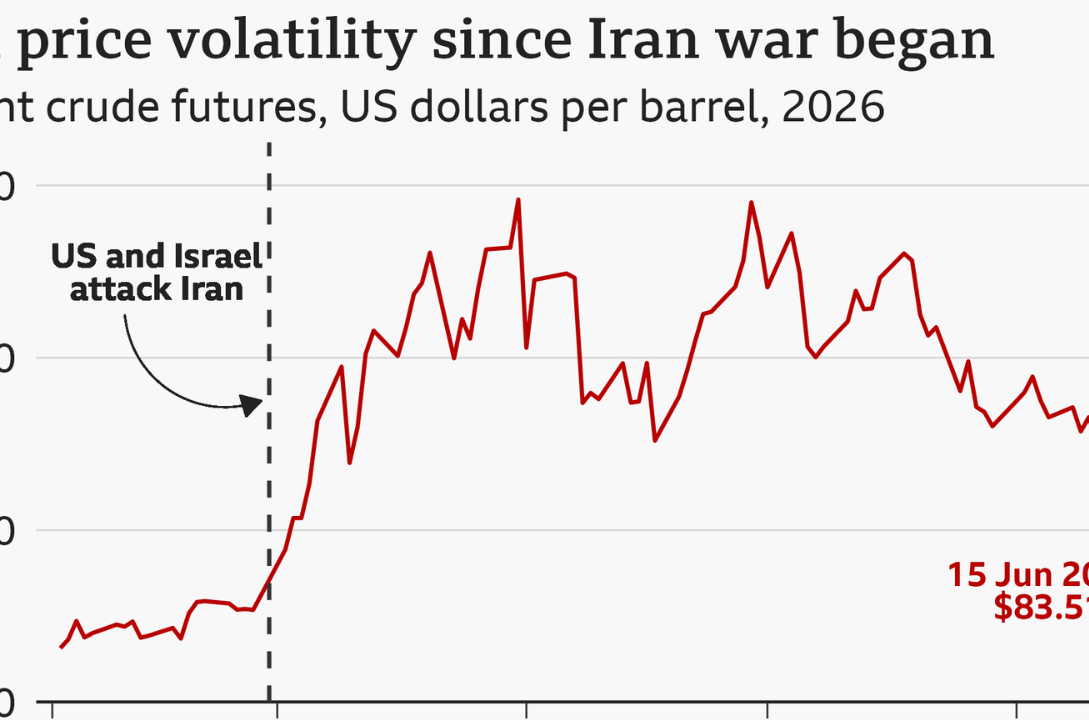
U.S. oil futures settled at their lowest level since the Iran war began, extending a nine-session losing streak as traders reassessed supply risks, shipping flows through the Strait of Hormuz and the possibility of faster normalization in the global crude market.
West Texas Intermediate futures fell 3.9% to settle at $70.34 a barrel, after trading below $70 during parts of the session. Brent crude, the international benchmark, dropped 4.6% to settle at $73.87 a barrel. The move came one day after Brent had already reached its lowest level since the start of the conflict.
The decline reflects a sharp shift in market psychology. During the early stages of the war, oil prices carried a heavy geopolitical risk premium. Traders worried that disruption in the Strait of Hormuz could restrict flows through one of the world’s most important energy transit routes. Now, with more ships passing through the waterway and diplomatic messages suggesting no immediate transit fees, that premium is being reduced quickly.
Hormuz Traffic Recovery Weakens the Risk Premium
The Strait of Hormuz remains central to the oil market’s reaction. Around 20% of the world’s daily oil traffic normally passes through the waterway, making it one of the most sensitive chokepoints in global energy trade.
During the conflict, shipping through the strait slowed sharply. Between June 12 and June 14, total crossings through Hormuz were reported at only 32. One week later, between June 19 and June 21, crossings rose to 93, according to maritime intelligence firm Kpler.
That recovery matters because oil markets price not only current supply, but also the probability of future disruption. When crossings were low, traders had to account for the risk of tighter supply, shipping delays, rerouted cargoes and higher freight costs. As transits recover, the market begins to remove part of that premium.
The latest fall in crude futures suggests traders now believe the worst-case supply disruption scenario is becoming less likely.
WTI’s move below $70 during parts of the session was technically and psychologically important. The $70 level is widely watched by traders because it often acts as a reference point for sentiment, hedging and producer economics.
A break below that level can signal that the market is no longer pricing a severe geopolitical supply shock. It can also trigger additional selling from traders who had been holding positions based on the expectation that war-related risks would keep prices elevated.
The final settlement at $70.34 kept WTI just above that round-number level, but the intraday move showed how quickly bearish momentum has built.
The nine-day losing streak also matters. A prolonged decline often reflects more than one headline. In this case, the selloff combines improving shipping flows, lower fear of immediate disruption, weaker risk premium and growing confidence that supply chains can adapt more quickly than expected.
Brent crude fell 4.6% to $73.87 a barrel, confirming that the decline was not limited to the U.S. benchmark. Brent is more directly tied to international supply and trade flows, so its weakness shows that the global market is also repricing the Hormuz risk.
When Brent falls sharply after a geopolitical crisis, it usually means traders are no longer paying the same premium for security of supply. The market is still watching the region, but it is no longer assuming that exports or shipping will remain severely constrained.
Brent’s decline also affects global pricing. Many physical crude contracts are linked to Brent-related benchmarks, so a weaker Brent price can influence refiners, producers, importers and energy-sensitive economies.
The fact that Brent reached its own post-war low before WTI did suggests the international market was already moving toward a faster normalization scenario.
No Transit Fees Calms Market Concerns
Another factor weighing on crude prices was the message that no tolls or fees were being charged along the Strait of Hormuz. President Donald Trump said on social media that Iran had informed the U.S. that no such charges were being imposed.
Oman’s foreign ministry also posted that it remained committed to ensuring freedom of navigation in the strait without imposing transit fees. That message helped calm concerns after Oman and Iran had previously said they were examining the costs associated with administering transit through the waterway.
The possibility of future fees had raised questions about shipping costs, trade friction and the structure of post-conflict navigation. Even if transit remained open, added fees could have increased costs for cargo movement and influenced pricing.
For oil traders, the absence of immediate fees reduces one uncertainty. If ships can move through the strait without new charges and with rising transit numbers, the case for a large risk premium becomes weaker.
Macquarie Cuts WTI Price Forecast
Strategists at Macquarie lowered their average WTI price estimate for the year to $77 a barrel from $89 previously. This is a meaningful revision because it signals that some analysts now expect the oil market to normalize faster than earlier forecasts assumed.
Macquarie strategist Peter Taylor wrote that the firm’s main view, based on the assumption of unrestricted Hormuz transit, is that the oil market normalizes much faster than consensus expects.
That view is important because it suggests the supply chain may have become more flexible during the conflict. Diversions, alternative routes and new trade patterns created under pressure could leave the system more diversified than it was before.
If that assessment is correct, the post-war oil market may not simply return to the old structure. It may become more adaptive, with traders, shippers and buyers better prepared to manage regional disruption.
Shipping Flexibility Changes the Price Outlook
One of the most important points in Macquarie’s view is that new trade routes and diversions established during the conflict may leave the supply chain more flexible. This matters because markets price vulnerability.
Before a crisis, traders may assume that disruption in a key chokepoint will create immediate and severe shortages. But if the market proves capable of rerouting flows, adjusting logistics and maintaining cargo movement, the future risk premium can shrink.
A more flexible supply chain does not eliminate geopolitical risk. It simply changes how much price protection the market demands against that risk.
If oil can move through alternative channels or resume quickly through Hormuz, prices may not need to stay as high as they did during peak uncertainty. That is one reason forecasts can move lower even when the geopolitical situation is not fully resolved.
Gasoline Prices Become Political Focus
The decline in crude futures has increased attention on U.S. gasoline prices. President Trump criticized major oil companies for not lowering prices at the pump as quickly as crude prices have fallen, saying customers were being overcharged and that he had instructed the Justice Department to examine the issue.
According to AAA data cited in the report, the average U.S. gasoline price fell to $3.9280 a gallon. That is down from $4.06 shortly after the U.S.-Iran deal was announced, but still nearly one dollar higher than before the conflict began.
This gap matters politically and economically. Consumers often feel the effects of gasoline prices directly and quickly, especially when commuting, traveling or managing household budgets. Even when crude prices fall, pump prices may decline more slowly due to refining margins, distribution costs, taxes, inventories and retail pricing dynamics.
The White House focus on gasoline indicates that lower crude futures alone may not be enough to ease consumer pressure immediately.
Why Pump Prices Lag Crude Futures
Gasoline prices do not always move in perfect sync with crude futures. Crude oil is a major input cost, but retail fuel prices also reflect refining, blending, transportation, wholesale contracts, station margins, taxes and regional supply conditions.
If refiners or retailers bought supply when crude was higher, it can take time for cheaper replacement supply to move through the system. Regional inventories and local market competition also influence how quickly prices fall.
This lag often becomes controversial when crude prices decline sharply. Consumers see headline oil prices falling and expect immediate relief at the pump. If gasoline prices remain high, political pressure can rise.
In the current environment, the White House is treating that lag as a consumer issue. For the oil market, it adds another layer of scrutiny on refiners, distributors and retail fuel pricing.
The Market Is Repricing War Risk
The latest selloff shows that traders are aggressively repricing the probability of a severe supply disruption. The market is not saying risk has disappeared. It is saying the risk looks smaller than it did during the height of the crisis.
Several factors support that repricing: more ships are passing through Hormuz, public statements indicate no current transit fees, diplomatic channels appear active and major forecasts are being revised lower.
This does not mean oil prices cannot rebound. Any renewed threat to shipping, fee dispute, military incident or sudden decline in transits could quickly restore part of the risk premium.
But for now, the direction is clear. Traders are removing the extreme-war-risk component from crude prices and reassessing the market based on supply flow, demand expectations and logistics normalization.
What Traders Should Watch Next
The first indicator to watch is Strait of Hormuz traffic. If crossings continue to rise toward normal levels, it would support the view that the market is normalizing quickly.
The second factor is any official statement from Oman, Iran or the United States regarding transit rules, fees or navigation guarantees. Clarity on those issues can reduce volatility.
The third indicator is WTI’s behavior around $70. A sustained break below that level could reinforce bearish momentum, while a recovery above it could signal that traders see value after the sharp decline.
The fourth factor is gasoline prices. If pump prices fall more slowly than crude, political pressure on the energy sector may increase.
The fifth point is analyst forecast revisions. If more firms follow Macquarie in cutting WTI expectations, sentiment may remain pressured.
Finally, traders should watch whether the nine-day losing streak leads to short-covering. After a sustained decline, crude can rebound quickly if headlines change or if sellers take profits.
U.S. oil futures fell to their lowest level since the start of the Iran war as WTI dropped 3.9% to $70.34 a barrel and Brent crude slid 4.6% to $73.87 a barrel. The move extended a nine-day losing streak for U.S. crude and reflected a rapid reduction in the market’s geopolitical risk premium.
Improved traffic through the Strait of Hormuz, public statements rejecting immediate transit fees and revised forecasts from Macquarie all contributed to the selloff. At the same time, U.S. gasoline prices remain politically sensitive, with the national average still elevated despite recent declines.
The oil market is shifting from war-risk pricing toward normalization pricing. As Hormuz traffic improves and fee concerns ease, traders are reassessing how much geopolitical premium crude should carry. If transit flows keep recovering, prices may remain under pressure. But any renewed disruption in the strait could quickly reverse the market’s current confidence.