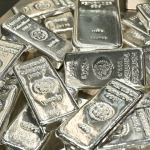
Gold prices rose sharply on Thursday after U.S. President Donald Trump canceled planned military strikes against Iran, easing fears that a wider conflict could push oil prices higher, intensify inflation and keep interest rates elevated for longer. Spot gold jumped 2% to $4,153.71 per ounce by early afternoon in New York, recovering from its lowest level since late November earlier in the session.
The move marked a notable reversal for the precious metal. Gold had been under pressure since the outbreak of the U.S.-Israeli war against Iran in late February, not because geopolitical risk disappeared, but because the conflict had driven energy prices higher. Rising oil prices increased inflation concerns, and those concerns supported expectations that U.S. interest rates could remain high or even rise further. That combination had weighed on gold despite its traditional role as a hedge against uncertainty.
Thursday’s decision changed that calculation. Trump said he had canceled strikes planned for Thursday evening, only hours after threatening additional bombings and expressing interest in taking Iran’s Kharg Island, a key oil export hub. The reversal lowered the perceived risk of an immediate military escalation and reduced fears of a fresh energy-driven inflation shock.
The rate outlook shifted quickly. According to the CME FedWatch tool, the probability of a December U.S. rate hike fell to 62% from 69% after the announcement. For gold, that mattered because higher interest rates increase the opportunity cost of holding a non-yielding asset. When rate-hike expectations decline, gold often finds support.
Gold Rebounds From Six-Month Low
Spot gold’s 2% rise was significant because it came after the metal had touched its weakest level since late November. That intraday low showed how much pressure gold had faced from the market’s recent reassessment of inflation and interest rates.
Gold is usually seen as a safe-haven asset during geopolitical stress. In a typical crisis, investors may buy gold to protect against uncertainty, currency instability or financial-market volatility. But the current environment has been more complicated. The war against Iran pushed oil prices higher, and that created a different problem for gold: stronger inflation expectations and the possibility of tighter monetary policy.
When inflation is rising because of energy shocks, central banks may hesitate to ease policy. If inflation becomes persistent, they may even consider rate hikes. That is negative for gold because the metal does not pay interest. Investors comparing gold with cash, bonds or money-market instruments may prefer yield-bearing assets when rates are expected to stay high.
Thursday’s rebound showed that gold traders were willing to buy once the immediate risk of another oil-price shock appeared to ease. The move was not only about safe-haven demand. It was also about lower rate pressure.
Why Canceling Iran Strikes Helped Gold
Trump’s decision helped gold by reducing the chance of a sudden escalation in the Middle East. The planned strikes had raised the risk that Iran could retaliate, that oil infrastructure could be hit, or that shipping flows through the Gulf could be disrupted again. Any of those outcomes could have pushed crude prices higher.
Higher crude prices would have fed directly into inflation expectations. Energy costs affect transportation, manufacturing, food distribution and consumer prices. If oil had surged again, investors might have expected the Federal Reserve to keep policy tighter for longer.
By canceling the strikes, Trump reduced the market’s fear of that scenario. Gold benefited because traders began pricing a slightly less hawkish rate path. The probability of a December rate hike fell, and that helped the metal recover from earlier losses.
This reaction may appear counterintuitive because geopolitical de-escalation sometimes reduces safe-haven demand for gold. But in this case, the key issue was inflation. Less military escalation meant less risk of an oil shock, and less risk of an oil shock meant less pressure for higher rates. That relationship supported gold.
The Iran Deal Still Needs Confirmation
Trump also said “discussions and final points” on a potential deal had been approved by the United States, Israel, Saudi Arabia, the United Arab Emirates, Qatar, Turkey, Pakistan, Bahrain, Kuwait, Jordan, Egypt and others. The implication was that a broader diplomatic framework may be forming.
Commodity strategist Ryan McKay of TD Securities cautioned that markets have seen headlines about potential deals before without those deals materializing. His point is important. Gold’s rebound was driven by hopes that the risk environment is improving, but those hopes still need confirmation.
If a deal is signed and tensions decline, gold could receive support from lower inflation and rate expectations. However, if talks break down or military threats return, the market could swing back toward oil-driven inflation fears.
The next phase will depend on whether the diplomatic language becomes an enforceable agreement. Traders will look for concrete details: whether strikes are fully suspended, whether Iran accepts the terms, whether oil infrastructure remains untouched, and whether shipping routes remain stable.
Until then, gold may remain volatile.
Inflation Data Complicates the Picture
While the geopolitical headline supported gold, U.S. inflation data remained uncomfortable. Producer prices rose more than expected in May, and consumer inflation also increased at its fastest pace in three years during the month, boosted by surging prices for energy-related products.
This matters because gold’s path is now closely tied to the Fed’s reaction function. If inflation remains elevated, the Fed may keep rates high, even if geopolitical tension eases. A softer oil outlook can help, but it may not be enough if broader inflation pressures persist.
The producer price data suggests that companies are still facing cost pressures. If those costs are passed on to consumers, inflation can remain sticky. The consumer inflation report already showed acceleration, creating a difficult backdrop for policymakers.
For gold, this creates a split signal. On one side, lower strike risk and weaker rate-hike odds are supportive. On the other side, stronger inflation data prevents traders from assuming that monetary policy will quickly turn dovish.
That is why gold futures did not mirror the full strength of spot gold. U.S. gold futures for August delivery settled 0.5% lower at $4,114, showing that the market remains divided.
Jobless Claims Add Another Layer
U.S. weekly jobless claims rose to 229,000 for the week ended June 6, exceeding Reuters forecasts of 219,000. This labor-market data adds another layer to the Fed outlook.
A softer labor market can reduce pressure on the Fed to raise rates. If unemployment risks increase or hiring momentum slows, policymakers may become more cautious about tightening further. That can support gold by lowering expected real yields.
However, the labor market signal is not strong enough on its own to override inflation concerns. A rise in jobless claims suggests some cooling, but producer and consumer price data still show inflation pressure. The Fed must weigh both sides of its mandate: price stability and employment.
For gold traders, the combination is complex. Higher jobless claims lean supportive. Stronger inflation leans negative. The cancellation of Iran strikes reduces one source of inflation pressure, but the market still needs clearer evidence that inflation is easing.
Fed Meeting Becomes the Next Major Test
Investors are now waiting for next week’s Federal Reserve meeting, which will be Kevin Warsh’s first as chair. Rates are expected to be held steady, but the market will focus heavily on the tone of the statement, the press conference and any update to rate projections.
The key question is whether the Fed sees the recent inflation rise as temporary and energy-driven, or as a sign of broader price pressure. If policymakers emphasize inflation risks, gold could face renewed headwinds. If they acknowledge lower geopolitical risk and signs of labor-market cooling, gold may find additional support.
Warsh’s first meeting as chair also raises the importance of communication. Markets will be looking for clues about how he balances inflation control against growth risks. Any sign that the Fed is less inclined to raise rates would likely support gold.
The December rate-hike probability has already fallen, but at 62%, it remains high. That means traders still see a meaningful chance of tighter policy later this year. Gold’s recovery may need a further decline in rate-hike expectations to become more durable.
Silver, Platinum and Palladium Also Move Higher
The precious-metals complex broadly strengthened. Spot silver rose 3.3% to $65.78 per ounce, platinum gained 2.6% to $1,708.38, and palladium climbed 4.4% to $1,267.50.
Silver’s gain was especially notable because the metal often trades with a dual identity. It has precious-metal characteristics, but it is also sensitive to industrial demand. When gold rises on lower rate pressure and market sentiment improves, silver can sometimes outperform because of its higher volatility.
Platinum and palladium also benefited from broader precious-metals buying. These metals are more closely tied to industrial and automotive demand, but they can still gain when macro conditions favor hard assets or when the dollar and rate expectations ease.
The broad rally suggests that the market reaction was not isolated to gold. Traders appeared to reassess the entire precious-metals space after the reduction in immediate Middle East escalation risk.
Why Gold’s Reaction Was Not Pure Safe-Haven Buying
It is important to understand that Thursday’s gold rally was not a simple safe-haven move. In many cases, gold rises when conflict intensifies. Here, gold rose after a planned attack was canceled. That makes sense only when the rate channel is considered.
The war had pressured gold because the main market concern was not only geopolitical danger, but inflation from higher oil prices. If war escalation pushes oil higher, the Fed may have less room to cut and more reason to remain restrictive. That environment can hurt gold.
When strikes were canceled, the market saw less risk of oil-driven inflation. That reduced rate-hike expectations and helped gold recover. In other words, gold rallied because the threat of tighter monetary policy eased.
This is a reminder that gold does not respond to geopolitics in isolation. It reacts to the interaction between geopolitics, inflation, real yields, the dollar and central-bank policy.
What Traders Should Watch Next
The first factor to watch is whether the proposed Iran deal becomes real. If the agreement is confirmed and oil prices remain contained, gold could continue to benefit from lower inflation expectations.
The second factor is oil. Gold traders need to monitor crude prices closely because energy costs are currently one of the main links between the war and U.S. monetary policy. A renewed oil spike could quickly reverse gold’s gains.
The third factor is the Fed meeting. Any shift in tone under Kevin Warsh will matter. A less hawkish Fed would support gold, while a stronger inflation-warning message could weigh on the metal.
The fourth point is incoming inflation data. Producer prices and consumer inflation have already surprised to the upside. If the next data releases remain hot, gold may struggle even if geopolitical risks ease.
Finally, labor-market data will remain important. A cooling labor market could reduce the need for further rate hikes, but only if inflation also begins to moderate.
Gold rose 2% on Thursday after Trump canceled planned strikes against Iran, easing fears of a renewed oil shock and reducing expectations for higher U.S. interest rates. Spot gold climbed to $4,153.71 per ounce after earlier hitting its lowest level since late November, while the probability of a December U.S. rate hike fell to 62% from 69%.
The rally reflects a complex market dynamic. Gold benefited not simply from geopolitical developments, but from the idea that reduced military escalation could lower oil-driven inflation pressure and ease the path for monetary policy.
Gold’s rebound depends on whether the Iran de-escalation becomes real and whether inflation pressure cools. A confirmed deal, stable oil prices and a less hawkish Fed could support further gains. But if inflation remains high or Middle East tensions return, gold may quickly face renewed pressure.