Oil futures and stock-index futures are set to reopen with investors watching two major forces at once: the unresolved Iran war and the continued strength of U.S. equity markets. The conflict enters its fourth month on Monday, with no confirmed breakthrough in negotiations and the Strait of Hormuz still effectively under Iranian control.
Markets have spent the past several weeks trying to price a difficult mix of geopolitical risk, energy inflation, resilient corporate sentiment and surprisingly strong stock momentum. While oil remains elevated compared with pre-war levels, U.S. equities have continued to climb, with the Dow Jones Industrial Average, S&P 500 and Nasdaq Composite all closing last week at fresh highs.
That split tells an important story. Investors are not ignoring the war, but they are also not treating it as enough to derail the stock rally for now. The next test will be whether energy prices remain contained, whether gasoline costs put more pressure on consumers, and whether the May jobs report confirms that the labor market is still strong enough to support risk appetite.
Iran War Enters a Fourth Month With No Clear Deal
The war between the United States and Iran is moving into its fourth month without a finalized agreement. President Donald Trump told Fox News in an interview aired Saturday that the U.S. was “close to a very good deal,” but he also suggested that a return to fighting remained an alternative if diplomacy failed.
That dual message has defined much of the recent market reaction. Every sign of progress has pushed oil lower and helped risk assets. Every sign of deadlock has lifted crude prices and revived concerns that the conflict could keep energy markets under strain for longer.
Iran’s Parliament Speaker Mohammad Ghalibaf said Sunday that there would be no deal unless Iran’s rights were secured. That statement shows that, even if negotiations are active, the political distance between the two sides remains meaningful.
Trump met with advisers in the Situation Room on Friday to assess the state of talks, but no announcement followed. For markets, the absence of a formal update matters. Investors have already seen multiple moments when officials suggested progress, only for negotiations to stall again.
As long as the talks remain unresolved, oil prices are likely to carry a geopolitical risk premium.
Strait of Hormuz Remains the Central Energy Risk
The Strait of Hormuz remains the most important pressure point in the crisis. The waterway is one of the world’s most important energy routes, and its disruption has been a major driver of higher oil and fuel prices.
According to the report, the strait remains effectively under Iranian control. Meanwhile, U.S. Central Command said the USS Milius is supporting the U.S. blockade against Iran, which had redirected 118 commercial vessels and disabled five as of May 31.
That level of disruption matters because shipping confidence does not recover instantly. Even if a ceasefire extension or framework agreement emerges, commercial shipping operators, insurers and energy companies will need proof that vessels can move safely and consistently.
Oil markets therefore face two different timelines. The diplomatic timeline can change quickly with a statement from Washington or Tehran. The physical market timeline is slower. Tanker routing, insurance pricing, refinery flows and supply-chain adjustments take time to normalize.
This is why oil may remain volatile even if negotiations improve.
Oil Prices Hold Elevated Ground
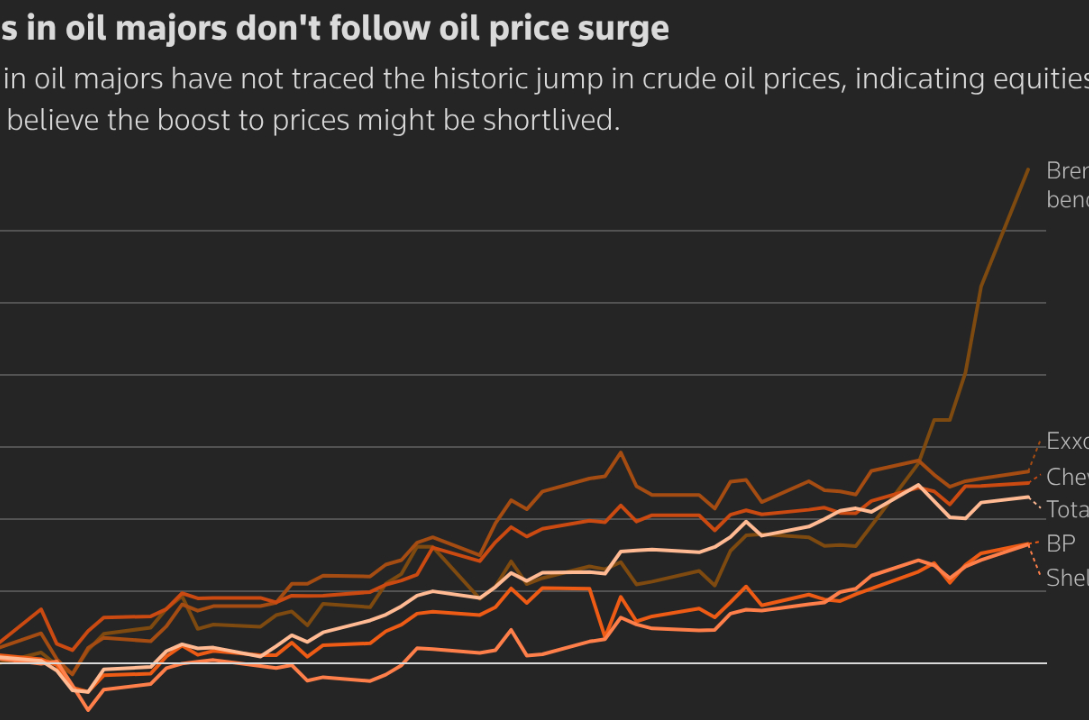
Brent crude continuous contract prices ended last week up 0.9% at $91.89. That level is below some of the most extreme war-driven highs, but it remains elevated enough to keep pressure on inflation expectations and consumer fuel costs.
The market is trying to assess whether crude prices are now reflecting a temporary disruption or a more durable geopolitical premium. If investors believe the Strait of Hormuz will reopen quickly and safely, oil could move lower. If traders believe the conflict will drag on, prices could remain supported.
The current setup is especially sensitive because oil affects multiple parts of the economy. Higher crude prices increase gasoline costs, raise transportation expenses, affect airline and shipping margins, and can feed into broader inflation measures.
For central banks, oil is not always treated the same as core inflation. But sustained energy increases can influence inflation expectations and consumer behavior. If households expect fuel prices to remain high, spending patterns can change. If businesses face persistent energy cost increases, they may raise prices or reduce margins.
That is why investors are closely watching whether the war remains contained or becomes a longer-term energy shock.
Gasoline Prices Add Pressure on Consumers
U.S. gasoline prices remain a visible transmission channel from the Iran war to American households. The national average gasoline price stood at $4.336 a gallon on Sunday, up from $3.987 a month earlier and $2.982 a year ago, according to AAA data cited in the report.
That rise is politically and economically important. Gasoline prices are one of the most visible inflation signals for consumers. Even when broader inflation metrics are complex, drivers see fuel costs directly and repeatedly.
Higher gasoline prices can pressure discretionary spending, especially for lower- and middle-income households. They can also affect travel plans, commuting costs, delivery prices and small business expenses.
The timing matters as well. Summer travel demand usually increases fuel consumption. If the conflict continues while travel demand remains firm, gasoline could stay elevated. That would complicate the economic narrative just as investors are looking for signs that inflation is moderating.
For the stock market, the question is whether higher fuel costs become a broad consumer headwind or remain a sector-specific issue. So far, equities have continued to climb, suggesting investors believe corporate earnings and economic momentum can absorb the pressure.
U.S. Stocks Keep Climbing Despite Geopolitical Risk
The strength of U.S. equities has been notable. All three major indexes ended last week at fresh highs, even as oil prices remained elevated and the Iran war remained unresolved.
The Dow Jones Industrial Average ended the week up 0.9%, setting its 12th record close of the year. It ended the month up 2.8% and has now closed higher in 12 of the past 13 months. Year to date, the Dow is up 6.2%.
The S&P 500 gained 1.4% for the week and recorded its 22nd record close of the year. It ended the month up 5.2%, marking its largest two-month percentage gain since May 2020 and its strongest nine-week percentage gain since early June 2020. The index is now up 10.7% this year.
The Nasdaq Composite performed even better, rising 2.4% for the week and marking its 18th record close of the year. It ended the month up 8.4%, its largest two-month percentage gain since November 2002. The tech-heavy index is up 16.1% year to date.
This rally suggests investors continue to favor U.S. growth, technology exposure and earnings resilience. It also shows that geopolitical risk has not yet produced a broad de-risking move across equities.
Why Stocks Are Still Resilient
Several factors may explain the resilience. First, investors may believe that a diplomatic solution is still possible. Trump’s comments that the U.S. is close to a deal have likely helped limit fear around a larger escalation.
Second, corporate earnings and market momentum remain strong. When indexes are breaking records, investors often hesitate to sell unless there is a clear catalyst. Momentum can become self-reinforcing, especially when major benchmarks continue to attract inflows.
Third, technology stocks continue to support the broader market. The Nasdaq’s strong performance indicates that investors remain focused on growth themes, including artificial intelligence, cloud infrastructure, semiconductors and large-cap technology earnings.
Fourth, some investors may see the U.S. market as relatively insulated compared with economies more directly exposed to energy imports or regional geopolitical instability. While higher oil prices hurt U.S. consumers, the U.S. also has a large domestic energy sector that can partially benefit from higher prices.
Still, resilience is not the same as immunity. If oil prices spike further, gasoline costs rise sharply, or the jobs report disappoints, the market could quickly reassess risk.
May Jobs Report Becomes the Next Major Test
The main economic event of the week will be the May jobs report from the Bureau of Labor Statistics, due Friday. Economists expect nonfarm payrolls to rise by 95,000, down from the 115,000 gain in April. The unemployment rate is expected to remain unchanged at 4.3%.
The jobs report matters because it will help investors judge whether the U.S. economy can continue supporting record-high stock prices while absorbing higher energy costs.
A solid report could reinforce the view that the labor market remains stable. That would support consumer spending and reduce recession concerns. However, if job growth is too strong, it could also keep inflation concerns alive, especially if energy prices remain high.
A weak report would create a different problem. It could suggest that higher costs, policy uncertainty or tighter financial conditions are beginning to weigh on hiring. In that case, investors may worry that corporate earnings expectations are too optimistic.
The unemployment rate will be especially important. At 4.3%, the labor market is softer than during its tightest post-pandemic period, but still not weak by historical standards. A stable unemployment rate would suggest that the economy is slowing without breaking.
Oil and Jobs Could Shape Fed Expectations
The combination of oil prices and labor data will shape expectations around Federal Reserve policy. If energy prices remain elevated while job growth holds up, investors may worry that inflation pressures could persist. That could limit the Fed’s flexibility.
If oil prices ease and job growth slows modestly, markets may interpret that as a more balanced outcome. It would suggest that inflation pressure is cooling without a sharp labor-market breakdown.
The challenge is that the Iran war makes the inflation outlook less predictable. Energy shocks are difficult for central banks because they can raise headline inflation while simultaneously hurting consumer demand. This creates a policy dilemma: tighten too much and risk slowing growth, or stay too patient and risk inflation expectations rising.
For now, equity investors appear willing to look through that risk. But bond, currency and commodity markets may remain more sensitive to changes in the war narrative.
What Traders Should Watch This Week
Traders will likely focus on five key signals.
The first is any official update from Washington or Tehran on the status of negotiations. Markets have reacted strongly to headlines about possible deals, ceasefire extensions and renewed military options.
The second is shipping activity around the Strait of Hormuz. Any signs that more vessels are moving safely through the waterway could ease oil-market pressure. Further disruptions could have the opposite effect.
The third is gasoline prices. If pump prices keep rising, consumer sentiment and political pressure may intensify.
The fourth is stock-market breadth. Record highs are impressive, but investors will want to know whether gains are broadening beyond a small group of large technology names.
The fifth is the jobs report. A major surprise in either direction could change expectations for growth, inflation and Fed policy.
Oil futures and stock futures are reopening at a delicate moment. The Iran war is entering its fourth month, the Strait of Hormuz remains a central energy risk, and gasoline prices are much higher than they were a year ago. At the same time, U.S. equities are trading at record levels, supported by strong momentum and continued confidence in corporate resilience.
The market is effectively balancing two narratives. One says geopolitical risk and energy inflation could eventually pressure consumers, companies and central banks. The other says U.S. growth, technology leadership and market momentum remain strong enough to keep the rally alive.
This week could help determine which narrative gains strength. If diplomatic progress becomes clearer and the jobs report remains steady, stocks may continue to hold firm while oil risk premiums ease. If talks stall, energy prices rise and labor data disappoints, investors may become less willing to ignore the risks.
For now, the rally remains intact. But with oil, geopolitics and employment data all in focus, the next trading sessions may test how durable that confidence really is.