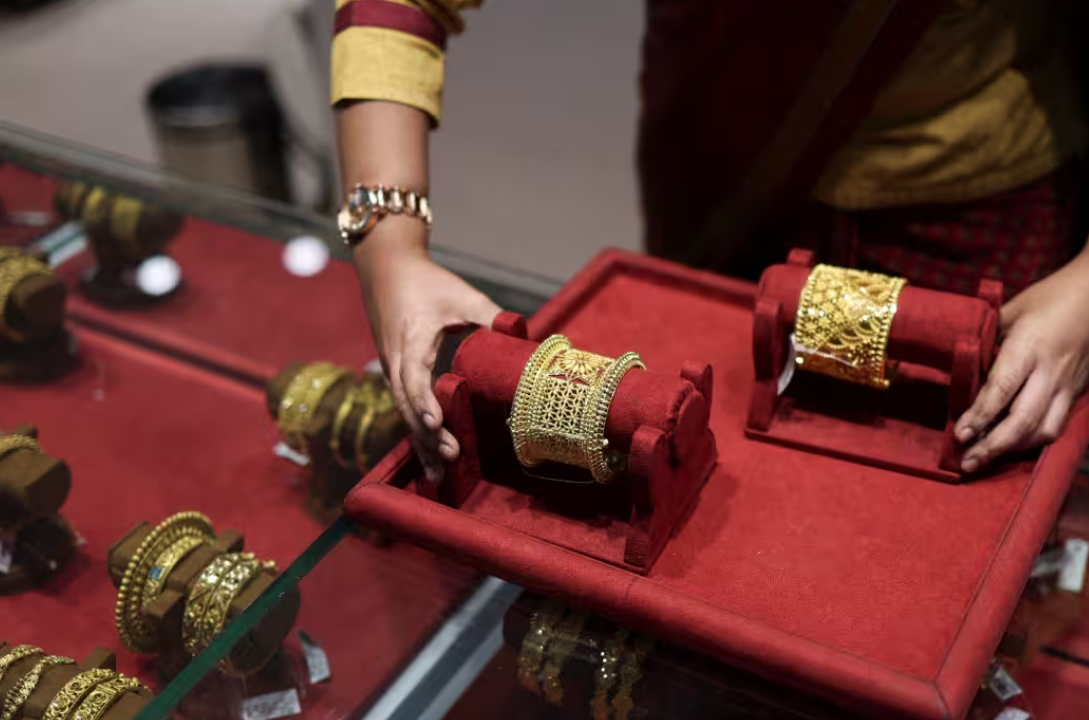
India’s leading jewellery retailers are intensifying efforts to bring household gold back into circulation as the country faces renewed pressure from rising bullion imports, higher import duties and strain on foreign exchange reserves. The push comes after the government raised import duties on gold and silver to 15% from 6%, a sharp policy move aimed at reducing fresh imports at a time when India’s external balances are already under pressure.
The strategy is built around a simple idea: India has one of the world’s largest pools of privately held gold, much of it sitting idle in homes, temples and bank lockers. If even a small portion of that gold is exchanged, recycled or monetised through formal channels, the country can reduce its dependence on imported bullion without disrupting the cultural and financial role gold plays in Indian households.
Major jewellers including Titan, Kalyan Jewellers and Malabar Gold & Diamonds are now positioning old gold exchange, lighter jewellery and gold monetisation schemes as key tools to manage supply. The shift is not only a commercial response to higher prices. It is also becoming part of a broader national conversation about imports, the current account deficit and the rupee.
India’s Gold Import Problem Is Back in Focus
India is the world’s second-largest gold market, but it imports nearly all of its gold requirements. That makes the country highly exposed whenever gold demand rises sharply or global prices surge.
Gold imports rose more than 24% to a record $71.98 billion in FY26, up from $45.54 billion in the previous year. This increase matters because gold is not just a consumer product in India. It is also a macroeconomic variable. Large gold imports increase demand for foreign currency, widen the trade deficit and add pressure on the current account.
The situation becomes more sensitive because India also imports more than 85% of its crude oil needs. When oil and gold imports rise at the same time, pressure on the rupee can intensify. The government’s decision to raise import duties reflects this concern.
Prime Minister Narendra Modi’s appeal for citizens to delay gold purchases for a year also shows the seriousness of the issue. The message is not just about jewellery consumption. It is about conserving foreign exchange reserves during a period of external stress.
Higher Import Duties Change the Market Equation
The increase in import duty from 6% to 15% is a major change for jewellers, consumers and bullion traders. Higher duties make imported gold more expensive, which can reduce demand for new bullion but also raise costs for retailers that depend heavily on fresh supply.
For jewellery companies, the new duty structure strengthens the case for old gold exchange programmes. If retailers can source more gold from customers who bring in old jewellery, coins or unused items, they can reduce their need for imported metal.
This approach also helps maintain inventory flexibility. Instead of relying entirely on imported bullion, jewellers can use recycled gold to meet part of their production needs. That becomes more valuable when import costs rise.
For consumers, higher duties may encourage exchange rather than fresh buying. A customer holding old jewellery may prefer to trade it in for a new design instead of purchasing entirely new gold at a higher effective price.
Titan Shows the Power of Gold Exchange
Titan Company, India’s largest jewellery retailer, has long been ahead of this trend. The company launched a gold exchange programme around 25 years ago, originally in response to rising gold prices. Today, that initiative reportedly meets about 50% of Titan’s gold sourcing requirements.
That figure is significant. It shows that old gold exchange is not a marginal activity. When properly managed, it can become a core sourcing channel for a major jewellery retailer.
Titan’s experience also gives the wider industry a working model. A trusted brand, transparent valuation process and large retail footprint can persuade consumers to exchange old gold in a formal setting. Trust is essential because gold transactions are deeply personal and financially meaningful for Indian families.
The company has also adapted its product strategy by introducing bridal jewellery collections crafted in 18 karat gold amid steep price increases. This reflects another industry trend: reducing gold weight while preserving design appeal.
Kalyan Jewellers Launches Gold4India Initiative
Kalyan Jewellers has also moved aggressively. On May 12, the company announced a four-point strategy designed to reduce gold imports by five tonnes this fiscal year.
Its “Nation First–Gold4India Initiative” focuses on old gold exchange programmes, lighter 18 karat jewellery, monetisation schemes and a broader gold recirculation drive. The company also plans to open dedicated counters across its 342 stores where customers can encash gold through a professionally managed and transparent service.
This is important because convenience can determine adoption. Many households own old gold but may not actively seek monetisation unless the process is simple, trustworthy and accessible. Dedicated counters can help formalise what is often an informal or fragmented market.
Kalyan Jewellers already has meaningful participation in old gold exchange. In the December quarter, its old-gold exchange mix was reportedly above 30%, slightly higher than a year earlier. That suggests consumers are already responding to high prices and exchange incentives.
Malabar Calls for Stronger Gold Monetisation
Malabar Gold & Diamonds has also urged the government to strengthen gold monetisation efforts. The company submitted a proposal to the Centre recommending strategic improvements to the gold monetisation scheme.
Malabar Group chairman M.P. Ahammad argued that India already holds an enormous quantity of gold within households, much of it idle. If part of that gold returns to circulation through formal exchange and recycling, pressure on fresh imports can ease meaningfully.
This point is central to the entire debate. Gold in India is not only jewellery. It is savings, inheritance, security, status and cultural capital. Any successful monetisation scheme must respect that role. Consumers are unlikely to part with gold unless the process feels safe, fair and useful.
That is why jewellers may be better positioned than banks or government schemes alone. They already have consumer relationships, valuation systems and retail trust.
GJEPC Pushes Lower Caratage Jewellery
The Gems and Jewellery Export Promotion Council has also proposed measures to reduce imports and revive idle gold. In a letter to the Prime Minister, the council said promoting lower-caratage jewellery could help reduce imports by 20% to 30%.
This strategy directly addresses India’s preference for 22 karat jewellery. Traditional Indian buyers often prefer high-purity gold, especially for weddings, festivals and long-term savings. But 22 karat jewellery uses more gold per piece than 18 karat or 14 karat designs.
By promoting lighter 18 karat and 14 karat jewellery, retailers can reduce the amount of gold required while still offering attractive designs. This approach is especially relevant at a time when gold prices are high and younger consumers may be more open to design-led jewellery rather than purity-first buying.
Lower caratage jewellery can also improve affordability. Consumers may still purchase jewellery, but at a lower gold weight and lower total cost.
Old Gold Can Reduce Pressure on Forex Reserves
The macroeconomic logic behind old gold exchange is straightforward. Every ounce of gold recycled domestically is an ounce that does not need to be imported. That reduces demand for dollars and eases pressure on India’s foreign exchange reserves.
This matters at a time when India is already managing external pressures from oil imports, currency weakness and global market volatility. Gold imports can become a major burden when prices rise sharply or demand accelerates.
Old gold exchange does not eliminate the need for imports, but it can reduce the intensity of the problem. If large retailers source 30% to 50% of their gold through exchange programmes, the cumulative effect across the industry could be substantial.
The challenge is scale. India’s household gold reserves are enormous, but much of that gold is emotionally significant, inherited or held for emergencies. Converting idle holdings into circulating supply requires trust, transparency and attractive incentives.
Consumer Behaviour Is Changing
High gold prices are already changing consumer behaviour. Some buyers are shifting toward lighter jewellery, lower caratage designs or exchange-based purchases. Others may delay purchases, especially after the government’s public appeal to conserve foreign exchange.
However, gold demand in India is deeply resilient. Weddings, festivals and family traditions continue to support purchases even when prices rise. This means demand may not collapse simply because import duties increase.
Instead, the market may shift in composition. Fresh purchases could slow, while exchange transactions, lighter designs and monetisation schemes gain share. Consumers may become more price-sensitive but not necessarily abandon gold.
Retailers that can offer transparent old gold valuation, modern designs and flexible purchase options may benefit from this transition.
Retailers Gain Strategic Advantages
For jewellers, old gold exchange is not only a national interest strategy. It can also provide commercial advantages.
First, it lowers dependence on imported gold during periods of high duty. Second, it brings customers into stores, creating opportunities for new sales. Third, it allows retailers to convert old jewellery into new designs, supporting margins and inventory turnover.
Fourth, it strengthens customer loyalty. A consumer who trusts a jeweller to fairly value old gold may return for future purchases. In a market where trust is critical, exchange programmes can deepen relationships.
Finally, old gold exchange can help organised retailers gain market share from informal channels. Customers may prefer professional valuation, documentation and transparency when gold prices are high and transaction sizes are meaningful.
Risks and Challenges Remain
Despite the opportunity, old gold exchange faces several challenges. The first is consumer trust. Customers need confidence that purity testing, valuation and pricing are fair.
The second is emotional attachment. Many households hold gold as family wealth or inheritance. They may hesitate to sell or exchange pieces with sentimental value.
The third is tax and documentation complexity. Formalising old gold flows may require clearer processes to avoid discouraging consumers.
The fourth is product preference. While lighter and lower-carat jewellery can reduce gold usage, many Indian consumers still prefer 22 karat jewellery for traditional reasons. Changing that preference may take time.
Finally, high import duties can create unintended effects, including incentives for informal trade or smuggling if the price gap becomes too large. Policymakers will need to balance import control with market stability.
What Investors Should Watch
Investors should monitor how quickly large jewellers increase old gold sourcing. Titan’s 50% sourcing figure sets a high benchmark, while Kalyan’s goal of reducing imports by five tonnes this fiscal year will be closely watched.
The second factor is consumer acceptance of 18 karat and 14 karat jewellery. If lower-caratage designs gain traction, retailers may reduce gold intensity without losing sales volume.
The third point is government policy. Import duties, monetisation incentives and documentation rules will shape how much idle gold enters formal circulation.
The fourth factor is gold price direction. High prices can encourage exchange, but they can also reduce discretionary purchases.
Finally, investors should track India’s current account and rupee performance. If oil and gold imports remain elevated, pressure on external balances may keep policy focused on reducing import dependence.
Conclusion
India’s top jewellery retailers are pushing old gold exchange and monetisation programmes as higher import duties reshape the bullion market. With gold and silver import duties raised to 15%, the industry is trying to unlock household gold reserves, reduce fresh imports and ease pressure on foreign exchange reserves.
Titan has already shown that gold exchange can become a major sourcing channel, meeting about half of its gold requirements. Kalyan Jewellers is expanding its Gold4India initiative with dedicated encashment counters, lighter jewellery and monetisation efforts. Malabar Gold & Diamonds and the GJEPC are also calling for stronger policy support and broader adoption of lower-caratage jewellery.
The strategy reflects both commercial adaptation and macroeconomic necessity. India imports nearly all of its gold and most of its crude oil, making external balances vulnerable when bullion and energy imports rise together. Recycling idle household gold cannot solve every problem, but it can reduce import dependence and strengthen domestic supply.
The next phase will depend on trust, transparency and consumer participation. If jewellers can make old gold exchange simple, fair and attractive, India may be able to turn its vast private gold reserves into a more active economic buffer.