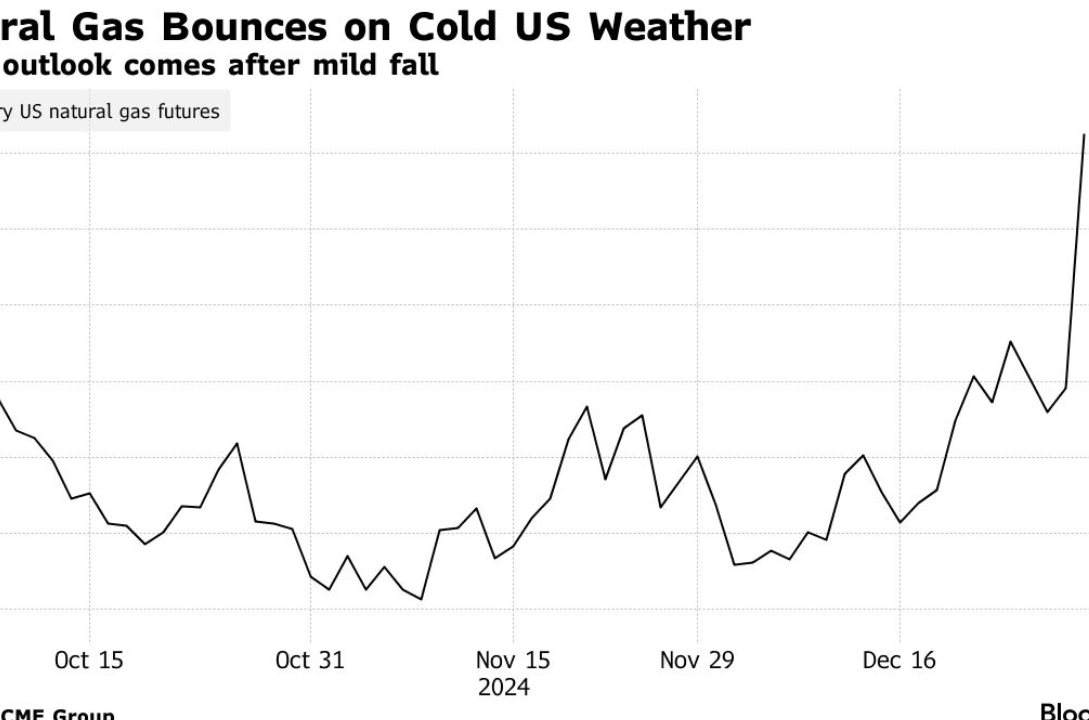
U.S. natural gas futures moved lower as traders reassessed the near-term demand outlook following updated weather forecasts and continued maintenance affecting liquefied natural gas exports. Nymex natural gas settled down 2.5% at $3.147 per million British thermal units, reflecting a market that remains sensitive to every shift in temperature expectations, power-sector demand, and LNG flows.
The decline came after forecasts removed some heat from the second half of June. That change mattered because summer weather is one of the most important drivers of U.S. gas demand. When temperatures rise, electricity consumption increases as households and businesses rely more heavily on air conditioning. Utilities then burn more natural gas for power generation, especially during periods of strong cooling demand. When forecasts turn slightly milder, traders often reduce expectations for gas-fired power demand, pressuring futures prices.
At the same time, LNG exports remain held back by maintenance. This limits one of the key demand channels for U.S. natural gas. Over the past several years, LNG exports have become a major outlet for domestic supply, tying U.S. gas prices more closely to global energy markets. When export facilities operate below capacity, more gas remains available for the domestic market, which can weigh on prices if local demand is not strong enough to absorb supply.
Still, the market’s decline does not necessarily signal a fully bearish shift. Near-term hot weather remains supportive, and analysts continue to watch for the first meaningful heat of the season later this week. That heat could drive the strongest power-generation demand of 2026 so far, potentially limiting downside if cooling demand accelerates.
The result is a mixed setup: short-term weather may support prices, but softer late-June forecasts and restrained LNG exports make it harder for natural gas to extend its recent rally without stronger confirmation from demand.
Why Weather Forecasts Matter So Much for Natural Gas
Natural gas is one of the most weather-sensitive commodities in the futures market. Unlike crude oil, which is heavily influenced by global trade flows, geopolitics, refinery demand, and transportation consumption, natural gas often reacts sharply to domestic temperature forecasts. In the United States, this is especially true during winter and summer.
In winter, cold weather increases heating demand. In summer, heat increases air-conditioning demand, which raises electricity consumption. Because natural gas is a major fuel for power generation, warmer summer forecasts often translate into higher expected gas demand.
That is why the removal of some heat from late-June forecasts had an immediate market effect. Traders had been looking for sustained heat to support a stronger rally. If the second half of June looks less hot than previously expected, the market must reduce assumptions for cooling demand. That adjustment can trigger selling, especially if prices had already risen in anticipation of stronger summer consumption.
The key issue is not whether the weather is hot at all. The issue is whether heat is sustained, widespread, and strong enough to meaningfully tighten the supply-demand balance. A few days of high temperatures can support prices in the short term. But a lasting rally usually requires a broader pattern of heat across major demand regions.
Near-Term Heat Still Supports the Market
Despite the pullback, near-term weather remains a supportive factor. The first meaningful heat of the season is expected later this week, and that could lift power-sector demand to the strongest level of 2026 so far. If this materializes, utilities may increase gas burn, helping absorb supply and providing a floor under prices.
This is why the market reaction was not a simple collapse. Traders are balancing two different time horizons. The near-term outlook suggests stronger cooling demand, but the second half of June appears less supportive than earlier forecasts implied. That creates uncertainty over whether the current rally can continue.
If the upcoming heat wave proves stronger or more persistent than expected, natural gas prices could regain momentum. Power burn would likely rise, storage injections could moderate, and traders may rebuild bullish positions. However, if the heat is brief or geographically limited, the support may fade quickly.
For natural gas futures, the duration of heat matters as much as the intensity. A short hot spell can create a temporary demand spike. A sustained heat pattern can reshape the market’s storage expectations and support prices over several weeks.
LNG Maintenance Limits Export Demand
The second major factor weighing on prices is LNG export maintenance. U.S. LNG terminals are a crucial source of demand because they move domestic gas into global markets. When these facilities are operating normally, they can absorb large volumes of U.S. production and help tighten the domestic market.
Maintenance changes that equation. If LNG export facilities are temporarily constrained, feedgas demand declines. That means less natural gas is pulled from the U.S. system for export. More supply remains available domestically, increasing pressure on prices unless power demand or industrial consumption rises enough to offset the reduction.
This is especially important because LNG has become one of the most important structural growth drivers for U.S. natural gas. Export demand links domestic producers to global buyers in Europe, Asia, and other regions. When export capacity is limited, the U.S. market can become more vulnerable to local oversupply.
For the current market, stronger LNG demand would likely be needed to extend the rally. Without it, weather must do more of the work. That creates a narrower bullish path: prices may need sustained heat, stronger power burn, or a quick return of LNG export volumes to maintain upward pressure.
The Bullish Case Is Still Alive, but Conditional
Pinebrook Energy Advisors maintained a bullish one-to-three-month outlook, but with an important caveat: the market likely needs sustained heat or stronger LNG demand to extend the rally. This caveat is critical because it separates short-term price support from a durable trend.
The bullish case depends on tightening fundamentals. If heat persists across major population centers, power demand can rise sharply. If LNG maintenance ends and export demand strengthens, domestic supply can be pulled more aggressively into global channels. Together, those forces could support prices above current levels.
But if both factors disappoint, the rally could lose momentum. Milder weather in late June would reduce cooling demand, while continued LNG maintenance would keep export demand constrained. In that scenario, traders may focus more on storage levels and domestic supply, both of which could limit upside.
This is why natural gas remains highly data-dependent. A bullish headline is not enough. The market needs confirmation from temperature models, power burns, LNG feedgas flows, and storage reports.
Storage Expectations Remain Important
Although the latest market report focused mainly on weather and LNG maintenance, storage remains an essential part of the natural gas outlook. Weekly inventory data can quickly change sentiment because it shows whether the market is tightening or loosening in real time.
During summer, traders watch storage injections closely. If injections are smaller than expected, it may indicate stronger demand or tighter supply. That can support prices. If injections are larger than expected, it suggests that supply is outpacing demand, which can pressure futures.
Weather-driven demand affects these storage numbers directly. Strong heat can reduce injections because more gas is burned for electricity. Milder weather can allow more supply to move into storage. LNG maintenance can also influence inventories by leaving more gas in the domestic system.
For traders, the next few storage reports will help confirm whether the current price pullback is temporary or whether the market is moving into a softer balance.
Power Generation Demand Is the Key Short-Term Driver
The most important immediate demand source is power generation. As hot weather arrives, grid operators rely heavily on natural gas-fired plants to meet cooling demand. This is especially true during peak afternoon and evening hours, when air-conditioning use is high.
If the coming heat drives the strongest power generation demand of 2026 so far, it could improve market sentiment. Higher gas burn would reduce available supply and may offset some of the weakness from LNG maintenance. It could also reinforce the idea that summer demand is finally beginning to tighten the market.
However, traders will need to see actual demand data, not just forecasts. Weather models can shift quickly, and expected heat does not always translate into the same level of power burn if regional conditions, renewable output, or grid dynamics change.
The strongest price support would come from a combination of broad heat, high power demand, and rising LNG feedgas demand. Without that combination, rallies may remain vulnerable to pullbacks.
Why Natural Gas Volatility Could Stay Elevated
Natural gas futures may remain volatile because the market is being pulled in different directions. Near-term heat supports demand. Late-June forecast revisions reduce confidence in sustained heat. LNG maintenance limits exports. A bullish medium-term outlook depends on stronger confirmation from either weather or export flows.
This type of setup often leads to sharp daily moves. Traders react quickly to forecast updates, pipeline flow data, LNG terminal activity, and storage reports. Even small changes in expected temperatures can produce outsized moves if the market is positioned for a rally.
The 2.5% decline in Nymex futures reflects that sensitivity. Prices did not fall because the entire demand picture collapsed. They fell because one of the key supports — sustained late-June heat — became less certain, while LNG demand remained constrained.
That distinction matters. The market is not necessarily bearish, but it has become more cautious.
Impact on Producers and Energy Markets
For natural gas producers, the pullback in prices is a reminder that summer rallies can be fragile if not supported by sustained demand. Producers benefit from higher prices, but they also face a market where supply-demand balances can shift quickly. If prices struggle to hold gains, companies may remain cautious with production growth.
For utilities and power markets, the near-term heat wave could increase gas burn and raise electricity demand. This can influence power prices, especially in regions where gas-fired generation plays a large role in the grid.
For LNG-linked companies, maintenance schedules remain important. A return to stronger LNG feedgas demand would support the domestic gas market and help absorb supply. Extended maintenance or weaker export demand would have the opposite effect.
For traders, the key is timing. Natural gas can move sharply ahead of actual demand changes because futures prices anticipate weather, storage, and export flows. That makes forecast interpretation critical.
What Traders Should Watch Next
Traders should first watch updated weather models for the second half of June. If heat returns to the forecast, prices could recover. If models continue to cool, the market may remain under pressure.
The second factor is LNG feedgas demand. A rebound in export flows would improve the bullish case and support the one-to-three-month outlook.
The third factor is power burn. Actual gas demand from electricity generation will show whether the near-term heat is strong enough to tighten the market.
The fourth factor is storage. Weekly inventory reports will indicate whether supply is being absorbed or whether the market remains comfortable.
Finally, traders should watch the $3 per mmBtu area as a psychological zone. While the source report does not identify a specific technical level, round numbers often influence short-term sentiment in commodity futures. Holding above that area would suggest the market still has support. A deeper break could invite more selling.
Conclusion
U.S. natural gas futures pulled back as late-June weather forecasts turned less hot and LNG export maintenance limited demand. Nymex gas settled down 2.5% at $3.147 per mmBtu, reflecting a market that still has bullish potential but needs stronger confirmation.
Near-term heat remains supportive and could drive the strongest power generation demand of 2026 so far. However, without sustained heat or stronger LNG demand, the rally may struggle to extend. Traders are now watching weather models, export flows, power burn, and storage data for the next signal.
Final Takeaway
Natural gas is not losing its bullish setup entirely, but the market needs more than a short heat wave to keep climbing. Sustained summer demand, stronger LNG exports, and tighter storage data would support prices. Without those catalysts, futures may remain vulnerable to weather-driven pullbacks.