US Treasury yields edged lower on Tuesday despite fresh data showing a sharp rise in job openings, leaving bond investors caught between a resilient labor market, persistent inflation concerns, cautious Federal Reserve messaging and volatile oil prices linked to negotiations between Washington and Tehran.
The 10-year Treasury yield fell 2.2 basis points to 4.455%, while the 30-year yield slipped 2.4 basis points to 4.967%. The two-year yield, which is more closely tied to expectations for Fed policy, eased slightly to 4.045%. The move showed that investors are still trying to balance strong economic data against geopolitical uncertainty and shifting expectations for interest rates.
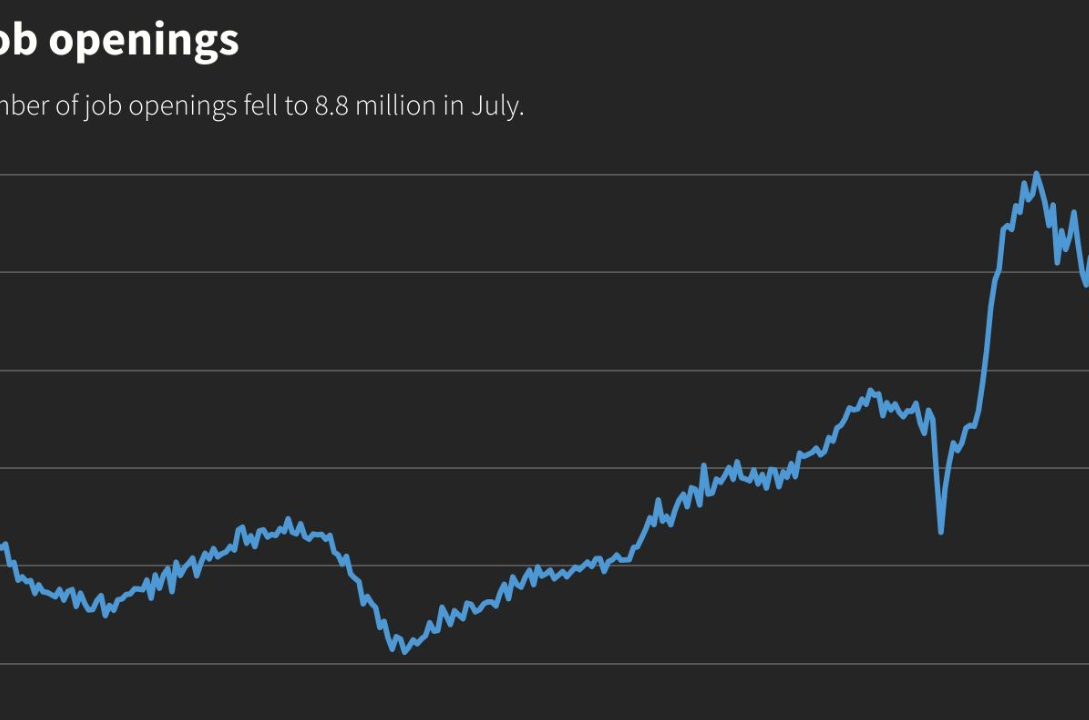
The labor market report surprised to the upside. The US Labor Department said job openings jumped by 731,000 in April to 7.618 million, the highest level since May 2024. The figure was well above the 6.88 million openings expected by economists polled by Reuters. Under normal conditions, such a strong reading could push yields higher because it suggests that demand for labor remains firm. This time, however, the market reaction was restrained by uncertainty around energy prices, Iran negotiations and the next move from the Federal Reserve.
Why Yields Fell Despite Strong Labor Data
The decline in yields despite stronger job openings shows that investors are not reading economic data in isolation. The Treasury market is also responding to geopolitical risk, oil prices and monetary policy expectations. In that environment, demand for safety and hopes for progress in US-Iran talks helped keep downward pressure on yields.
Since reaching 4.687% on May 19, the highest level in 16 months, the 10-year yield has moved lower. Part of that decline reflects optimism that a potential agreement between Washington and Tehran could reduce geopolitical tension, calm energy markets and limit the risk of a prolonged inflation shock.
The labor data complicates that view. More job openings suggest that companies are still looking to hire, even if actual hiring and quit rates are not showing the same strength. Some analysts noted that the increase in openings was largely concentrated in one sector, while the hiring rate itself did not rise.
That helps explain why yields only pared their losses after the report instead of fully reversing course. Investors appear to be waiting for more evidence before concluding that the labor market is truly reaccelerating.
Job Openings Put the Fed Back in Focus
The rise in job openings comes at a sensitive moment for the Federal Reserve. At the start of the year, markets were still pricing in roughly 50 basis points of rate cuts for 2026. Expectations have since shifted sharply. Investors are now pricing in a meaningful possibility that the Fed could raise rates before the end of the year.
According to CME Group’s FedWatch tool, the probability of at least a 25-basis-point rate increase at the Fed’s final meeting of the year in December has risen to about 50%, compared with only 9.3% one month earlier. That shift shows how quickly market expectations have changed in response to inflation pressure, higher oil prices and resilient economic indicators.
Cleveland Fed President Beth Hammack reinforced that cautious tone by saying the central bank may need to raise interest rates soon to address inflation pressures that are already too high and moving in a worrying direction. Comments like these reduce confidence in a quick policy easing cycle and keep bond investors focused on inflation risk.
For markets, the message is clear: the Fed cannot look only at growth or employment. If inflation remains too persistent, especially because of energy costs, the central bank may be forced to keep policy restrictive for longer or even tighten further.
Oil Remains the Main Source of Macro Volatility
Oil prices swung sharply on Tuesday as traders reacted to conflicting signals around US-Iran negotiations. Iranian media reported that Tehran was reviewing a proposed agreement with Washington to end the war, while President Donald Trump said talks were continuing.
US crude rose 1.44% to $93.49 per barrel, while Brent gained 0.76% to $95.70. The session was choppy, with both contracts falling by more than $2 earlier in the day before rebounding.
This volatility reflects the importance of the Iran issue for global energy markets. Any sign of progress toward an agreement could reduce the risk premium in oil, especially if it involves reopening or securing the Strait of Hormuz. On the other hand, any indication that negotiations are stalling can quickly lift prices, as traders price in the risk of supply disruption or shipping restrictions.
Secretary of State Marco Rubio added an important clarification by saying that the US negotiating team had not offered Iran sanctions relief in exchange for reopening the Strait of Hormuz. According to Rubio, any sanctions relief remains tied to Iran’s nuclear program. That distinction limits optimism around a quick and comprehensive deal.
Inflation Expectations Remain Sensitive to Energy Prices
Oil volatility matters for Treasury yields because it feeds directly into inflation expectations. When energy prices rise, investors may expect stronger pressure on transportation costs, consumer prices and corporate margins. That can lead markets to reassess interest rate expectations.
Inflation-linked indicators remain closely watched. The five-year breakeven rate on US Treasury Inflation-Protected Securities stood at 2.535%, while the 10-year breakeven rate was at 2.399%. The latter suggests that the market expects inflation to average about 2.4% per year over the next decade.
These levels do not signal inflation panic, but they show that investors do not view the risk as fully contained. If oil remains near $95 per barrel or moves higher, inflation expectations could become more sensitive, especially if labor market data remains firm.
For the Fed, this creates a difficult policy problem. Higher oil prices can act as a drag on consumption, but they can also lift inflation. If the central bank tightens too aggressively, it risks weighing on growth. If it waits too long, it risks allowing inflation expectations to drift higher.
The Yield Curve Still Points to a Resilient Economy
The gap between two-year and 10-year Treasury yields, a closely watched measure of economic expectations, stood at a positive 40.8 basis points. A positive curve can suggest that investors still expect reasonably solid growth or a gradual normalization of economic conditions.
Still, the signal should be read carefully. The yield curve is influenced by several forces, including policy rate expectations, inflation, safe-haven demand, fiscal policy, debt issuance and geopolitical risk. In the current environment, it reflects uncertainty about both Fed policy and oil-driven inflation risks.
The market appears to be in a waiting phase. Investors know that the labor market remains fairly resilient, but they do not yet know whether that resilience will translate into stronger wage growth, persistent inflation or simply a normalization after a period of low labor-market mobility.
The next major labor report will therefore be critical. Friday’s May payrolls report should help determine whether April’s jump in job openings was an isolated reading or the beginning of a broader shift in labor demand.
Friday’s Jobs Report Becomes the Next Key Test
The JOLTS job openings data marked the first major release in a week packed with labor market reports. The most important one will be Friday’s official government payrolls report for May. That report could have a significant impact on rate expectations, Treasury yields, the dollar and equities.
If payroll growth is strong and wages rise firmly, markets may strengthen the view that the Fed will need to keep policy restrictive. In that scenario, short-term yields could move higher, and risk assets may face renewed pressure.
If the report shows slower hiring or softer wage growth, investors may conclude that April’s job openings surge does not signal a lasting acceleration. Yields could then remain under downward pressure, particularly if tensions with Iran ease.
The market is looking for confirmation. Job openings alone are not enough to fully reset the Fed outlook. But combined with energy-driven inflation risk and hawkish comments from central bank officials, they reinforce the idea that rate cuts are no longer the dominant market scenario.
Impact on Stocks, the Dollar and Investors
For equities, the combination of solid employment data, elevated oil prices and the risk of higher interest rates creates a mixed setup. Companies benefit from an economy that remains resilient, but they also face higher financing costs and potential margin pressure if energy prices stay elevated.
The dollar may also remain sensitive to the data. Higher yields and a more restrictive Fed can support the US currency. But if Treasury yields fall because investors seek safety, the dollar’s movement may become less straightforward.
For bond investors, the debate centers on duration. Long-term yields have already fallen from their May peak, but another round of strong economic data could limit further declines. Investors will need to watch both economic indicators and geopolitical risks.
Portfolio positioning remains difficult because markets are not facing a single dominant risk. They are dealing with a complex mix of labor strength, inflation pressure, oil volatility, Fed uncertainty, Iran negotiations and growth expectations.
US Treasury yields slipped despite a sharp rise in job openings, showing that investors remain divided between economic resilience and geopolitical uncertainty. The increase in openings suggests that the US labor market still has strength, but the details of the report and the lack of clear acceleration in hiring limited its impact on bond yields.
Oil remains the other major driver. Negotiations between the United States and Iran, uncertainty around the Strait of Hormuz and statements on sanctions continue to keep energy prices volatile. That volatility can affect inflation expectations, rate pricing and the Fed’s policy path.
The US Treasury market is operating in a fragile balance. Strong job openings reduce hopes for quick rate cuts, while uncertainty around Iran and oil prices supports demand for Treasuries. Friday’s payrolls report will be the next major test for yields, the Fed and inflation expectations.