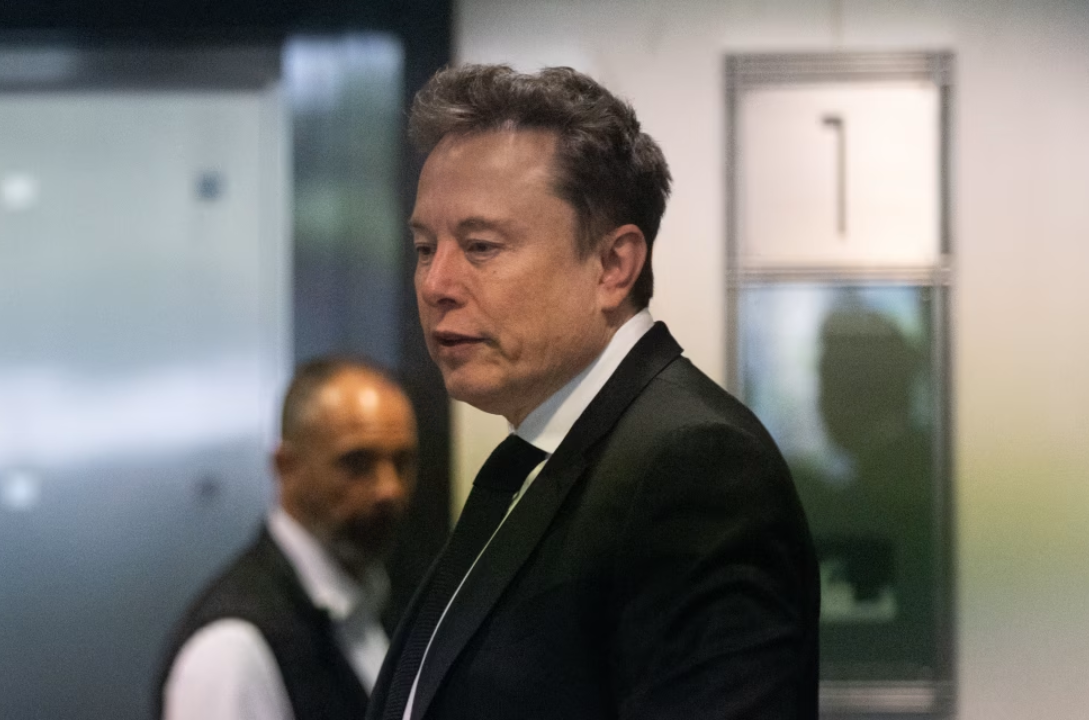
Elon Musk’s legal battle with OpenAI is drawing renewed attention after courtroom testimony suggested that Musk once wanted OpenAI to become part of Tesla. The testimony came from Shivon Zilis, a former OpenAI board member and longtime associate of Musk, who was questioned in court about whether she acted independently while serving on OpenAI’s board or functioned as a proxy for Musk.
The case has become one of the most closely watched disputes in the artificial intelligence industry. It is not simply a disagreement between former partners. It raises broader questions about nonprofit governance, conflicts of interest, the commercialization of AI, and the control of technology that could reshape entire industries.
Musk is suing OpenAI and its co-founders, Sam Altman and Greg Brockman, arguing that he was misled into donating $38 million to a nonprofit that later moved toward a for-profit structure. OpenAI rejects that view, saying Musk knew about and supported plans for a for-profit model and wanted broad control over the project.
Zilis’s testimony added another layer to the dispute. She said there were many possible structures discussed at the time, including one supported by Musk in which OpenAI would become a subsidiary of Tesla. That detail matters because it shifts the debate from whether OpenAI should have remained purely nonprofit to who would have controlled its future.
Zilis Testimony Brings Tesla Into the OpenAI Dispute
Shivon Zilis testified that Musk had backed the idea of OpenAI becoming part of Tesla, where he serves as chief executive. According to her testimony, OpenAI leaders Sam Altman, Greg Brockman and Ilya Sutskever declined to join Tesla.
That point is central to the legal and strategic debate. Musk’s lawsuit argues that OpenAI moved away from its original nonprofit mission. But OpenAI’s side has argued that Musk was not opposed to a more commercial structure when he believed he could control it.
If OpenAI had become a Tesla subsidiary, its AI research would likely have been tied more directly to Tesla’s ambitions in autonomous driving, robotics, manufacturing automation and AI infrastructure. Tesla has long positioned itself as more than an electric-vehicle company, with Musk repeatedly emphasizing its AI capabilities.
The courtroom testimony therefore gives investors and industry observers a clearer view of how closely Musk may have connected OpenAI’s future to Tesla’s strategic direction.
Why Tesla Matters in the AI Debate
Tesla’s role in the dispute is important because the company has been building its own AI capabilities for years. Its self-driving technology, robotics ambitions and vehicle data platform all depend heavily on machine learning, compute infrastructure and engineering talent.
Zilis testified that when Musk left OpenAI’s board in 2018, he was concerned Tesla would be competing with OpenAI for engineering talent. She also said that shortly before stepping down, Musk recruited a top OpenAI researcher to join Tesla.
That detail highlights a core tension in AI development: talent is scarce, and top researchers can shape the direction of entire companies. For Tesla, attracting elite AI engineers was critical to building autonomous-driving systems. For OpenAI, the same talent was essential to developing advanced AI models.
The competition for engineers also complicates governance. If a board member has major interests in another company competing for the same talent or technology, questions about independence become harder to avoid.
OpenAI Questions Zilis’s Independence
OpenAI’s lawyers and executives have portrayed Zilis as a close adviser to Musk and, at times, a proxy for him. They argued that she was often consulted when Musk himself was difficult to reach.
Zilis rejected the idea that she served Musk’s interests rather than OpenAI’s. She said she had “an allegiance to the best outcome of AI for humanity.” Her testimony emphasized that she viewed her role through the lens of AI safety and long-term societal impact.
Still, the situation is complicated. Zilis worked for Musk’s companies, including Tesla and Neuralink, while also serving on OpenAI’s board. She also had children with Musk during her time as an OpenAI director. OpenAI executives have argued that this personal relationship should have been disclosed more clearly.
The independence question is therefore not only legal. It is also about governance standards in powerful AI organizations. When board members have overlapping personal, professional and financial relationships, even the perception of conflict can become damaging.
The Personal Relationship Becomes Part of the Case
The trial has also brought personal details into the public record. OpenAI executives accused Zilis of not disclosing that Musk was the father of her twins while she was on the board.
Zilis testified that she initially kept Musk’s paternity confidential to protect the children from security threats. She later disclosed it to OpenAI’s board after public reporting revealed the relationship in 2022.
Her testimony described Musk offering to donate sperm around 2020 because he wanted people around him to have more children. She said their relationship had been difficult to categorize and that autoimmune issues had affected her ability to maintain long-term relationships.
These details are sensitive, but they are relevant to the case because OpenAI is using them to raise questions about transparency and board independence. Musk’s side argues that Zilis acted independently. OpenAI’s side argues that her closeness to Musk created conflicts that should have been handled more clearly.
Musk’s lawsuit claims that OpenAI and its leadership manipulated him into supporting a nonprofit mission, only for the organization to move toward a profit-oriented structure. He is asking for major remedies, including the removal of Altman and Brockman from leadership roles and up to $180 billion in damages from OpenAI’s for-profit arm to its nonprofit parent.
He is also asking the court to unwind OpenAI’s recent conversion into a more traditional corporate governance structure. If any of these remedies were granted, the consequences could be enormous.
OpenAI is now one of the most important companies in the AI sector. Its products, partnerships and infrastructure decisions influence the broader technology market. A court-ordered governance change could disrupt the company internally and affect investors, partners, employees and competitors.
The stakes go far beyond Musk and OpenAI. The case could shape how courts view the relationship between nonprofit AI missions and commercial AI development.
OpenAI Says Musk Wanted Control
OpenAI’s defense centers on a different interpretation. The company says Musk knew about the plan to create a for-profit structure and supported it. More importantly, OpenAI argues that Musk wanted unilateral control of the new venture.
That argument directly challenges Musk’s public framing of the case. If the court accepts OpenAI’s view, the issue becomes less about OpenAI abandoning its mission and more about a failed power struggle over control of a major AI project.
Zilis’s testimony about the proposed Tesla structure may support that broader argument. If Musk wanted OpenAI to become a Tesla subsidiary, then he was not necessarily opposed to commercial alignment. Instead, the dispute may involve whether that commercial alignment happened under Musk’s control or under OpenAI’s current leadership.
That distinction is critical for investors and AI policy observers. The legal outcome may depend heavily on what the court believes Musk understood, supported and wanted at the time.
The Helion Conflict Question Adds Another Layer
Zilis’s testimony also touched on potential conflicts involving OpenAI leaders Altman and Brockman. She described an OpenAI board discussion about a possible deal with Helion, a nuclear fusion startup in which both Altman and Brockman reportedly held significant stakes.
Zilis said she was concerned about the deal because the technology was not proven and the startup had no working product at the time. She also argued that power would become one of the most important bottlenecks for building advanced AI models.
That concern now looks especially relevant. The AI industry is increasingly constrained by energy availability, data-center capacity, cooling systems and power-grid limitations. If electricity is the central input for advanced AI, then deals involving energy companies require careful scrutiny.
Zilis testified that Altman and Brockman recused themselves from the discussion, but added that they were still in the room. That statement may raise additional questions about how OpenAI handled conflicts of interest as it scaled from a research lab into a major technology company.
AI Governance Is Becoming a Market Risk
The trial shows that AI governance is no longer a niche policy issue. It is now a market risk. Companies developing advanced AI systems are making decisions about corporate structure, energy sourcing, model access, infrastructure ownership and commercialization. Those decisions can affect valuations, partnerships and investor confidence.
OpenAI’s unusual structure has always attracted attention because it combines nonprofit oversight with a powerful commercial arm. That model was designed to balance mission-driven AI development with the capital needs of building frontier models. But as AI becomes more valuable, the tension between mission and profit becomes harder to manage.
Musk’s lawsuit is testing that tension in public. The court is being asked to review whether OpenAI’s evolution was consistent with its original commitments, and whether its leaders acted properly during that transition.
The result could influence how other AI companies structure themselves, disclose conflicts and manage investor expectations.
Tesla Investors Are Watching the AI Angle
For Tesla investors, the case matters because it reinforces how central AI is to Musk’s broader business empire. Tesla, xAI, Neuralink and SpaceX all depend on advanced engineering, compute infrastructure and automation. The idea that Musk once wanted OpenAI under Tesla suggests that he saw the AI lab as strategically valuable to Tesla’s future.
Tesla’s stock often reacts not only to vehicle deliveries and margins, but also to expectations around autonomy, robotics and software. Any evidence that Musk viewed OpenAI as important to Tesla’s AI roadmap adds context to his long-term strategy.
However, the case also highlights a risk: Musk’s companies are deeply interconnected through talent, capital, leadership attention and strategic overlap. That can create powerful synergies, but it can also create conflicts and distractions.
Investors will need to assess whether Musk’s AI ambitions strengthen Tesla’s long-term position or add complexity to an already crowded strategic agenda.
Why the Case Could Affect the Broader AI Industry
The AI industry is watching because the remedies Musk seeks are unusually significant. Removing OpenAI’s top leaders, shifting billions of dollars between corporate entities or unwinding a governance conversion would send shockwaves through the sector.
Such an outcome could affect OpenAI’s partnerships, its ability to raise capital, its employee retention and its commercial roadmap. It could also influence competitors that are building their own governance models around AI safety and profitability.
Even if Musk does not win the most aggressive remedies, the trial may still expose documents, testimony and governance practices that reshape public understanding of how OpenAI evolved.
In fast-growing technology sectors, legal disputes often become windows into internal strategy. This case is doing exactly that.
The testimony from Shivon Zilis has brought Tesla more directly into Elon Musk’s lawsuit against OpenAI. Her statement that Musk supported a structure in which OpenAI would become a Tesla subsidiary adds a key detail to the dispute over control, governance and commercialization.
Musk argues that OpenAI moved away from its nonprofit mission after taking his support. OpenAI argues that Musk understood and supported a for-profit structure, but wanted control over it. The court will need to weigh those competing narratives against testimony, documents and the history of OpenAI’s transformation.
For markets, the case is bigger than a personal or corporate feud. It touches Tesla’s AI ambitions, OpenAI’s governance, conflicts of interest, energy bottlenecks and the future structure of the AI industry. As artificial intelligence becomes one of the most valuable sectors in the global economy, the question of who controls its leading institutions is no longer theoretical. It is now being argued in court.