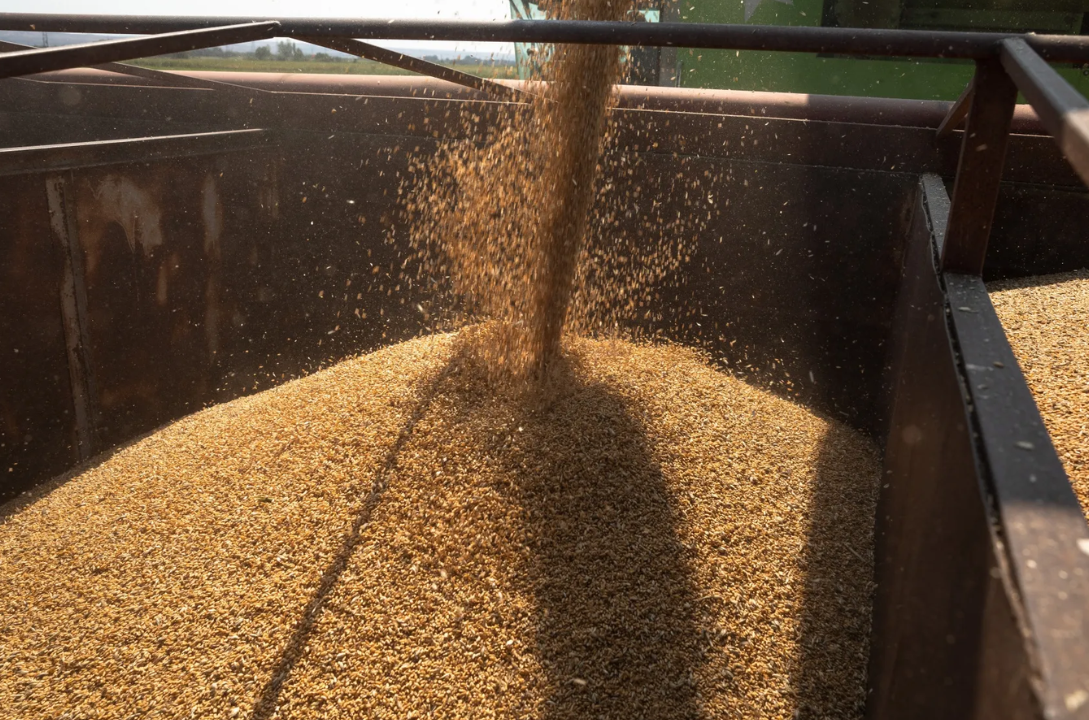
The agricultural futures market had a mixed session in Chicago, with wheat falling after approaching its highest level in nearly two years, while corn and soybeans advanced. The move showed a clear split between technical profit-taking in wheat and more consistent support for corn and soybeans, driven by demand, higher oil prices and selective weather concerns.
The most-active wheat contract on the Chicago Board of Trade settled 4.75 cents lower at $6.53 per bushel. The decline came after the grain hit, on a continuous chart, its highest level in nearly two years. The retreat was mainly attributed to technical selling after a strong rally, even though the market remained supported by fund buying and concerns over dry weather in the U.S. Plains.
At the same time, corn closed 2.25 cents higher at $4.7775 per bushel after touching $4.79, its highest level in a year. Soybeans also advanced, rising 7.75 cents to $11.97 per bushel. These two markets received additional support from higher crude oil prices linked to the Iran war and from signs of firmer demand.
Wheat retreats after strong rally
Wheat was the main focus of the session. After approaching a nearly two-year high, the contract faced technical profit-taking. This type of move is common when an asset rises quickly and attracts speculative flows. Traders who bought at lower levels may decide to take profits, while technical traders use the approach to resistance areas as an opportunity to sell.
The decline does not necessarily mean the wheat outlook has turned bearish. On the contrary, the market still carries important support factors. Dry weather in the U.S. Plains remains a concern, especially for winter wheat-producing areas. In addition, fund and managed-money buying has helped sustain the upward trend.
The problem is that, after a strong rally, the market becomes more vulnerable to corrections. When many traders move in the same direction, any sign of weakening can trigger quick selling. That is what happened in the session, with wheat losing part of its recent momentum.
Plains weather remains central to analysis
Weather conditions remain a decisive factor for U.S. wheat. Rain forecast for the Plains wheat belt could ease some drought stress on crops. However, some yield losses may already have occurred in certain areas.
This point matters. Rain can improve crop conditions going forward, but it cannot always reverse damage caused by prolonged dry periods. In addition, forecasts indicate that some of the driest areas may miss meaningful rainfall.
For the market, this creates a mixed reading. On one hand, incoming rain reduces part of the weather premium. On the other hand, the possibility of already-established yield losses keeps fundamental support in place. This combination helps explain why wheat declined during the session without fully erasing the positive tone of recent weeks.
Fund buying strengthens wheat momentum
Another important factor has been the role of speculators and funds. Recent strength in wheat contracts attracted buying from trend-following participants. When a market rises persistently, it can create a cycle that draws in new flows.
Futures International trader Joe Davis summarized this dynamic by saying wheat keeps grinding higher and attracting flow because everyone wants exposure to a winning asset. This behavior is common in commodity markets. As prices rise, systematic funds, technical traders and momentum investors increase exposure, reinforcing the move.
The risk is that this flow can also reverse quickly. If the price loses support or weather improves, some of those buyers may exit at the same time. That can generate stronger volatility. For this reason, even with a strong trend, wheat remains vulnerable to technical corrections.
While wheat retreated, corn advanced and reached its highest level in a year. The contract settled at $4.7775 per bushel after touching $4.79 during the session. The move was supported by strong export demand and moderate weather concerns in the U.S. corn belt.
External demand has been an important factor for corn. When exports gain momentum, the market begins adjusting expectations around stocks and future availability. This can support futures contracts, especially if there are doubts about new-crop production.
In addition, there are concerns that high fertilizer costs could reduce planted area. If farmers decide to cut acreage because of tight margins or high costs, future supply could come in below expectations. This possibility also supports prices.
Higher oil supports corn and soybeans
Rising crude oil prices were another supportive factor for corn and soybeans. The increase in crude, linked to the war involving Iran, reinforced interest in commodities tied to biofuels. Corn and soybeans are important feedstocks in that sector, especially through their links to ethanol, biodiesel and soyoil.
When oil rises, biofuels can become more competitive. This can increase demand for corn used in ethanol and soyoil used in biodiesel. Even if the effect is not immediate, futures markets tend to anticipate possible changes in demand.
For soybeans, support also came from stronger crush margins. When crush margins improve, processors have more incentive to buy soybeans and turn them into meal and oil. This increase in industrial demand can support soybean prices.
Soybeans rise on demand and better margins
Soybeans closed 7.75 cents higher at $11.97 per bushel. The move reflected support from firmer crush margins and a positive environment for energy-linked commodities. Although U.S. planting is progressing well, the market still found room for gains.
Soybeans have their own dynamic within the agricultural complex. The crop responds to export demand, South American production, the pace of U.S. planting and the performance of soybean products. When soyoil gains strength because of crude oil, it can improve the reading for the broader complex.
Traders are also watching the possibility of localized planting delays because of storms in the U.S. Midwest. Even though early progress has been good, any temporary interruption can provide some price support, especially in a market already sensitive to weather.
U.S. planting is progressing well, but storms may delay some areas
Early U.S. soybean and corn planting has been progressing well. This factor would normally be negative for prices because it reduces the risk of planting delays. However, forecast storms in the Midwest could delay seeding in some areas.
Still, rains are expected to taper by the middle of the week, suggesting farmers are unlikely to remain sidelined for long. This limits the bullish impact of weather. If delays are short, the market may return to focusing on demand fundamentals and global supply.
For corn and soybeans, the planting calendar will remain essential in the coming weeks. Fast planting under good conditions usually reduces risk premiums. Prolonged delays, however, can increase concern about yield potential and crop development timing.
High fertilizer costs remain on the radar
Expectations of lower planting due to high fertilizer costs also continue to support corn. Fertilizers are one of the main costs in agricultural production, especially for corn, which requires intensive nutrient application.
If fertilizer prices remain high, some farmers may adjust planting decisions, reduce acreage or limit applications. This can affect both cultivated area and yield potential. Even before any confirmation, futures markets tend to price this risk.
This factor is particularly relevant in an environment of higher oil and energy costs, since fertilizers are also linked to energy expenses. When energy rises, pressure on agricultural inputs can increase.
In the next sessions, traders should monitor three main factors. The first is weather in the U.S. Plains and Midwest. For wheat, the question will be whether rains can ease drought without missing key areas. For corn and soybeans, the focus will be planting pace after storms.
The second factor is fund flow. Wheat has attracted strong speculative interest, but this type of positioning can accelerate both rallies and corrections. If funds continue buying, wheat may regain strength. If positions are reduced, further technical selling could appear.
The third point is crude oil. As long as Iran-linked tension supports crude, corn and soybeans may continue receiving indirect support through biofuels. A sharp drop in oil, however, could reduce that support.
The agricultural futures market had a divided session in Chicago. Wheat retreated after nearing its highest price in nearly two years, pressured by technical selling and profit-taking. Still, dry weather in the U.S. Plains and fund buying continue to support the grain.
Corn advanced toward a one-year high, driven by export demand, weather concerns and expectations of lower planting due to high fertilizer costs. Soybeans also rose, supported by higher oil prices, better crush margins and firmer demand.
In the coming days, market direction will depend on weather, planting pace, crude oil strength and fund behavior. Wheat, corn and soybeans remain sensitive to different factors, but all are tied to the same reality: in an environment of uncertain weather, expensive energy and strong speculative flows, agricultural futures may remain volatile.