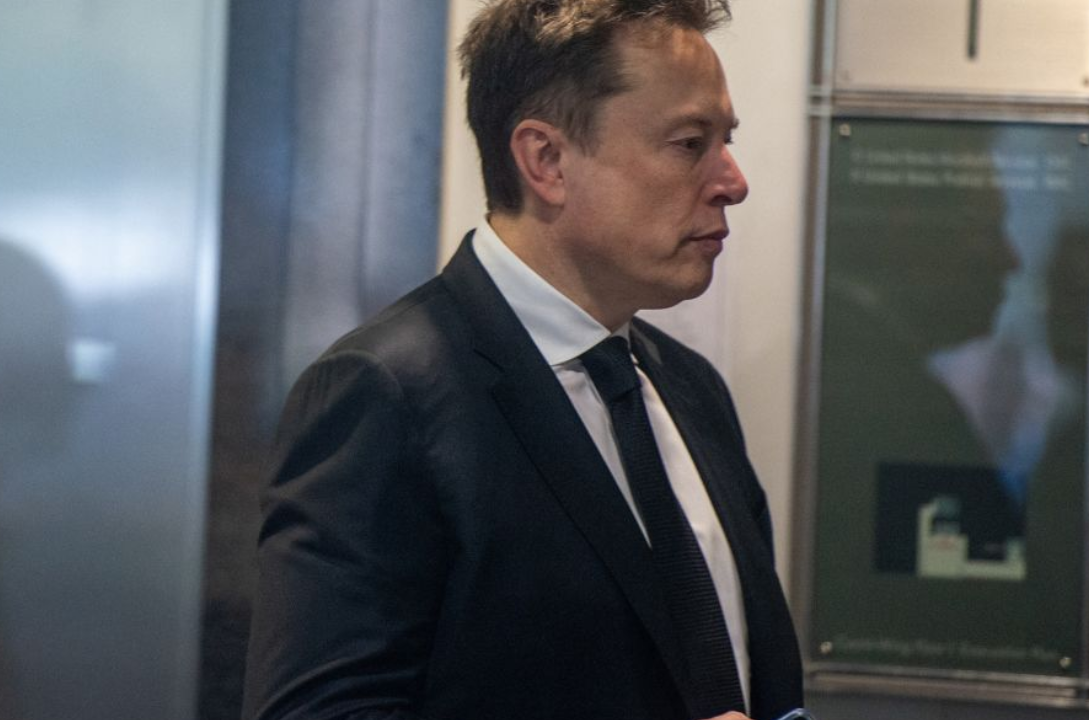
Elon Musk took the stand in a trial that could have major consequences for OpenAI’s future, one of the most influential companies in artificial intelligence. The case centers on a core accusation: Musk claims OpenAI was created as a nonprofit organization dedicated to developing artificial intelligence for the benefit of humanity, but later moved in a different direction by adopting a for-profit structure.
At the beginning of his testimony, Musk tried to present the dispute in simple and direct terms. According to him, the issue should not be viewed as a complex legal conflict, but as a question of whether an organization created for charitable purposes could be transformed in a way that contradicted its original mission. His strongest statement was that “it is not okay to steal a charity,” a phrase that summarizes the emotional and strategic core of his argument.
Judge Yvonne Gonzalez Rogers, who is overseeing the trial in a federal courthouse in Oakland, intervened after an objection and told jurors that Musk’s perspective was only his opinion and had no direct legal value. That moment showed the tone of the trial: on one side, a moral and founding narrative; on the other, a legal dispute over promises, governance, corporate control and documentary evidence.
The center of the dispute between Musk and OpenAI
Elon Musk’s lawsuit accuses OpenAI and its CEO, Sam Altman, of leading him to believe that his donations would help launch a nonprofit organization focused on the safe development of artificial intelligence. Musk says he contributed tens of millions of dollars based on that original mission.
In Musk’s view, OpenAI abandoned its initial commitment by creating a commercial structure and moving closer to corporate interests. For him, that shift represents a break from the promise made when the organization was founded.
OpenAI rejects that narrative. The company says Musk knew about the possibility of a for-profit structure, supported the idea and even requested unilateral control over the venture. According to OpenAI’s defense, the founders rejected that demand, and Musk later launched his own artificial intelligence company before beginning a legal strategy against OpenAI.
This difference in versions is the core of the trial. The court will need to assess whether there was a clear promise to keep OpenAI permanently nonprofit, whether Musk was misled and whether the company’s current structure violates legal or fiduciary obligations.
Musk seeks sweeping measures against OpenAI leadership
The remedies requested by Musk are broad and potentially transformative. They include removing Sam Altman and Greg Brockman from their leadership roles, requiring more than $180 billion in damages to be paid from OpenAI’s for-profit arm to its nonprofit parent, and unwinding the company’s recent conversion to a more traditional governance structure.
These requests show the scale of the dispute. This is not just an ordinary damages claim or a limited contractual disagreement. Musk is seeking a deep restructuring of OpenAI and a redefinition of how the company should operate.
If granted, those measures could dramatically alter the balance of power inside the company, affect its ability to raise capital, change its relationship with commercial partners and reshape the strategic direction of its AI products.
Legal experts cited in relation to the case, however, have said Musk faces an uphill battle. To win, he will need to show convincingly that there were clear legal commitments, not just expectations, shared values or mission statements.
Musk’s defense highlights his role in founding OpenAI
During opening statements, Steven Molo, Musk’s lead attorney, tried to position his client as essential to OpenAI’s creation. According to him, “without Elon Musk, there would be no OpenAI.” The defense sought to highlight Musk’s role in recruiting, early funding and shaping concerns about the risks artificial intelligence could pose to humanity.
This strategy aims to reinforce the idea that Musk was not merely a distant donor. The defense wants to show that he was central to the organization’s origins and that his contribution was based on a specific vision: creating an institution serving the public interest, not a traditional commercial company.
Molo also addressed possible personal resistance toward Musk. During jury selection, some potential jurors acknowledged negative opinions about him, especially because of his political activity. The defense tried to neutralize that point by arguing that, regardless of whether people like or dislike Musk, he has a historic role in the technology sector.
That aspect matters because Musk’s public image could influence the emotional environment of the trial. The judge, however, made clear that the case should not be decided based on political or personal opinions about Musk, but on the facts presented.
OpenAI presents a different version of the story
The defense for OpenAI and Sam Altman presented a different view of Musk’s early involvement. William Savitt, the company’s lead attorney, argued that the co-founders were responsible for the more intense operational work, while Musk appeared occasionally to give advice and push people to move faster.
To reinforce that narrative, the defense showed a 2016 photo taken in Greg Brockman’s apartment, featuring Ilya Sutskever and Sam Altman in a modest living room. Musk was not in the image. The message was clear: the founders built the organization day by day, while Musk’s presence was more intermittent.
The defense also presented a chart showing donations to OpenAI between 2016 and 2020, suggesting that other donors contributed more than Musk over the period. That point is meant to weaken the argument that Musk was the indispensable principal funder of the organization.
Another central argument from OpenAI is that no promise was made to Musk that the company would remain nonprofit forever. According to Savitt, only Musk claims to have heard those promises. The defense will try to persuade the jury that there is not enough documentation to turn that allegation into a legal obligation.
Internal documents may weigh on the trial
The lawsuit has also brought forward hundreds of legal documents, messages, emails and internal records that offer a rare look into the inner workings of Silicon Valley’s tech elite. Among the materials disclosed are communications between Musk and Altman and even private journal entries from Greg Brockman.
One of those notes, written by Brockman in 2017, mentioned the possibility of turning the organization into a for-profit company. In the entry, he wrote that maybe they should simply flip to a for-profit structure, adding that making money “sounds great.”
Musk’s attorneys point to those records as evidence that OpenAI’s founders had internal plans that differed from the commitment presented publicly. For Musk’s defense, those notes could help show that there was a hidden intention to change the organization’s structure.
OpenAI will likely try to frame those documents differently. An internal discussion about corporate structure does not necessarily prove fraud, a broken promise or mission abandonment. Growing companies and organizations often evaluate different funding and governance models, especially in expensive sectors such as artificial intelligence.
The trial also involves public image and trust
Although the case is legal, it has a strong public dimension. Musk and Altman are two of the most recognizable figures in global technology. OpenAI, meanwhile, has become one of the most important brands in the generative AI era. For that reason, the trial affects not only the parties involved but also how the public views AI company governance.
The discussion around nonprofits, hybrid structures and fast-growing technology companies is increasingly relevant. Artificial intelligence requires massive investments in infrastructure, talent, chips, research and safety. That makes it difficult to maintain a cutting-edge operation solely through traditional donations.
At the same time, when an organization begins with a public mission, donors and society may expect a higher level of transparency. The trial puts that tension in focus: how can a public-benefit mission be balanced with the need for private capital to compete in an extremely expensive sector?
Musk’s social media posts become a point of attention
Another element of the case involves Musk’s public behavior during the trial. Even though he did not appear in court on Monday, he posted several times on X about OpenAI and Sam Altman. In one message, he accused Altman and Brockman of stealing a charity.
After a warning from the judge on Tuesday, the parties agreed to avoid social media posts during the trial. That agreement shows the court’s concern that public statements could influence the process or create noise around the jurors.
In high-profile trials, communication outside the courtroom can become almost as important as strategy inside the courtroom. In Musk’s case, given his enormous social media audience, that risk is even greater.
The trial could have significant implications for OpenAI. If Musk convinces the jury and wins part of the requested remedies, the company could face deep restructuring, leadership changes and massive financial obligations.
Even if Musk does not win, the case has already exposed important tensions around the company’s governance, nonprofit origins and evolution into a more complex commercial structure. The dispute may influence how investors, regulators, partners and users view OpenAI.
For the AI sector, the case also serves as a warning. Organizations that combine public mission, critical technology and private capital will need to be increasingly clear about their structures, objectives and responsibilities. AI governance is no longer just an internal company topic; it has become an economic, legal and social debate.
Elon Musk’s testimony in the trial against OpenAI opened a high-impact dispute over origin, mission and control in the artificial intelligence sector. Musk is trying to convince the court that OpenAI strayed from its original nonprofit mission. OpenAI responds that Musk knew about and supported a commercial structure, but turned against the company after failing to obtain control.
The case brings together legal, financial, technological and reputational elements. On one side is the question of whether a charitable mission was abandoned. On the other is the reality of a company that says it needed to evolve to finance extremely expensive and competitive technology.
The outcome remains uncertain, but the trial has already become one of the most important cases of the artificial intelligence era. More than resolving a dispute between Musk, Altman and OpenAI, it could influence how future AI companies structure their governance, protect their missions and balance public purpose with private capital.