A leadership reset across three major consumer companies
Apple, Best Buy and Lululemon operate in very different markets, but their latest executive changes tell a similar story. Each company has named a new chief executive at a time when the business environment is becoming more unpredictable, more digital and more demanding. These appointments are not simply routine succession decisions. They reflect a broader shift in what major companies now need from their leaders.
Apple has named John Ternus as its new CEO, replacing Tim Cook, who led the iPhone maker for 15 years. Best Buy has chosen Jason Bonfig to succeed Corie Barry, who spent seven years leading the electronics retailer. Lululemon Athletica has appointed Heidi O’Neill, a longtime Nike executive, as its next CEO after the departure of Calvin McDonald earlier this year.
The timing is significant. Companies are facing a world shaped by artificial intelligence, cautious consumers, trade tensions, supply-chain stress, inflation pressure and wars that have disrupted the flow of goods and pushed up prices for essentials. Boards are looking for CEOs who can do more than maintain existing operations. They want executives who can adapt quickly, modernize business models and find growth in a less stable environment.
This is why analysts are describing the moment as a generational change, or even an era change. The next generation of CEOs will be judged not only by earnings growth, but by their ability to manage disruption.
Digital transformation becomes the common thread
Although Apple, Best Buy and Lululemon sell very different products, the common link among the new CEOs is their exposure to digital transformation. Analysts have noted that each appointment points toward a stronger emphasis on technology, digital commerce, data-driven operations and AI-era competition.
This matters because digital transformation is no longer a side project. It now affects almost every part of corporate strategy. Companies need better online channels, faster supply-chain visibility, smarter customer targeting, more efficient product development and stronger use of data. Artificial intelligence is accelerating that shift by changing how companies design products, assist customers, manage inventory and operate internally.
For Apple, digital transformation means proving it can remain a leader as AI becomes the next major layer of consumer technology. For Best Buy, it means building a stronger online marketplace while defending the relevance of physical stores. For Lululemon, it means improving product speed, digital commerce and global market execution in a more competitive apparel market.
The new CEOs are stepping into roles where traditional leadership skills are no longer enough. They need to understand technology as a central business force, not just as a support function.
Apple enters a rare post-Cook transition
The change at Apple is the most symbolic because leadership transitions at the company are rare and closely watched. Tim Cook’s tenure was one of the most successful in modern corporate history. Under his leadership, Apple’s stock rose about 1,900%, and the company became one of the world’s most valuable businesses.
Cook’s strongest legacy is operational excellence. He built on Apple’s product ecosystem and turned the company into a global supply-chain and manufacturing powerhouse. The iPhone became the center of a massive services, hardware and software ecosystem, supported by disciplined production, logistics and global distribution.
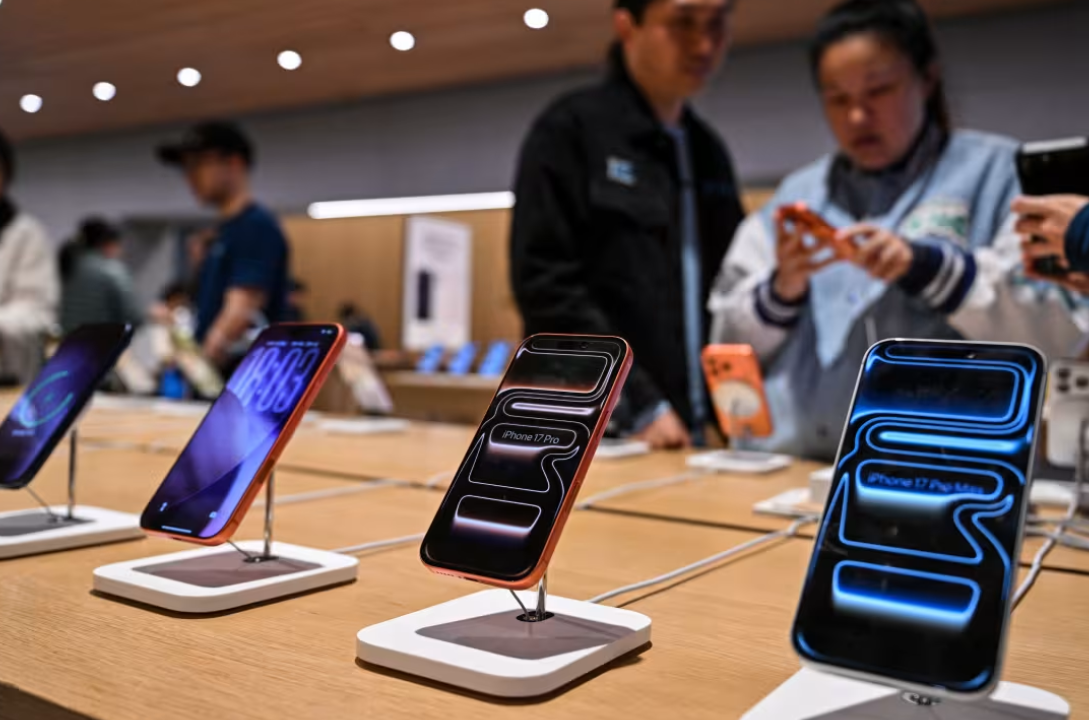
John Ternus inherits a company that remains financially powerful, but he also takes over at a moment when investors are asking harder questions about Apple’s next major growth engine. The iPhone remains central, but the market wants to know how Apple will compete in artificial intelligence, where rivals such as Microsoft, Google and Meta have moved aggressively.
Apple’s rollout of Apple Intelligence created high expectations, but some analysts believe the company has lagged its Big Tech peers in AI execution. Ternus must now show that Apple can turn AI into a practical, high-value part of its devices and ecosystem.
Apple must prove AI can fit its ecosystem
Apple’s AI challenge is different from that of many competitors. The company does not usually win by launching unfinished technology quickly. It wins by turning technology into polished consumer experiences. That approach helped Apple dominate smartphones, wearables and premium consumer hardware. But AI moves quickly, and the market may not be patient if Apple appears too slow.
The key question is whether Apple can integrate AI into the iPhone, Mac, iPad, Apple Watch and services ecosystem in a way that feels useful, private and seamless. The company has a major advantage: it controls hardware, software and user experience. If Ternus can connect AI features deeply into devices, Apple could still become a major AI winner.
However, the company must also address developer expectations, user demand and investor pressure. AI assistants, agentic software and productivity tools are becoming more important. If users begin relying on AI systems that live outside Apple’s ecosystem, the company could face a strategic threat.
That is why the CEO change matters. Ternus is not replacing a failed leader. He is taking over a successful company at a moment when the next technology cycle is still being defined.
Best Buy faces a difficult post-pandemic reset
Best Buy’s challenge is more direct. The company benefited during the pandemic when consumers rushed to buy laptops, monitors, gaming systems, home-office equipment and other electronics. Its stock surged to $138 in 2021, but that momentum did not last. The share price has since been cut roughly in half, and the stock recently traded below the level seen when Corie Barry became CEO.
Jason Bonfig will become CEO on November 1, and his background shows where Best Buy wants to go. He recently oversaw the creation of Best Buy’s online U.S. marketplace and the expansion of its advertising business. These areas are important because the company needs new sources of growth beyond traditional store-based electronics sales.
The electronics market has become more competitive. Consumers can buy devices through Amazon, Walmart, direct brand websites and mobile carriers. Best Buy still has a strong brand, but it must prove that its stores, services and online platform offer enough value to keep shoppers engaged.
Bonfig’s task is to modernize the business without losing what made Best Buy useful in the first place.
Geek Squad now competes with AI
For years, Geek Squad helped Best Buy stand apart. Customers could go to the retailer for device setup, troubleshooting, repair and technical support. That human-service layer gave Best Buy an advantage over many online competitors.
But artificial intelligence is starting to challenge that edge. Consumers can now ask AI tools for product comparisons, setup instructions, troubleshooting steps and technical explanations. These tools are not perfect, and they do not replace every in-person service need. Still, they reduce the uniqueness of Best Buy’s tech-assistance model.
Retail analyst Neil Saunders also noted that Best Buy’s stores have lost some of their former energy. The chain used to feel like a place where shoppers could explore new technology and try innovative products. More recently, some locations have felt less exciting and less differentiated.
That is a serious issue. If Best Buy’s stores are not inspiring, and if AI reduces the need for basic tech support, the company must find new ways to make physical retail valuable. It may need better product experiences, stronger services, more membership benefits, improved store layouts and a more compelling online-offline connection.
Chip shortages add another obstacle
Best Buy and Apple also face pressure from the semiconductor market. Demand for AI infrastructure is absorbing large amounts of chip capacity, especially memory chips. That can raise costs for consumer electronics such as smartphones, laptops and tablets.
If chip shortages drive up prices, consumers may delay purchases. That would create another challenge for Best Buy, which depends heavily on replacement cycles. The company has argued that its broad price range and normal product-replacement demand can help manage the impact, but analysts say Wall Street will watch closely.
For Apple, chip supply is also critical. Advanced chips power performance, battery efficiency, AI features and product differentiation. Any disruption can affect margins, product availability and launch timing.
This is part of the broader CEO challenge. Leaders now need to manage not only consumer demand, but also upstream technology bottlenecks that are increasingly shaped by AI infrastructure demand.
Lululemon needs to restore product momentum
Lululemon’s CEO change comes from a different problem: brand and product execution. The company became popular through premium workout wear, high-quality stretch fabrics, technical design and strong appeal among female consumers. The pandemic’s at-home fitness boom boosted the stock through 2021, and shares peaked in 2023.
Now the picture is weaker. Lululemon’s stock is around $143, near levels not seen since 2019. Competition has intensified from brands such as Vuori and Alo Yoga, while analysts have criticized the company for drifting away from its core identity.
Some observers argue that Lululemon has moved into categories that do not fully match the brand, such as rugby shirts. Others point to a lack of fashion cohesion. The leisure side of the business has also disappointed, with innovation sometimes appearing limited to new colors rather than stronger product concepts.
Heidi O’Neill will take over on September 8. Her experience at Nike includes product design, digital commerce and global market operations. Those skills are relevant, but investors reacted cautiously because Nike has struggled recently, and it is difficult to know how much of those challenges should be connected to O’Neill’s role.
Lululemon must move faster in a faster market
One of Lululemon’s biggest problems is speed. William Blair analyst Sharon Zackfia said that, in the U.S., the time it takes the company to bring products to market has stretched to around 24 months, compared with less than a year when Lululemon went public in 2007.
That is a serious disadvantage. Fashion, athleisure and lifestyle apparel move quickly. Social media, influencers and fast-growing competitors can change consumer preferences almost overnight. If Lululemon takes too long to respond, it risks missing trends and losing relevance.
The company also needs to refocus on the female consumers who made the brand powerful. That does not mean ignoring men’s apparel or new categories, but it does mean protecting the core identity that built customer loyalty.
For O’Neill, the challenge is not simply to add more products. It is to sharpen the product pipeline, improve speed, rebuild fashion credibility and make the brand feel fresh again.
Boards are searching for CEOs built for uncertainty
The leadership changes at these three companies show how boards are thinking about the future. They are not only looking for executives who can manage quarterly results. They are looking for leaders who can operate in uncertainty.
AI is changing business models. Supply chains remain fragile. Trade wars and geopolitical conflicts are making costs harder to predict. Consumers are becoming more selective. Digital channels are becoming more important. In this environment, companies need CEOs who can make faster decisions while still protecting brand value and financial discipline.
This is the broader meaning of the Apple, Best Buy and Lululemon changes. Each company has different problems, but all three are preparing for a more difficult operating world. The next CEO generation must combine digital fluency, operational control, product judgment and the ability to communicate a convincing long-term strategy.
The new CEOs at Apple, Best Buy and Lululemon signal more than ordinary leadership turnover. They reflect a larger corporate shift toward digital transformation, AI readiness and resilience in a more chaotic global economy.
John Ternus must guide Apple beyond the Cook era and prove the company can compete in artificial intelligence while protecting its premium ecosystem. Jason Bonfig must rebuild Best Buy’s growth story as electronics retail becomes more digital and AI challenges its service advantage. Heidi O’Neill must restore Lululemon’s product focus, speed and brand clarity after competition and style missteps weakened investor confidence.
The market will now watch whether these new leaders can do more than inherit major brands. They must redefine them for a world where technology, consumers and supply chains are changing faster than ever.