Walter Isaacson revives the Tesla-SpaceX merger conversation
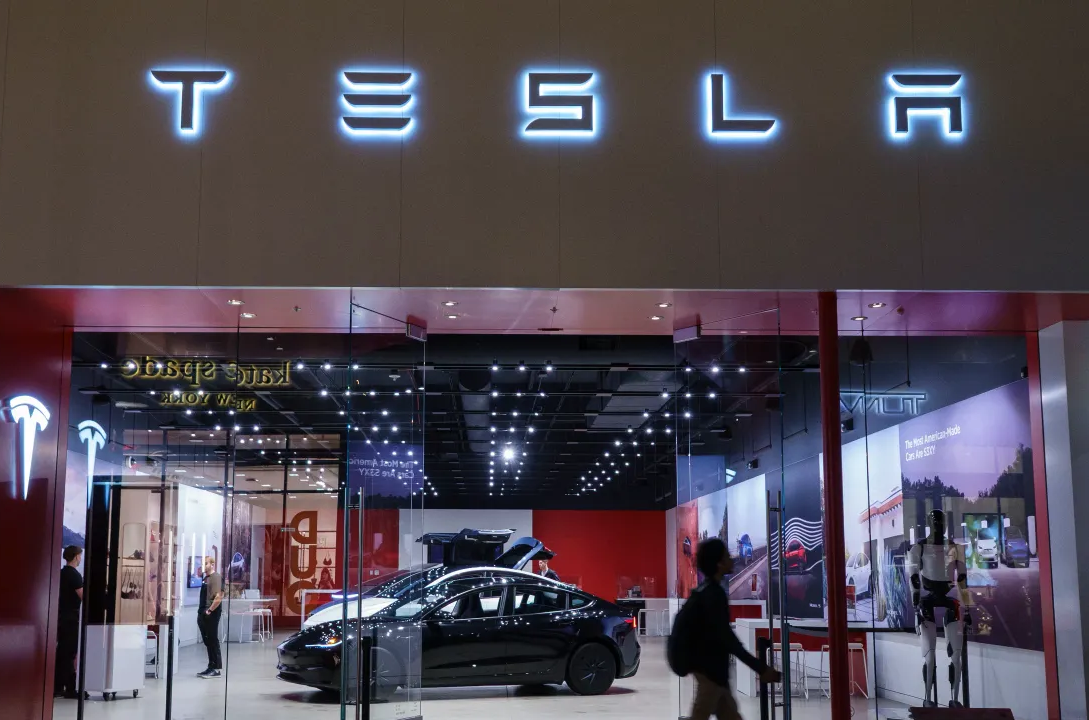
Speculation about a future merger between Tesla and SpaceX moved back into the spotlight after Walter Isaacson, Elon Musk’s biographer, suggested that Musk ultimately wants to combine the two businesses into one larger entity. The comment immediately caught investor attention, not only because of Isaacson’s close access to Musk, but also because it came at a time when connections between Musk’s companies are becoming more visible and more strategic.
Speaking in a CNBC interview, Isaacson said Musk has long shown a tendency to move engineers, designs, and ideas back and forth across his companies. In his view, that pattern points to something deeper than simple cooperation. It reflects a founder who sees his businesses less as separate silos and more as parts of a wider industrial and technological system. That is why Isaacson said he believes Musk wants to create one much larger company in the long run.
The comment matters because Tesla and SpaceX are no longer linked only by Musk’s personal leadership. They are increasingly tied by capital flows, infrastructure plans, engineering overlap, and a broader narrative that places autonomy, artificial intelligence, energy, communications, and industrial scale inside one ecosystem.
Terafab has become the clearest symbol of deeper integration
A major reason this merger speculation is gaining traction now is the growing attention around Terafab, the large semiconductor fabrication project under construction in Austin. Isaacson pointed to Terafab as evidence that ties between Musk’s companies are becoming deeper and more operationally meaningful.
That matters because semiconductor manufacturing is not a side detail. Chips sit at the center of Tesla’s ambitions in electric vehicles, autonomy, robotics, and artificial intelligence. They also matter for SpaceX as it expands into advanced communications, satellite infrastructure, and increasingly data-intensive systems. If both companies are investing in shared strategic capacity at the semiconductor level, then the case for closer alignment becomes much stronger.
Terafab therefore represents more than collaboration. It suggests that Musk’s businesses may increasingly depend on overlapping industrial foundations. When companies share talent, design logic, capital priorities, and critical infrastructure, investors naturally begin asking whether those firms are slowly evolving toward a more unified structure.
Musk’s companies already behave less like isolated businesses
Isaacson’s comments also resonate because they align with the way Musk has historically operated. He has repeatedly treated his companies as interconnected platforms rather than as self-contained businesses with rigid borders. Engineers have moved across organizations. Technologies have informed one another. Strategic priorities in one company have often shaped decisions in another.
That operating style is unusual by normal corporate standards. Most public-company investors are used to businesses that keep governance, capital allocation, and strategic identity relatively separate. Musk has often done the opposite. His approach has been to build a wider network of mutually reinforcing enterprises, each feeding knowledge, momentum, and sometimes resources into the others.
This is why Isaacson framed investing in Musk ventures in a very particular way. His argument was not that investors are buying exposure to one narrow corporate story. His point was that they are, in effect, investing in Elon Musk himself as a builder of systems. That may sound dramatic, but it reflects a real market phenomenon. Many investors do not own Tesla purely for current vehicle sales or even current margins. They own it because they believe Musk can connect cars, AI, robotics, energy, manufacturing, and space into something much bigger over time.
SpaceX is increasingly viewed as a future public-market giant
Isaacson also made clear that he sees SpaceX as a company with enormous future value. He pointed to its role in low-Earth orbit internet, direct-to-cell communications, and even the possibility of orbital data centers. Those areas matter because they expand the SpaceX story far beyond rockets.
For years, some investors saw SpaceX primarily as a launch company. That view is now outdated. SpaceX increasingly sits at the intersection of communications infrastructure, data transmission, national security relevance, global connectivity, and potentially future computing architecture. If those opportunities continue to grow, then SpaceX could become one of the most strategically valuable private companies in the world.
That possibility becomes even more important in the context of merger speculation. A future combination of Tesla and SpaceX would not mean pairing a car company with a rocket company in a simplistic sense. It would mean bringing together a major electric and AI-driven industrial platform with an advanced communications and aerospace network. The scale of that concept is one reason the market keeps returning to it.
Tesla’s $2 billion investment in SpaceX adds another layer
Another reason investors are taking the idea more seriously is that Tesla reportedly invested $2 billion in SpaceX in the first quarter. That is not a symbolic amount. It represents a meaningful capital relationship between two of Musk’s most closely watched businesses.
This move immediately raises several questions. Is the investment merely financial? Is it strategic? Does it reflect confidence in SpaceX’s coming growth? Or is it one more sign that Tesla and SpaceX are already moving toward tighter integration before any formal merger is even discussed?
Whatever the answer, the existence of a large direct investment makes the relationship more concrete. It is harder to dismiss merger speculation as fantasy when one company is already allocating serious capital into the other. Investors tend to pay attention when strategic alignment starts to show up not only in speeches and engineering overlap, but on the balance sheet.
SpaceX’s reported IPO path could complicate or accelerate the story
Reports that SpaceX could go public as early as mid-2026 make the picture even more interesting. If SpaceX does list, it would become the second major Musk company available on public markets after Tesla. That would create a new layer of valuation discovery, shareholder expectations, and possible strategic optionality.
On one hand, a public listing could make a future merger more complicated, because both companies would then have their own shareholder bases, disclosure obligations, and governance considerations. On the other hand, it could make a future combination easier to structure if both firms are already public and valued in the market.
This is one of the reasons Isaacson’s remarks carry weight right now. SpaceX may be approaching a transition point where its relationship with Tesla becomes more visible and more scrutinized. If Musk really does want a larger integrated company in the long run, then the period around a SpaceX listing could become an important stage in shaping that future.
The xAI and Cursor deals show Musk is still building across entities
Recent deal activity across Musk-linked businesses reinforces the broader impression that he is still constructing a multi-company ecosystem rather than managing isolated enterprises. Isaacson acknowledged investor frustration around SpaceX’s acquisition of xAI in February, which diluted existing shareholders. He compared that backlash to the criticism Tesla faced when it bought SolarCity in 2016.
That comparison is revealing. Musk’s major strategic moves often look controversial in the moment because they stretch conventional corporate logic. But he has repeatedly argued, implicitly and explicitly, that scale, integration, and mission alignment matter more than short-term neatness.
The same can be said of the report that SpaceX secured an option to acquire the AI coding startup Cursor later this year for $60 billion, or alternatively pay $10 billion for the collaborative work if the purchase is not completed. The deal would connect Cursor’s AI-assisted coding tools with SpaceX’s Colossus supercomputer, with the goal of building highly useful models for coding and knowledge work.
This matters because it shows the Musk ecosystem continuing to absorb more AI capability, more infrastructure, and more strategic depth. That same logic strengthens the case for why some investors believe a Tesla-SpaceX merger is not just theoretically possible but philosophically consistent with how Musk builds.
Retail traders are embracing Tesla more than SpaceX for now
Retail reaction has been notably uneven. On Stocktwits, sentiment around TSLA remained in extremely bullish territory over the last 24 hours, while message volume increased from normal to high. By contrast, sentiment around SPACEX remained in bearish territory.
That divergence says something interesting about current investor psychology. Retail traders continue to see Tesla as the core public expression of the Musk story. Even when broader speculation touches SpaceX, it is Tesla that absorbs the excitement more directly because it is the familiar, liquid, public vehicle for betting on Musk’s future projects.
Tesla stock has also gained 49% over the past 12 months, which gives traders another reason to remain confident. A strong share-price backdrop makes the market more willing to entertain ambitious narratives. When a stock is already performing well, investors often become more open to strategic speculation around mergers, platform expansion, and ecosystem integration.
A merger would excite some investors and unsettle others
If a Tesla-SpaceX merger ever moved from speculation to reality, the market reaction would likely be intense and divided. Supporters would argue that such a move could create one of the most ambitious industrial and technology conglomerates in modern history, spanning electric vehicles, robotics, AI, chips, satellites, launch systems, communications, and energy infrastructure.
Critics, however, would likely focus on governance, dilution, capital allocation risk, and complexity. They would question whether combining such different businesses would help shareholders or simply concentrate even more power and execution risk around Musk himself. They would also worry about whether Tesla investors signed up for direct exposure to the economics of launch, satellites, and space infrastructure.
This tension is exactly why Isaacson’s phrasing is so sharp. His message is essentially that investors in Musk’s ventures are not buying a neat, conventional company. They are buying into a founder who tends to move aggressively, integrate unexpectedly, and think at system scale. For some investors, that is the attraction. For others, it is the warning label.
Walter Isaacson’s suggestion that Elon Musk ultimately wants Tesla and SpaceX to become one larger company has reignited a conversation that many investors already suspected would return sooner or later. The idea no longer rests only on Musk’s personality or reputation. It is now reinforced by deeper operational links, Tesla’s reported $2 billion investment in SpaceX, the rise of Terafab, and the continued expansion of Musk’s AI and semiconductor ambitions across multiple entities.
None of this confirms that a merger is imminent. But it does make the speculation more grounded than it once seemed. SpaceX is becoming increasingly valuable and strategically important, Tesla remains the public anchor of the Musk ecosystem, and the lines between the companies appear to be getting less rigid over time.
For investors, the main takeaway is simple: when it comes to Musk, the market is no longer evaluating just separate businesses. It is increasingly evaluating the possibility that those businesses are all pieces of a much larger design.