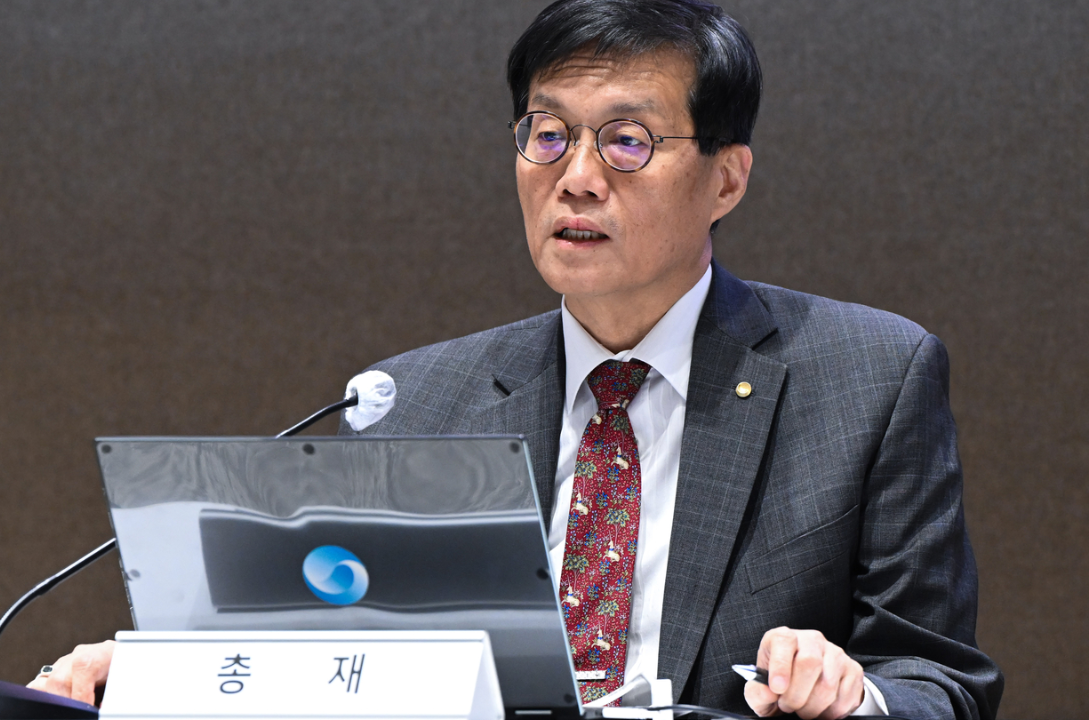
South Korea may be heading into a more difficult inflation environment, according to incoming Bank of Korea governor nominee Shin Hyun-song, who warned that headline consumer inflation is likely to accelerate as rising import costs and geopolitical uncertainty put fresh pressure on the economy.
Speaking during a parliamentary confirmation hearing in Seoul on Wednesday, Shin said the inflation outlook has become more concerning because of the conflict in the Middle East, which is driving up external costs and complicating the broader economic picture. His remarks suggest that, even before formally taking office, he is preparing markets for a more cautious and potentially more complex policy backdrop.
The warning is especially important because it comes at a time when many central banks are trying to balance slowing growth risks against the possibility that inflation may prove more persistent than hoped. In South Korea’s case, the challenge may become even sharper if higher import prices begin feeding more directly into consumer prices in the coming months.
Rising import costs are becoming a central concern
Shin’s comments place import costs at the center of the inflation story. For an economy like South Korea, which is deeply integrated into global trade and highly sensitive to imported energy and industrial inputs, higher import prices can quickly become a macroeconomic problem.
When external costs rise, the effects can spread through multiple channels. Energy becomes more expensive. Transport costs increase. Production inputs become costlier. Businesses then face pressure either to absorb those higher costs through weaker margins or to pass them on to consumers. If the pressure lasts long enough, headline inflation can begin climbing more visibly.
That is why Shin’s warning matters. He is not describing inflation as an abstract risk. He is pointing to a very concrete mechanism: imported inflation driven by a more unstable global environment.
The Middle East conflict is reshaping the inflation outlook
The conflict in the Middle East appears to be a key driver behind this shift in tone. As tensions in the region disrupt trade expectations and contribute to higher energy-related costs, countries far from the conflict zone are still feeling the impact through global pricing channels.
For South Korea, this matters because the economy is highly exposed to international commodity flows and global shipping conditions. If the Middle East conflict keeps energy prices elevated or creates broader market instability, the knock-on effects can reach Korean households and businesses through fuel costs, import bills, and price pressures across the supply chain.
Shin’s comments suggest that policymakers are increasingly alert to this transmission effect. Even if domestic demand conditions remain mixed, external shocks can still lift inflation and complicate monetary decision-making.
A more uncertain policy environment may lie ahead
By warning that headline inflation is likely to accelerate, Shin is also signaling that the policy environment may become less comfortable. Central banks prefer situations where inflation is clearly cooling or where growth weakness creates room to ease. But when inflation begins to reaccelerate because of imported cost shocks, the options become more difficult.
This does not necessarily mean immediate policy tightening. But it does suggest that expectations for a smoother inflation path may need to be reassessed. If import-driven price pressure becomes stronger, the Bank of Korea may have to remain more alert and more flexible than markets had expected.
That would be especially important if inflation picks up while economic uncertainty remains elevated. In that case, policymakers could face a familiar but uncomfortable mix: weaker confidence on one side and renewed price pressure on the other.
Shin also wants to promote the won internationally
Alongside his inflation warning, Shin said he would focus on promoting the internationalisation of the won in order to expand its role in global trade and financial markets.
That is a notable signal because it points to a broader strategic vision beyond immediate monetary policy concerns. Expanding the international role of the won could, over time, strengthen South Korea’s position in regional and global finance, reduce some transaction frictions, and give the country a more prominent monetary profile.
It also suggests that Shin may view the central bank’s role in wider structural terms, not only through interest-rate decisions, but also through the long-term positioning of South Korea in the global financial system.
While that is a larger and slower-moving objective, it complements his near-term inflation concerns in an interesting way. One issue is about managing immediate external pressure. The other is about improving Korea’s standing in the international monetary landscape over time.
Markets will watch how his tone evolves
Because these comments were made during a parliamentary confirmation hearing, markets will likely treat them as an early guide to how Shin may lead once officially in office. His tone so far appears cautious, internationally aware, and highly sensitive to external cost pressures.
That matters because leadership transitions at central banks are always closely watched. Investors want to know whether the incoming governor will lean more toward growth support, inflation control, exchange-rate stability, or broader financial reform. Shin’s early comments suggest he is putting inflation risk and external vulnerability near the top of that agenda.
If import prices continue rising and the Middle East conflict remains a source of volatility, his warning may prove timely. If pressures ease, markets may interpret his stance as prudently defensive. Either way, his first signals are being delivered in a global environment that offers little room for complacency.
Incoming Bank of Korea governor nominee Shin Hyun-song has warned that consumer inflation is likely to accelerate, driven by rising import costs and heightened uncertainty linked to the conflict in the Middle East. His remarks underline how exposed South Korea remains to global pricing shocks, especially through energy and trade-related channels.
At the same time, Shin signaled a broader ambition to promote the internationalisation of the won, suggesting that his approach may combine short-term vigilance on inflation with longer-term financial strategy.
For markets, the message is clear: the inflation outlook in South Korea may be getting more complicated, and the next phase of central bank leadership could begin under heavier external pressure than many had hoped.