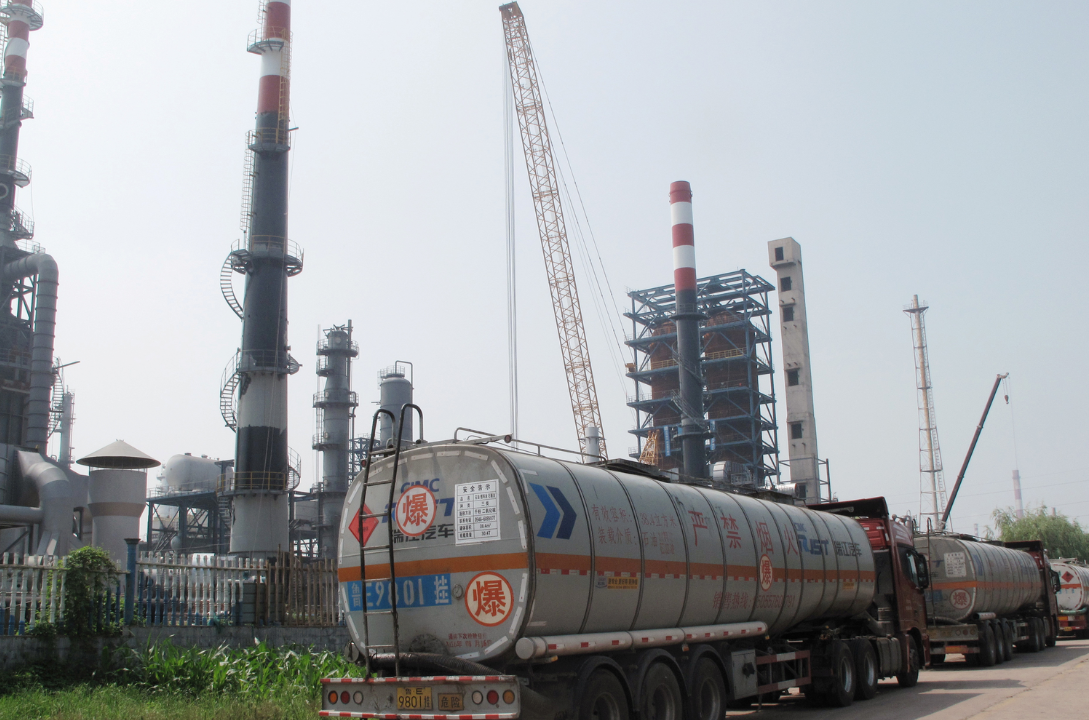
Some Chinese independent refiners, commonly known as teapots, have started showing renewed interest in prompt cargoes of Iranian crude after oil prices dropped sharply on Wednesday. The move comes as Brent fell below the US$100-per-barrel threshold, giving back part of the geopolitical premium that had built up since the U.S.–Iran conflict erupted in late February.
According to market sources, this renewed interest was also supported by a fresh round of import quotas issued by Beijing. With more regulatory room to import crude and with international prices finally pulling back, some of these refiners have begun reassessing the possibility of returning to the Iranian market, although still in a cautious manner.
That return, however, does not mean normalization. Although there are inquiries and cargo discussions, actual deals remain limited so far. The main reason is straightforward: even after the recent decline, crude prices are still far above the levels seen before the war. In other words, Brent’s correction has improved the environment, but it has not restored the kind of economics that previously made Iranian crude especially attractive to China’s independent refiners.
The backdrop is even more difficult because these refiners are still facing weak domestic margins. Feedstock costs rose sharply over recent months, while China’s domestic fuel demand remains soft. That leaves teapots in an uncomfortable position: they are being encouraged to maintain processing activity to support domestic fuel supply, but running at those levels with crude still expensive can produce significant losses.
Brent’s decline reopened a window of interest
The turning point for the market was the selloff in oil prices after the announcement of a two-week ceasefire between the United States and Iran. Brent fell to its lowest level since March 11 after Donald Trump said he had agreed to the truce, subject to the immediate and safe reopening of the Strait of Hormuz.
That price drop changed sentiment in the physical market very quickly. When Brent was trading at highly elevated levels, many Chinese independent refiners had preferred to stay on the sidelines, avoiding aggressive buying because costs looked too damaging for their already thin margins. Once oil moved back into the US$90 range, new inquiries started to emerge.
One trader close to Iranian oil trade summed up the mood by saying that there were already some inquiries in the morning as Brent slipped into the US$90s. That observation shows how price-sensitive these refiners still are. They never abandoned interest in Iranian crude entirely; they simply stepped back while costs were too high.
Even so, the market is still far from comfortable. A second trader noted that while there have been some inquiries, very few deals have been concluded so far, precisely because prices are still significantly above pre-war levels. In short, the market has reopened, but without enthusiasm.
Iranian crude has lost much of its discount appeal
One of the biggest problems for Chinese teapots is that Iranian crude no longer carries the kind of discount it offered before the conflict. Prior to the war, Iranian Light was trading at around US$10 per barrel below ICE Brent. Now, according to traders, those offers are being made at parity or even at a slight premium to Brent.
That change is extremely important. The main attraction of Iranian crude for China’s independent refiners has always been the combination of availability, flexible trade channels, and meaningful discounts. Once that discount disappears, the economics change dramatically.
In practical terms, that means Iranian crude is no longer the “cheap barrel” it once was in this market structure. It remains an important option, but it no longer provides the same cost cushion that used to justify more aggressive buying. For refiners already struggling with narrow margins, that difference matters a great deal.
The same phenomenon is also being seen in Russian crude. According to market sources, Russian oil has shifted to a premium of about US$8 per barrel, whereas it previously traded at discounts. That move has been driven in part by strong demand from Indian refiners, which has helped support prices.
As a result, two of the key alternative crude sources for Asian independent refiners — Iran and Russia — no longer offer the kind of deep discounts that once supported profitability. That sharply reduces the arbitrage opportunity these refiners relied on.
Teapots remain trapped between high feedstock costs and weak demand
The renewed interest in Iranian crude comes at a particularly difficult time for China’s independent refiners. Rising feedstock costs over recent weeks, combined with still-soft domestic fuel demand, had already pushed many of them to consider run cuts for April.
This point is central to understanding the situation. Teapots do not buy crude only based on geopolitics or availability. They buy based on margins. And right now, margins remain very weak.
According to trade sources, keeping refinery run rates higher under current cost conditions would result in substantial losses. One market figure cited suggests that average refining losses for Shandong teapots stood at 143 yuan per metric ton throughout March up to March 27, according to a note published by local consultancy SCI on March 31.
That number helps translate the operating reality. Even with fresh import quotas and some relief in Brent, refining remains an economically uncomfortable business for many of these players. That explains why the return to Iranian crude is happening gradually and selectively, rather than through a broad wave of buying.
Beijing wants to preserve domestic fuel supply
Despite those economic difficulties, the Chinese government is pushing refiners not to cut too aggressively. Last week, China’s state planner urged independent refiners not to reduce processing rates below the average of the past two years. The goal is to protect domestic fuel supply, especially at a time when state-owned refiners are also trimming output.
That guidance places teapots in a difficult position. On one side, the government wants stable supply. On the other, the economics of refining remain challenging. In theory, maintaining higher throughput helps preserve domestic product availability. In practice, it can mean operating with weak or even negative margins.
This is where the new import quotas come in as both a policy and market tool. On Friday, China issued a fresh batch of crude import quotas totaling around 55 million metric tons, or 401.5 million barrels, to independent refiners.
That decision shows that Beijing wants to give these refiners the means to keep operating. More quotas mean more legal space to import and more commercial flexibility to replenish supply or respond to market opportunities. But that does not automatically solve the profitability problem.
New quotas help, but uncertainty remains
Although the new quota allocation is an important supportive step, refining sources note that there is still a lack of detail regarding how much volume each refinery received and how exactly those quotas can be used. That lack of clarity limits the immediate impact of the measure.
In practice, the market received a positive signal, but it is still waiting for more precise information to determine how far this will translate into actual purchases. For refiners already under financial pressure, the practical terms of quota usage make a direct difference to procurement strategy.
Moreover, even with expanded regulatory room, the final buying decision still depends on crude prices and expected margins. Refiners may now be authorized to import more, but that does not mean they will do so if prices remain economically unattractive.
The result is a market in waiting mode. There is more interest than there was just days ago, and there are more policy tools available. But there is still no strong conviction that deal flow is about to surge immediately.
The ceasefire improved sentiment, but not enough to restore pre-war conditions
The temporary ceasefire between the United States and Iran helped improve market sentiment and brought Brent back to less extreme levels. Even so, the environment remains very different from what refiners were facing before the conflict began.
Before the war, Iranian crude traded at a deep discount, Russian oil also offered a strong price advantage, and Chinese independent refiners were able to structure purchases with more predictable economics. Today, the picture is very different. Discounts have narrowed or disappeared, geopolitical volatility remains in place, and domestic refining margins are still weak.
That means the market has reopened, but with a different balance. Iranian crude remains on the radar for teapots, but now in a more expensive, more uncertain, and less favorable environment than before.
In other words, Brent’s recent decline was enough to reactivate interest, but not enough to fully restore the old opportunistic buying model that once defined this part of the market.
Conclusion
Chinese independent refiners have started looking again at Iranian crude after Brent’s decline made the pricing environment somewhat more workable and Beijing issued new import quotas. Even so, the move is more of a reassessment than an aggressive return.
The main obstacle remains price. Iranian crude, which used to trade at a discount of around US$10 per barrel to Brent, is now being offered at parity or even at a slight premium. Russian crude has also lost much of its discount appeal. As a result, teapots are facing the challenge of buying still-expensive feedstock in an environment of weak domestic fuel demand and pressured refining margins.
The new quotas help by providing flexibility and by showing that the government wants to preserve domestic fuel supply. But without a clearer improvement in refinery economics, the return to Iranian crude is likely to remain gradual. For China’s teapots, the window has reopened — but it is still far from comfortable.