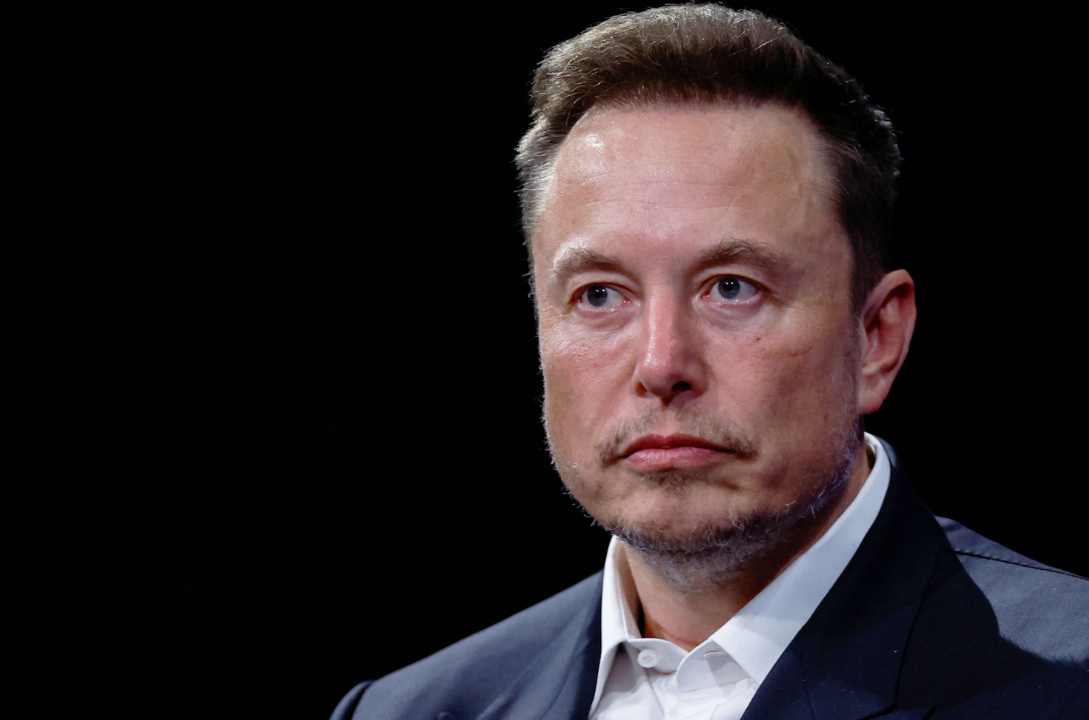
Tesla stock lost momentum on Thursday after Elon Musk made a striking comparison between Tesla’s early years and the current state of xAI. Musk said xAI is being rebuilt “from the foundations up” because it “was not built right first time around,” then added that “the same thing happened with Tesla.” At the same time, Tesla’s financial links with Musk’s wider business empire deepened after the company received U.S. clearance to convert its xAI investment into a small stake in SpaceX. Tesla shares fell more than 3% on the day, ending a three-session winning streak and posting their worst one-day decline in over a month.
For investors following finance news, stock market updates, and the evolving market outlook around Tesla, the timing matters. Musk’s comments were not just another off-the-cuff post. They landed at a moment when investors are already trying to understand how Tesla fits into a much bigger web of companies that now includes electric vehicles, artificial intelligence, robotics, rockets, satellite infrastructure, and social media. The more connected those companies become, the more Tesla shareholders have to ask a simple question: does this create new opportunity, or new complexity?
Musk’s Comment Hit a Nerve
Musk’s statement about Tesla “not” being built right the first time was notable because it openly acknowledged that even Tesla, now one of the world’s most closely watched companies, went through foundational problems early on. He used that comparison to explain what is happening at xAI, saying the company is now being rebuilt from the ground up. Reports published the same day also described leadership turnover and a broader internal reorganization at xAI, suggesting that the reset is not just rhetorical.
That kind of language can cut two ways for the market. On one hand, some investors may see it as classic Musk: blunt, ambitious, and focused on fixing weaknesses fast. On the other hand, others may hear a warning siren. If xAI is being rebuilt so aggressively, and Tesla is increasingly linked to it through capital, technology, and strategic planning, then Tesla investors cannot ignore what happens inside xAI anymore.
Markets usually like confidence. They are less comfortable when a major founder says a closely tied company was not built properly the first time around. That tends to invite questions rather than applause.
Tesla’s xAI Investment Is Now Tied to SpaceX
The bigger corporate development behind the sell-off was Tesla’s shift from holding an interest in xAI to holding a stake in SpaceX. Regulatory filings reported by Bloomberg and others show Tesla received U.S. government clearance to convert its investment after the recent merger between xAI and SpaceX. The documents list Tesla as the acquirer of a SpaceX stake from Musk, though the exact size of that stake was not disclosed in the filing. Reports say Tesla’s previously announced $2 billion investment in xAI is being rolled into SpaceX and would translate into a stake of less than 1% in the rocket company.
That may sound small, but the symbolism is large. Tesla is no longer just adjacent to xAI and SpaceX through Musk’s leadership. It now has a direct financial bridge into SpaceX as part of this restructuring. For bullish investors, this can look like a smart way to gain exposure to one of the most valuable private companies in the world. For cautious investors, it raises governance questions about how closely Musk’s companies should be intertwined.
The market has been wrestling with that debate for years, and this move pushes it into sharper focus.
Why Investors Are Watching SpaceX More Closely
Part of the reason this matters so much is the increasing expectation around a potential SpaceX IPO. Reports say Musk’s empire is being reshaped ahead of a possible public listing that could rank among the largest in history. SpaceX’s combination with xAI was described by Musk as an “innovation engine,” bringing together artificial intelligence, space infrastructure, and satellite internet in one larger platform. Bloomberg also reported that the recent clearance formalizes Tesla’s indirect path into that story before any IPO happens.
That creates an interesting tension for Tesla stock. Some investors may welcome any chance for Tesla to gain a foothold in SpaceX before public markets fully price it in. Others may worry that Tesla is being pulled further away from a clean, easy-to-value EV story and into a more tangled holding-company narrative centered on Musk’s ecosystem.
Wall Street loves a big vision right up until it starts needing a flowchart.
Tesla Is Becoming Harder to Value
Tesla’s core story used to be easier to explain. It built electric vehicles, expanded into energy storage, and promised future upside in autonomy and robotics. That was already a lot. Now the picture includes xAI, SpaceX, Optimus, AI computing, satellite internet links, and cross-company projects such as the recently disclosed “Digital Optimus” or “Macrohard” initiative between Tesla and xAI.
This may eventually support a larger long-term thesis. Musk has discussed possible technology links between his companies, including using Tesla energy systems to power space-based data centers and transporting Optimus robots on Starship. If those connections become real businesses, Tesla could end up looking less like a carmaker and more like a node in a giant technology platform.
But there is a catch. The more moving parts a company has, the harder it becomes for investors to value it with confidence. A car business can be measured. A software platform can be modeled. A founder-led network of partially linked companies spanning rockets, robots, AI, and energy is a different beast entirely.
That kind of complexity can excite true believers, but it can also scare off investors who prefer cleaner lines between strategy, capital allocation, and shareholder benefit.
Thursday’s Drop Reflects More Than a Simple Pullback
Tesla’s decline of more than 3% came after a short winning streak, but the drop still mattered because it marked the stock’s worst session in more than a month. Reports also noted that Tesla shares are down 12% year to date. That tells us investors are still trying to decide whether new Musk-driven announcements add value or add distraction.
A stock like Tesla does not usually move on traditional valuation logic alone. It moves on expectations, confidence, narrative strength, and belief in execution. On that front, Musk’s remarks may have had an awkward effect. Comparing xAI’s rebuild to Tesla’s early struggles might have been meant as reassurance. Instead, it reminded the market that building world-changing companies is messy, expensive, and rarely linear.
There is also a practical concern. If Tesla’s capital keeps flowing into adjacent Musk ventures, shareholders may ask whether the company is investing to strengthen its own operations or to support a broader founder ecosystem. Even if those goals overlap, investors will still want evidence that Tesla itself remains the main priority.
The Bull Case Still Exists
To be fair, there is a strong optimistic case here. Tesla gaining even a small stake in SpaceX could prove valuable if SpaceX eventually lists at a very high valuation. The deepening ties with xAI could also strengthen Tesla’s ambitions in robotics, automation, and AI agents, especially as Optimus becomes a larger part of the company’s future pitch. If the different Musk companies truly share technology and infrastructure in a way that improves execution, investors could one day see this period as the beginning of a more integrated and more powerful ecosystem.
That is the dream scenario: Tesla is not drifting away from its mission, but expanding into a wider platform where EVs, energy, robotics, and AI reinforce one another.
The Bear Case Is Getting Louder
The risk case is just as obvious. The deeper Tesla gets into cross-company deals, the more investors may worry about governance, transparency, and focus. A less than 1% stake in SpaceX is interesting, but it is not large enough on its own to transform Tesla’s valuation today. Meanwhile, the company still faces pressure to deliver in its own core businesses, including vehicle demand, margins, self-driving progress, and robotaxi ambitions.
If investors begin to feel that Tesla is becoming a financing arm or strategic partner for Musk’s private ventures, the market could apply more skepticism rather than more excitement. It is one thing to sell a bold future. It is another to convince shareholders they will capture enough of that future to justify the risk.
Bottom Line
Tesla stock lost ground as Elon Musk’s comments and Tesla’s latest restructuring move reminded investors that the company is now part of a far bigger and more complicated story. Musk said Tesla “was not built right the first time” while defending xAI’s current rebuild, and Tesla’s $2 billion xAI investment is now being converted into a small SpaceX stake ahead of a possible IPO. Those developments deepen the financial and strategic links inside Musk’s empire, but they also raise fresh questions about focus, governance, and valuation.
For now, Tesla remains the only publicly traded front door into that empire. That alone keeps the stock fascinating. It also keeps it volatile. Investors are no longer judging Tesla only as an EV company. They are judging whether it can stay disciplined while being tied ever more closely to rockets, AI, and Musk’s expanding all-in-one future.